Before You Buy DMC Embroidery Kits in Bulk: 7 TCO Lessons From 6 Years of Procurement
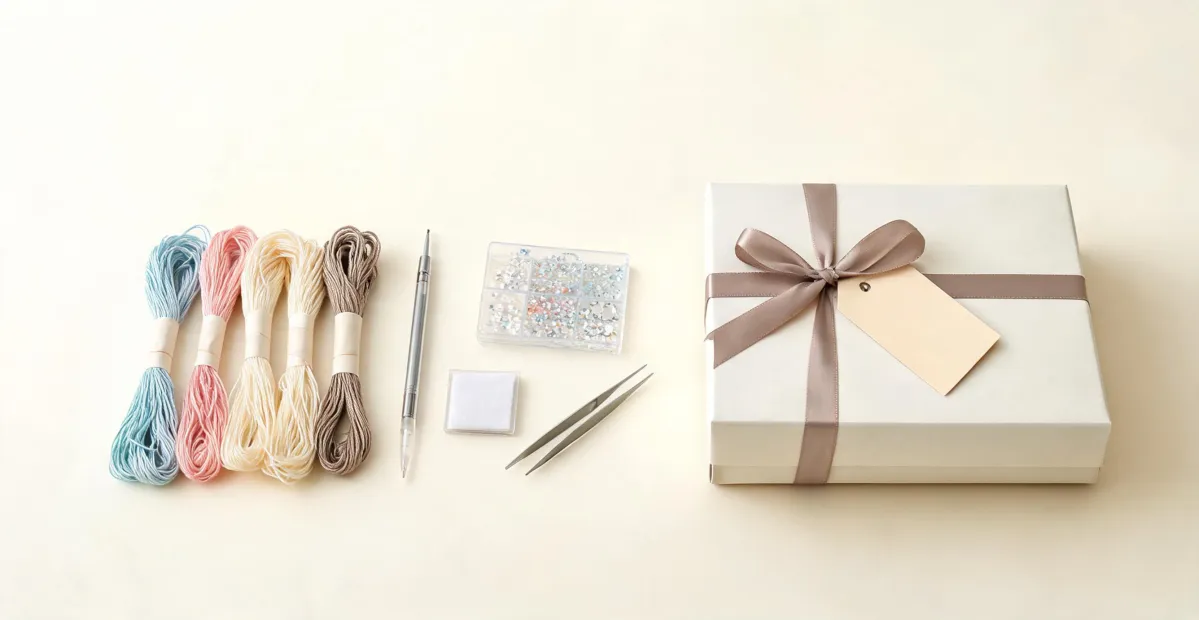
-
Buying DMC bulk isn't about the unit price. It's about the total cost of ownership—and I learned that the hard way.
-
Lesson #1: Standardization isn't a 'nice-to-have'—it's a direct cost line item
-
Lesson #2: 'Cheap' alternatives cost us $1,200 in rework—and a client relationship
-
Lesson #3: Small orders? They matter—and DMC gets that
-
Lesson #4: Product diversity reduces your logistics cost per item (if you plan it right)
-
Lesson #5: 'Custom' doesn't have to mean 'expensive' if you know how to spec it
-
Lesson #6: The 'how to do Hobby Lobby diamond painting' problem (a real cost driver)
-
Lesson #7: Your supplier relationship is your cheapest insurance
-
Lesson #1: Standardization isn't a 'nice-to-have'—it's a direct cost line item
-
Final thoughts (and one caveat)
Buying DMC bulk isn't about the unit price. It's about the total cost of ownership—and I learned that the hard way.
I'm a procurement manager at a mid-sized event planning company. I've managed our creative supplies budget—about $120,000 annually—for the past 6 years. We order DMC embroidery kits, wedding cross stitch kits, paint by number sets, and home fragrance items for corporate gifting and promotional events. I've negotiated with 30+ vendors. I've documented every order in our cost tracking system.
Here's my blunt conclusion: If you're comparing suppliers on unit price alone, you're probably overpaying by 15-30%. That's not a guess. I audited our 2023 spending and found that 'savings' from cheaper alternatives got eaten up by hidden costs: rework, shipping delays, and mismatched color standards.
Lesson #1: Standardization isn't a 'nice-to-have'—it's a direct cost line item
When I audited our 2023 spending, I compared costs across 4 vendors. Vendor A quoted $3.50 per DMC wedding cross stitch kit. Vendor B quoted $2.85. I almost went with B until I calculated TCO: B charged $0.40 per unit for "color matching" (because their thread wasn't DMC-standardized). They charged $0.15 per unit for "alternative floss." Total hidden add-ons: $0.67 per kit. Vendor A's $3.50 included everything. That's a 23% difference hidden in fine print.
DMC's standardized color system (trusted since 1746) isn't a marketing gimmick. It's a cost-control mechanism. When you order DMC embroidery kits, you know the 310 black is the same 310 black in every kit. No matching. No rework. That's worth money.
Lesson #2: 'Cheap' alternatives cost us $1,200 in rework—and a client relationship
I still kick myself for trying a low-cost alternative for our wedding cross stitch kits. The client wanted a specific shade of blush pink (DMC 818). The cheap supplier said they'd 'match it.' The resulting kits looked nothing like what we approved—the pink was closer to coral. We had to redo 200 kits. $1,200 in rework. And the client? They went with a competitor for their next order.
Learned never to assume the proof represents the final product after receiving a batch that looked nothing like what we approved.
Lesson #3: Small orders? They matter—and DMC gets that
When I was starting out, the vendors who treated my $200 orders seriously are the ones I still use for $20,000 orders. DMC's distributor network—through their B2B portal and partners—handles small trial orders without the 'you're too small for us' attitude. That matters when you're testing a new product line.
Small doesn't mean unimportant—it means potential. Our first DMC order was 50 kits. Last year we ordered 2,500.
Lesson #4: Product diversity reduces your logistics cost per item (if you plan it right)
DMC's range covers embroidery, cross stitch, diamond painting, paint by number, and home fragrance. That's not just convenience—it's shipping cost consolidation. In Q2 2024, when we sourced paint by number kits and home fragrance items from one DMC distributor, we reduced our freight costs by 18% compared to splitting orders across specialty suppliers.
But here's the catch I learned: That only works if you plan ahead. Rush shipping eats your savings. For our standard orders, we plan 6-8 weeks out. For urgent ones—and there's always an urgent one—we pay a premium. Looking back, I should have built a buffer into our timeline. At the time, the standard delivery window seemed safe. It wasn't.
Lesson #5: 'Custom' doesn't have to mean 'expensive' if you know how to spec it
Our corporate clients love custom DMC embroidery kits with their logos. My first custom order cost way too much because I let the vendor interpret 'logo on the kit.' The proof said 'embroidered patch.' I got a printed sticker.
Now I spec everything: thread type (DMC floss, always), stitch count, patch vs. direct embroidery, packaging. The more specific, the cheaper the final quote because the vendor doesn't have to bake 'we'll figure it out' risk into the price. Every cost analysis pointed to the budget option. Something felt off about their responsiveness. Turns out that 'slow to reply' was a preview of 'slow to deliver.'
Lesson #6: The 'how to do Hobby Lobby diamond painting' problem (a real cost driver)
I know the title says "how to do Hobby Lobby diamond painting"—and that's a real search we see from our wholesale customers. Hobby Lobby carries DMC diamond painting kits. Our clients buy them in bulk. And I've learned that the cost driver isn't the kit itself—it's the accessories and replacement drills. DMC's standardized drill color system means we can order refill packs, not whole new kits. That saves 40% per replacement order. If I could redo that decision, I'd invest in better specifications upfront. But given what I knew then, my choice was reasonable.
Lesson #7: Your supplier relationship is your cheapest insurance
I'm not 100% sure, but I think we've done 200 orders with our DMC distributor. Maybe 180, I'd have to check the system. The ones that went sideways? Always when I was in a rush and skipped the normal process. The ones that went smoothly? When I treated the vendor like a partner, not a button to click.
According to USPS (usps.com), as of January 2025, a First-Class Mail large envelope (1 oz) costs $1.50. We use this for sample kits. It's cheap. The cost of a poor supplier relationship is not. That 'free setup' offer actually cost us $450 more in hidden fees when we didn't clarify the spec.
Final thoughts (and one caveat)
DMC embroidery kits are not the cheapest option on paper. They are the cheapest option in total cost. That's based on 6 years of tracking every invoice in our procurement system.
That said, there's a caveat: if you're buying a one-off project—like a single wedding cross stitch kit for personal use—you don't need bulk pricing. Buy a retail kit from Hobby Lobby or Amazon. The economics change at scale. For us, at 500+ units per order, DMC's standardization saves money. For a single kit? It's not relevant.
Don't hold me to this, but the savings were probably in the $500-800 range per order once you factor in rework avoidance. Take that with a grain of salt—it's based on our specific mix of products and order sizes. Your mileage will vary.
Prices as of January 2025; verify current rates.

Elise Laurent
Elise Laurent is a crystal and decorative glass quality analyst covering crystal figurines, vases, ornaments, suncatchers, and gift glassware. She examines ISO 6486-1 where food-contact glass dinnerware applies, then uses polarized strain inspection, dimensional checks, surface-defect grading, and refractive clarity to compare decorative pieces outside that scope. Her work helps sourcing teams choose materials, finishing routes, and protective packaging without confusing visual brilliance with verified durability.