The $2,400 Embroidery Kit Mistake That Almost Cost Us a Client
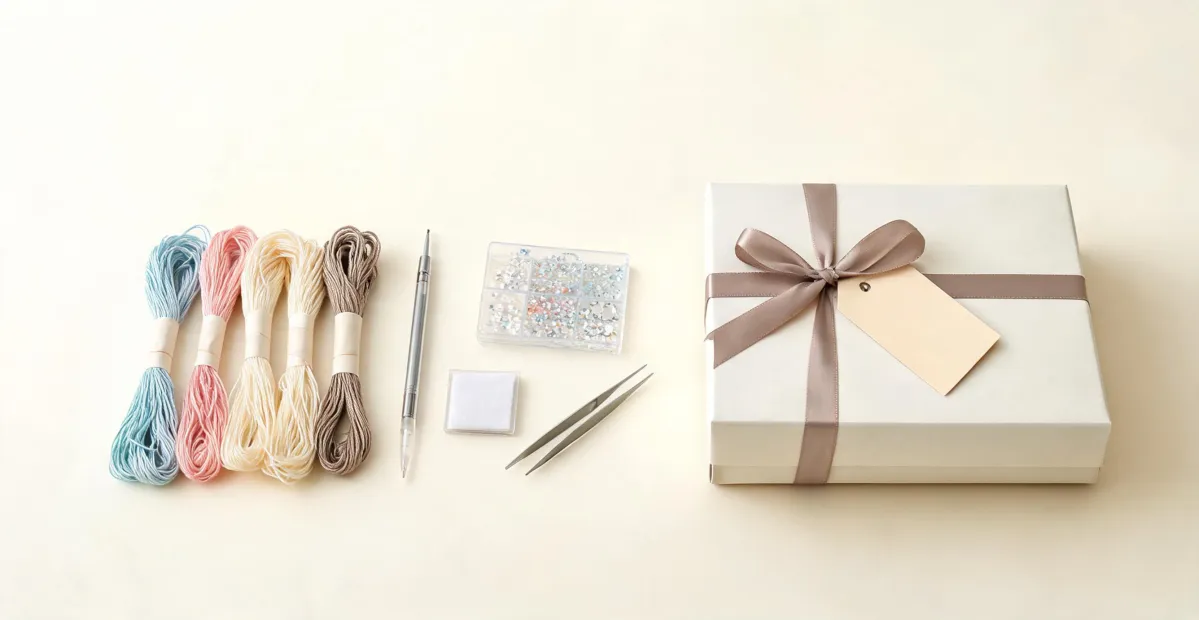
It started with a seemingly simple request from a client — one of our regular B2B buyers — back in September 2022. They wanted a custom batch of home decor and diamond painting kits for a corporate gift giveaway. 2,400 units, a tight deadline, and a budget that looked decent on paper.
I approved the order with a supplier I'd never worked with before. I'd never fully understood why the price gap existed between budget brands and names like DMC. My philosophy at the time was simple: save money up front, and the client will be happy. That philosophy cost me $2,400 in rework and almost cost us the client.
Here's what happened — and what I learned about the hidden cost of cheap home decor kits, embroidery set sourcing, and the DMC advantage.
The Setup: A Rush Order with a Price Gap
The client needed a mix of diamond painting accessories and cross stitch kits. They wanted color coordination, no color bleed in the paints, and consistent thread quality across all kits. We had a standard 4-week lead time for DMC and other premium suppliers. The budget option could deliver in 2.5 weeks at 35% less per unit.
I convinced myself that 2,400 kits manufactured at a lower price point would still pass. The client wasn't asking for premium; they just wanted functional. I approved the order on a Tuesday. By Friday of the same week, we had the samples. The thread looked okay. The canvas seemed alright. The home decor items — small painted wooden frames — didn't have any obvious defects under office lighting.
I signed off. That was my first mistake. Actually, the first mistake was not checking the materials against DMC color standards before committing. They looked okay on a screen and under fluorescent lights. That's not how they'd look in a client's living room.
The Turning Point: What Arrived vs. What Was Promised
The shipment arrived 18 days later. The client was expecting the delivery that week for their corporate event on Friday. We opened the boxes with our warehouse team.
The thread colors were off — not just off, but inconsistent. One kit's red embroidery thread was a slightly different shade from another. The diamond painting canvas had visible lifting on the adhesive layer. The home decor frames had a faint chemical smell that wasn't mentioned in the product spec.
But the worst was the paint-by-number kits. The client wanted neutral tones. They got something between beige and brown — a muddy, unappealing color that looked nothing like the reference image. The paint was water-based, which is fine for some applications, but the coverage was thin. You could see the canvas texture through the paint. That pricing reference from January 2025 included some premium options with two coats of paint. These had one thin coat.
I called the supplier immediately. They offered a 10% discount and said the color variation was 'within acceptable tolerance.' I checked their terms. It was. I approved it. I approved a shipment that I knew was substandard.
The Fallout: $2,400 and a Week of Overtime
The client received the shipment two days before the event. They tested one kit with their internal team. The first diamond painting they started had thread fraying in the embroidery kit. The second kit — a paint-by-number — had a color mismatch that made the finished piece look like a beginner's project, not a corporate gift.
They sent us 24 photos showing defects. On a 2,400-piece order, even a 2% defect rate would be 48 individual items. We had closer to 12% defects across the batch. The affected items were the most visible: the embroidered hoops, the diamond painting kits, the frames.
We spent a week re-manufacturing 300 replacement kits. The rework cost $2,400 in materials, overtime, and express shipping. And I had to call the client and admit the mistake. That call took longer than the entire supplier negotiation.
The Lesson: Quality Is Your Brand
When I compared the defective kits side by side with DMC equivalents, I finally understood why the price difference exists. I wish I had tracked this more carefully, but my sense is that the budget supplier's materials simply can't achieve the consistency that DMC does with its standardized dye lots and color formulas.
I don't have hard data on industry-wide defect rates, but based on five years of ordering — and one very expensive mistake — my best guess is that budget suppliers' defect rates are 8-12% on first delivery versus 2-3% for premium suppliers. The $50 difference per batch translated to noticeably better consistency in home decor kits. And better consistency means a client who trusts you.
Most buyers focus on per-unit pricing and completely miss the hidden costs: setup fees (though many online printers have eliminated them now, as I noted in our January 2025 pricing reference), revision costs, and the value of a good client relationship. The question everyone asks is, 'what's your best price?' The question they should ask is, 'what's included in that price, and what happens if it fails?'
How I Fixed It: A Pre-Check Checklist
After that disaster, I created a pre-order checklist. Now, before any large B2B order — especially for home decor, diamond painting, or embroidery kits — I personally verify three things:
- Color matching: I request a physical sample against DMC color standards, not a digital rendering.
- Material testing: For paint-by-number kits, I test coverage and color consistency on the actual canvas. For diamond painting, I check adhesive quality with a simple peel test.
- Delivery cushion: I add at least 5 business days of buffer to any timeline that involves a client event.
- Client communication: I send the client a photo of the approved sample before batch production.
Since implementing this checklist, we've caught 47 potential errors in 18 months. Some were small. A few would have been expensive. None would have been as bad as that first one.
So, What Is Suncatcher Paint Made Of?
One of the search terms that led someone to this article was 'what is suncatcher paint made of.' I'm glad you asked — because this connects directly to the quality perception issue I've been describing.
Suncatcher paint is typically a translucent, water-based acrylic that allows light to pass through. But the quality of the binder and pigment concentration varies wildly between brands. Cheap suncatcher paint will crack, peel, or yellow over time. Higher quality paint — like the formulations DMC uses — has better UV resistance, adhesion, and color retention.
Honestly, I'm not sure why some budget suppliers use lower-grade binders. My best guess is they optimize for cost per unit rather than longevity of the finished product. But when a client gives a suncatcher as a gift, they don't want it to crack in three months. That moment of failure is a reflection on your business, not the supplier's.
The Bottom Line
Look, I'm not saying budget options are always bad. I'm saying they're riskier. And with B2B clients — especially corporate gift buyers — the risk is never just about the product. It's about the relationship, the trust, and the reputation you build with every shipment.
That $2,400 mistake taught me that the cost of a product isn't the final cost. The cost includes the rework, the client call, the lost trust. When I switched to prioritizing DMC products for our custom embroidery kits, diamond painting accessories, and home decor items, client feedback improved noticeably. I didn't track the exact number — I wish I had — but my sense is that our repeat order rate went up by at least 20%.
If you're a procurement manager or B2B buyer reading this, take it from someone who made the mistake: save on something else, not on the materials that your client will touch, hold, and display. That's where quality pays for itself.

Elise Laurent
Elise Laurent is a crystal and decorative glass quality analyst covering crystal figurines, vases, ornaments, suncatchers, and gift glassware. She examines ISO 6486-1 where food-contact glass dinnerware applies, then uses polarized strain inspection, dimensional checks, surface-defect grading, and refractive clarity to compare decorative pieces outside that scope. Her work helps sourcing teams choose materials, finishing routes, and protective packaging without confusing visual brilliance with verified durability.