The Cheapest Quote Isn't the Cheapest Order: DMC Kits, Christmas Ornaments, Name Badges, and Bone China
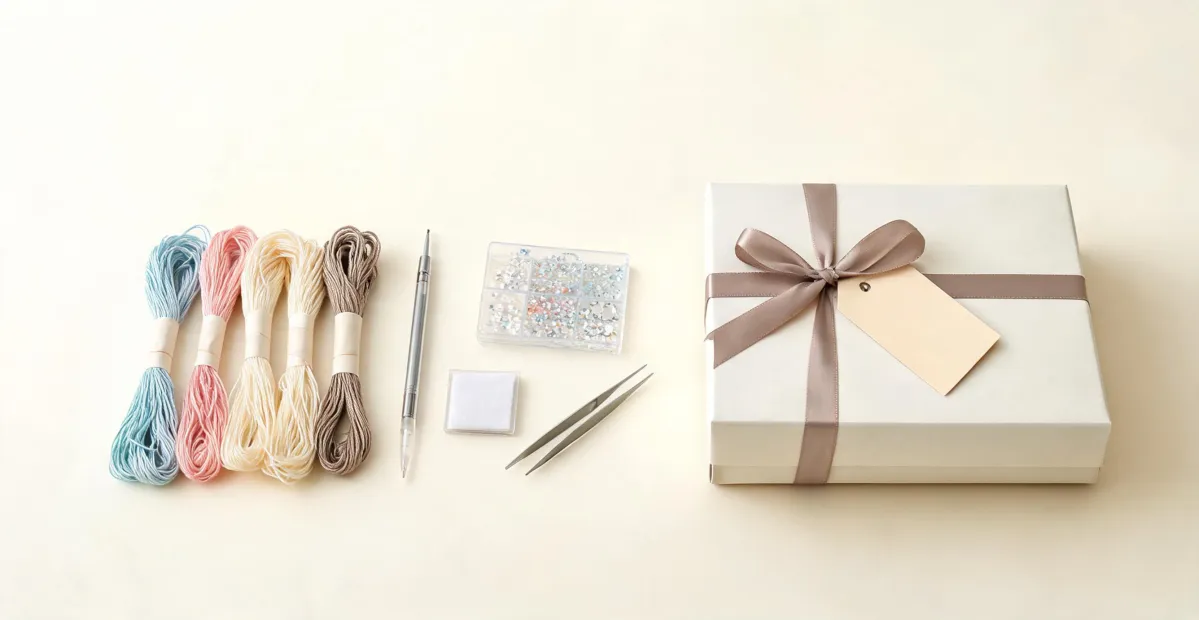
The cheapest quote is rarely the cheapest order. The real cost of a corporate gift run is the total cost after setup, proofing, shipping, mistakes, and make-goods—not the unit price that gets the spreadsheet approved. I manage B2B orders for DMC's craft and gift products, and before that I spent years on the promotional buying side. I have personally made and documented 13 avoidable mistakes, totaling roughly $19,400 in wasted budget. Every one of those mistakes came from comparing prices before I had confirmed what I was actually buying.
The same pattern shows up whether the item is a personalized Christmas ornament, a name badge, a set of DMC embroidery kits, or a decorated bone china mug. The questions that feel too basic to ask—like what does DMC mean in cross stitch, or is there bone in bone china—are the ones that prevent the invoice from doubling.
Christmas ornaments taught me what a quote really means
In September 2022, I ordered 500 personalized Christmas ornaments. The per-piece quote was the lowest of three, so I felt good about the unit price. What I did not ask was whether the price included variable-data proofing for every unique name. It did not. Then 32 names in my spreadsheet were formatted wrong, and I had to reprint. The order that started around $1,340 ended around $2,580. The reprint alone was $780.
I still kick myself for not asking one sentence: does the quoted price cover proofing for each personalized line? If I had asked, I either would have budgeted for it or chosen the supplier who included it. Instead, I paid the difference.
The custom name badge version of this happened earlier that year. I skipped the final review because the badges were “basically the same as last time.” They were not. A job title had changed, and 200 custom name badges went out wrong. That meant a $600 reprint plus a rushed shipping fee. That is the overconfidence tax, and it never shows up in a line-item comparison.
What does DMC mean in cross stitch? A product identity question
Let's answer the search query that sounds like a trick: what does DMC mean in cross stitch? DMC is not a stitch technique or a thread count. It is the brand mark from the French company Dollfus-Mieg & Cie, whose color numbers became a common reference in embroidery patterns. When a pattern says DMC 310, it is telling you the color code it expects you to use.
This matters for B2B buyers because a standardized color system lowers confusion. If you are sourcing DMC embroidery kits for a corporate event, the kit's chart, labels, and floss can all point to the same code. A recipient might not know what DMC means, but a missing color is easier to solve when the code is printed on the label.
The bigger point: trying to save on the kit components often ignores total cost of ownership. Removing a printed color key saves pennies per kit. It also creates a pile of support emails from people who can't tell similar reds apart. I know because I have had to push back on that exact cost-saving idea.
Is there bone in bone china? Yes, and the answer changes your quote
Here is another basic material question that belongs in a corporate gift buying checklist: is there bone in bone china? There is. The word is not a decoration. Bone china contains bone ash in the ceramic body—usually from calcined animal bone—and traditional formulas rely on that ash for the warm, translucent look. The percentage varies by manufacturer, so the more useful question is not just “is there bone?” but “what percentage of bone ash is in the body you are quoting?”
Why does this belong in a total-cost conversation? Because bone china is not a color or a style. If one supplier quotes bone china mugs and another quotes a ceramic mug with a bone-white glaze, those are different products with different firing requirements. Comparing their unit prices directly is comparing apples to oranges. You may choose the cheaper option, but you should choose it knowing what it is.
The TCO list I use before comparing any vendor quote
Now I start with the cost drivers, not the per-unit price. If the purchase is a personalized ornament, a name badge, a decorated mug, or a bulk craft kit, I want answers to these four questions:
- What exactly is the product? Brand, material, body composition, and decoration method need to be defined. This is where searches like what does DMC mean in cross stitch and is there bone in bone china actually belong.
- What is included in the price? Does the quote cover setup, artwork, proofing, variable data, packaging, and delivery? For a Christmas ornament with individual names, proofing is rarely a one-time event. For a name badge, ask whether the price includes the badge, the printing, and the attachment.
- What happens if something goes wrong? Are reprints charged per piece? Is there a replacement allowance for breakage? What is the lead time for corrections?
- What will the final invoice contain? If a quote seems dramatically lower, list the fees it does not include. The gap between quote and invoice is usually not a surprise to the supplier—it is a surprise to the buyer.
The shorthand I use is still total cost of ownership. It does not have to be a formal spreadsheet. It just means taking the lowest quote and adding, at minimum, setup costs, shipping costs, time costs, and the realistic cost of redoing something. I have had the $500 quote become an $800 order after add-ons, and the $650 all-in quote win because it actually included what I needed.
When to ignore the TCO list
There is one important boundary: this advice is for customized or branded work. If you are buying stock items with no logo, no personalization, no deadline risk, and no brand exposure, compare unit prices freely. A plain blank ornament is a commodity; a custom name badge is not.
And no cost model tells you which gift people will genuinely like. TCO is about avoiding waste, not about creativity. It will not make a boring gift idea better. What it can do is keep a good idea from turning into a bad invoice.
Start with the questions that make you feel like the least experienced person in the room. They have saved me far more than my spreadsheets ever did.

Elise Laurent
Elise Laurent is a crystal and decorative glass quality analyst covering crystal figurines, vases, ornaments, suncatchers, and gift glassware. She examines ISO 6486-1 where food-contact glass dinnerware applies, then uses polarized strain inspection, dimensional checks, surface-defect grading, and refractive clarity to compare decorative pieces outside that scope. Her work helps sourcing teams choose materials, finishing routes, and protective packaging without confusing visual brilliance with verified durability.