The Cheapest Craft Kit Quote Is Usually the Most Expensive Order: A Quality Inspector's Take on DMC and TCO
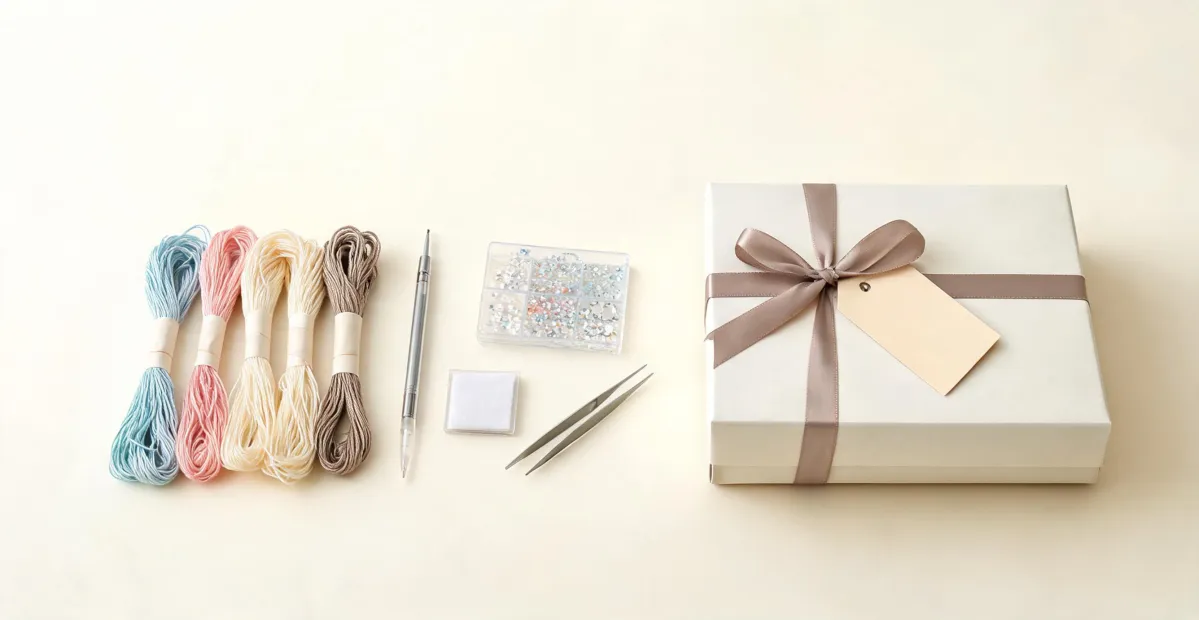
Here's an opinion that has cost me some arguments: The cheapest quote for a craft kit is usually the most expensive order in your profit and loss statement. It doesn't look that way when you're comparing vendor spreadsheets on a Thursday afternoon. It looks that way after the first batch is rejected, the customer issues a debit note, and the replacement order costs more in freight than the original quote saved.
I'm the quality/compliance manager for DMC's B2B and promotional-goods lines. I review every product before it reaches customers—roughly 200 unique SKUs a year—across embroidery kits, cross stitch supplies, DMC diamond painting kits, paint by number sets, home fragrance, and custom promotional gifts. I've approved thousands of deliveries and rejected more first articles than I like to remember. That experience is why I keep saying the same thing: use total-cost thinking, not unit-price thinking.
Unit price hides the cost of consistency
Take an embroidery kit. On paper, a few cents per kit might be enough reason to switch suppliers. But a kit is not only a design and some floss. It is a promise that the colors will match the chart, the fabric will hold the intended stitch count, and the finished piece will look like the image on the package.
The thing most buyers don't see is what quality checkers see. In my audits, I pull six to ten kits from a production carton and compare the floss to the DMC color number printed on the label. I do the same with a DMC diamond painting canvas: the printed symbols on the canvas need to line up with the drill color chart. If a factory uses off-brand materials to save money, the mismatch often isn't visible in the first 20 kits. It becomes visible in batch 500, when a new dye lot is introduced to a different production line.
What most people don't realize is that black is not one color in embroidery. DMC 310 is a different black from a generic thread black. A pattern from the DMC free cross stitch patterns library assumes the stitcher will use the same DMC code. If you substitute, your low-cost kit is no longer following the pattern. Every substitute floss creates a small deviation. Twenty substitutes create a finished project that looks faded, muddy, or just wrong.
That inconsistency has a cost. It may not appear in the unit price, but it appears in returns, negative reviews, and rework. In Q1 2024, I rejected a delivery of embroidery kits because the red thread shifted two shades between production runs. The supplier called it acceptable. I called it a brand risk. They redid it at their cost, but the damage to our schedule was real.
The real cost is in the line items no one talks about
I don't have hard data on industry-wide defect rates, and I won't pretend I do. What I can say anecdotally, from reviewing 200+ unique products a year, is that the line items under the unit price are where orders go wrong.
When I calculate total cost of ownership, I include more than the quoted piece price:
- Setup and prep charges: artwork, digitizing, screens, molds, or first-article approvals.
- Sample and pre-production costs, including the cost of waiting for a second sample when the first one misses the spec.
- Shipping, customs, storage, and repacking costs that are often added after the purchase order is signed.
- Quality risk: sorting, rejection, rework, replacement product, and expedited freight.
- Packaging and documentation costs, because instructions and inserts are part of the product experience.
- Support and return costs after the product reaches the end customer.
The lowest unit price can still win if all those line items are included and compared. But they rarely are. A quote that leaves out approval samples and color matching is not a quote. It's an opening bid.
Custom items make this worse. Earlier in 2024, I watched two quotes for a simple embroidered name badge order. The lower unit price came with a separate setup charge for artwork approval and a color-matching surcharge. The higher unit price included both. On paper, the first quote looked cheaper. On a 3,000-piece order, the second quote was actually lower once the extras were added.
For a product as small as a name badge, quality is easy to overlook. The visible criteria are lettering and border color. The hidden criteria are backing density, edge finishing, and colorfastness. A name badge can look fine in a sample of 20 pieces and then start to fray at the edges by piece 500. That's why I now ask suppliers to define the failure point before they define the price.
Three checks that turn unit price into total cost
If you want to reduce your real cost per order, start looking at these three areas before you sign the next contract.
1. Require a written color standard
For any product connected to embroidery, cross stitch, or diamond painting, color is a specification, not a suggestion. I ask for the DMC number, the acceptable shade tolerance, and the dye lot plan. If a supplier cannot write that down, they are asking you to accept whatever they produce.
2. Test the actual failure mode of the product
An embroidery kit fails when colors don't match or the fabric count is wrong. A suncatcher paint kit fails when the paint won't flow, the outline smears, or the instructions are confusing. A custom promotional item fails when it doesn't survive normal use. Define the failure mode before you compare price per unit.
3. Make instructions part of the product
One of the most underrated specifications in craft B2B is the instruction insert. Every time a customer searches for how to use suncatcher paint, they aren't looking for a chemistry lesson. They're already holding a kit, and they need a simple answer. If that answer isn't in the package, they call support, return the product, or leave a negative review.
During a review last year, one supplier's suncatcher paint kit had beautiful glass and good paint colors. But the instructions were three paragraphs of legal-size fine print. We added a two-page visual guide before approval, and the client's support tickets dropped noticeably. That guide cost pennies per unit. It was worth more than any discount the supplier could have offered.
But my budget only allows the lower quote
I hear that a lot, and I don't dismiss it. Budgets are real. If the lower quote fits the fiscal year and the higher quote doesn't, the decision is made before I see it. My argument is not that you should always pick the premium supplier. My argument is that you should compare the same scope on every quote.
If the lower quote includes no approval sample, no setup fee, no documented color standard, and no plan for defective units, it doesn't cover the full scope. You're not comparing apples to apples. You're comparing a finished product to an unfinished promise.
The unit price is data. It is not the whole decision. I've watched a $0.15 difference per unit nearly kill an $18,000 project margin once the hidden costs were added. I've also watched a slightly higher unit price deliver a smoother launch, fewer returns, and a customer who came back for the next season.
So here's my closing opinion: if you are buying DMC-related craft products, DMC diamond painting kits, name badge customizations, or any custom gift line, the lowest quote is not the lowest cost. The lowest total cost wins. The vendor who can prove they will deliver the right color, the right instruction, and the right packaging is the one who will save you the most money in the end.

Elise Laurent
Elise Laurent is a crystal and decorative glass quality analyst covering crystal figurines, vases, ornaments, suncatchers, and gift glassware. She examines ISO 6486-1 where food-contact glass dinnerware applies, then uses polarized strain inspection, dimensional checks, surface-defect grading, and refractive clarity to compare decorative pieces outside that scope. Her work helps sourcing teams choose materials, finishing routes, and protective packaging without confusing visual brilliance with verified durability.