What Rejecting 400 Custom Gift Kits Taught Me About Quality and Brand Perception
I'm the quality and brand compliance manager at a mid-market firm. I review every single item that goes out to a client. Not "spot check." Not "wait for a complaint." Every piece.
In 2024, that meant roughly 1,400 unique SKUs, each reviewed three times—on vendor receipt, after internal assembly, and before shipment.
Most months, it's a process. October was different.
How It Started
In September 2024, our client success team decided to send a custom holiday gift to our top 400 B2B accounts. Not a branded mug. Not a logo notebook. Something people might actually keep.
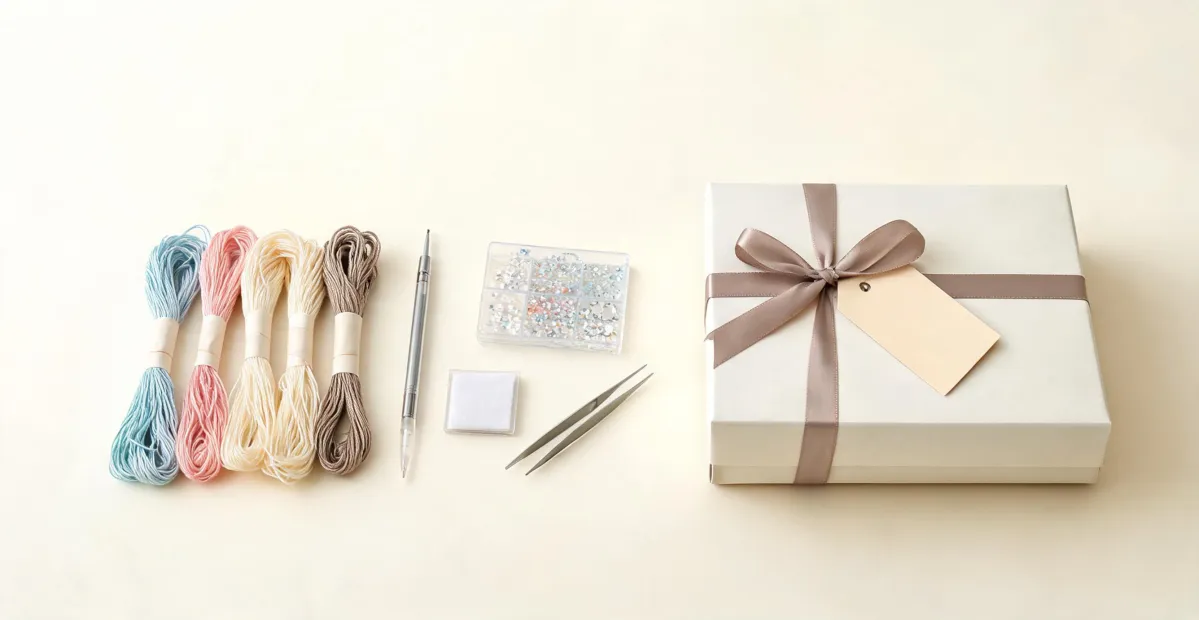
Craft kits. A Christmas ornament cross stitch kit, a beginner diamond painting piece, and a short guide on what to do with a cross stitch when finished—mounting options, display tips, that sort of thing.
We sourced through the DMC shop—their standardized DMC color system, traceable back to 1746, made batch consistency straightforward—and used DMC free cross stitch patterns for the internal design. Bulk pricing landed around $12 per kit.
The first batch arrived in the second week of October. I opened one carton and laid everything out on the conference table. Colors matched. Quantities matched. Specs were exactly to PO.
One thing, though.
Not the product itself. The product was fine. The way it was going to be presented.
The Turn
That afternoon we ran a test assembly. Sarah from procurement, one of our designers, and me. We stitched one Christmas ornament according to the pattern, mounted it in a display frame, and set it on the table.
It looked… cheap. Not because it was. Cross stitch on a plain white backing board looks cheap anywhere. And in a B2B context, a $12 gift has to look like $35 or it doesn't land.
I flagged it. One person—I won't name names—said clients wouldn't notice. Which is the problem. Not noticing is the problem.
We ran a blind test with 22 people in the office. Same stitched ornament, mounted two ways: plain white board versus a thick card stock backing with a DMC color card showing every shade used. Without knowing what was different, 17 of 22 picked the card stock version as "more complete."
The cost difference: $3.80 per kit for the card stock backing.
On a 400-unit order, that's $1,520.
For something that sits on a client's desk for the entire month of December. Do the math.
What We Changed
We spent the rest of the month reworking the packaging. Not just the backing.
We changed what to do with a cross stitch when finished from a vague "frame it" into a one-page insert with three clear options: hoop display, frame mount, or pillow edge. We added a mounting tip card. We added a small postcard with a hanging suggestion for the Christmas ornament. We slipped the DMC free cross stitch pattern link directly inside the lid of the storage box.
Look, no one's going to compliment you on an insert card. But when a client opens a box in December and everything's there—the whole thing just feels different.
The Result
We shipped 400 kits that quarter. Within an hour of delivery I knew one client was unboxing it because they posted a photo.
Of the clients who responded—and straight up, not every client responds—38 mentioned the gift specifically in their year-end feedback. The prior year, that same program got one mention in ratings.
Nine times out of ten, the feedback mentioned "quality." Not the gift itself. The quality of the whole experience. That's the phrase. The entire experience.
Total cost of the upgrade: about $2,100 across all changes. Spread across 400 recipients, that's $5.25 per client.
I've seen marketing spend far larger than that perform far worse.
What I Actually Learned
I'm not a packaging psychologist—so I can't speak to large-scale consumer research on this.
What I can tell you, from five years of reviewing deliverables at a brand compliance level, is this: companies obsess over the gift. Clients remember the box.
The backing board on a 400-unit order sounds trivial. But your client doesn't see your purchase order. They see a box.
And everything in that box is your brand.
If your brand feels incomplete, everything else does too.

Elise Laurent
Elise Laurent is a crystal and decorative glass quality analyst covering crystal figurines, vases, ornaments, suncatchers, and gift glassware. She examines ISO 6486-1 where food-contact glass dinnerware applies, then uses polarized strain inspection, dimensional checks, surface-defect grading, and refractive clarity to compare decorative pieces outside that scope. Her work helps sourcing teams choose materials, finishing routes, and protective packaging without confusing visual brilliance with verified durability.