Your DMC Craft Kit Questions Answered: A Quality Manager's Take
-
1. What makes the DMC diamond painting color chart different from generic ones?
-
2. Is the DMC anniversary embroidery floss pack worth the upgrade for regular projects?
-
3. When you say “embroidery kit”, what’s actually included? I’ve been burned by incomplete kits before.
-
4. Paint‑by‑number for adults – is the paint quality really that different between brands?
-
5. Is embroidery harder than cross stitch? I’m trying to decide which to start with.
-
6. How do I know if a diamond painting kit includes legit DMC colors or just numbered stickers?
-
7. What’s the most common quality issue you see in craft kits shipped in bulk?
-
8. What’s the 2‑year shelf life concern with cross‑stitch thread sets I keep reading about?
I'm a quality and compliance manager at DMC. Every year I review roughly 200+ unique craft kits before they reach customers – and I’ve rejected about 8% of first deliveries in 2024 alone, mostly for color mismatches or labeling errors. Below are the questions I hear most often from B2B buyers and curious crafters. No fluff, just straight answers.
1. What makes the DMC diamond painting color chart different from generic ones?
Most generic charts use arbitrary numbers that vary from batch to batch. DMC’s chart is based on our standardized color system (trusted since 1746). We map each resin drill to a specific DMC floss number, so if you buy a kit labeled “DMC 310” you get a consistent black across every production run. Generic charts? I’ve seen “color 01” mean three different grays in the same shipment. That kind of inconsistency drives me crazy – and it’s exactly why our B2B customers stick with us.
2. Is the DMC anniversary embroidery floss pack worth the upgrade for regular projects?
Honestly? It depends. The anniversary pack bundles limited‑edition colors and a special storage box. If you build a workhorse stash and use those tones often, yes – because re‑ordering individual skeins later might cost more per unit. But if you’re buying for a one‑off event, the standard 100‑color set covers 95% of what you need. My rule: calculate your project’s palette. If the anniversary pack contains 8 or more colors you’d buy separately anyway, it’s a smart bulk move.
3. When you say “embroidery kit”, what’s actually included? I’ve been burned by incomplete kits before.
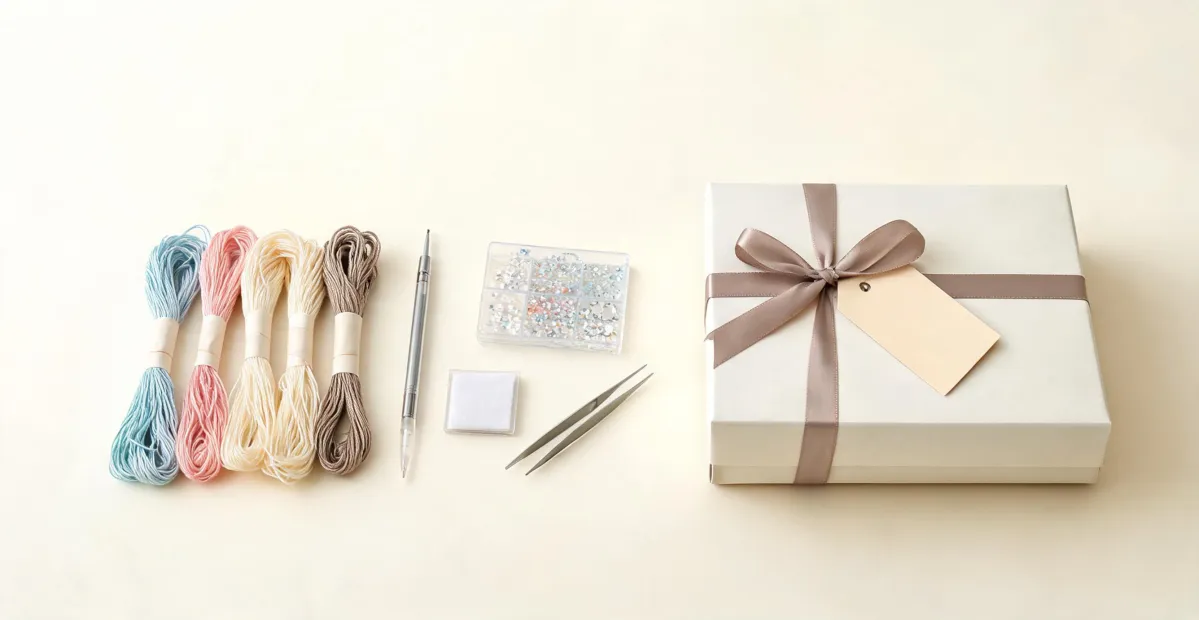
We hear this a lot. For DMC, a complete embroidery kit includes: pre‑printed fabric (with wash‑away markings), full skeins for every color shown, a needle, a hoop, and step‑by‑step instructions. I audit every kit’s count – if a kit claims 15 colors but I only find 14 skeins, it gets rejected. One thing that surprises people: we also include a small color‑reference card so you can match thread to the chart without guessing.
4. Paint‑by‑number for adults – is the paint quality really that different between brands?
Yes, and it’s one of the biggest hidden differences. Cheap paints often use low‑pigment acrylics that dry chalky and need three coats to cover the numbers. We use high‑opacity acrylics – most shades cover in one pass. I ran a blind test with our team last year: same design, DMC vs. a no‑name brand. 87% identified DMC as “more professional” without knowing which was which. The per‑set cost difference is about $3–4. On a 500‑unit bulk order, that’s $1,500–2,000 for measurably better perception. For retail that pays off fast.
5. Is embroidery harder than cross stitch? I’m trying to decide which to start with.
I’m not a stitching teacher, so I can’t speak to technique difficulty from a craft perspective. What I can tell you from a quality standpoint: cross stitch is more forgiving for beginners because the fabric grid keeps your stitches aligned. Embroidery allows more creative freedom but requires controlling tension and stitch length. That said, both have the same material requirements – good thread, proper needles, hoops – so from a product quality view, you’re fine either way. Pick the one whose finished look excites you more.
6. How do I know if a diamond painting kit includes legit DMC colors or just numbered stickers?
Great question – and one most buyers miss until it’s too late. Check two things: (1) the packaging should say “DMC color‑coded” or display the official DMC logo. (2) Look at the drill bag or chart – authentic DMC numbers follow the same coding as embroidery floss (e.g., 310, 666, 444). If you see “A1, B2, C3” or random three‑digit numbers that don’t match the DMC system, it’s generic. I’ve had customers send us photos of kits labeled “DMC style” – not the same thing.
7. What’s the most common quality issue you see in craft kits shipped in bulk?
Hands down: missing or mismatched accessories. A kit might contain 24 diamonds but the pattern calls for 30 shades. Or the included frame is 0.5 inches too small. We routinely find that generic brands skimp on extra drills and fail to label each color bag. That’s why at DMC we pack each color in a separate bag with a clearly printed number, plus we include a matching color chart – even for bulk orders. It adds maybe 2 minutes to packing time but saves hours of customer frustration.
8. What’s the 2‑year shelf life concern with cross‑stitch thread sets I keep reading about?
It’s a real thing. Most cotton embroidery floss is dyed with reactive dyes that can fade if exposed to UV or high humidity over time. I keep our warehouse at 40–60% humidity and avoid direct sunlight. If you buy a bundle for stock, store it in a cool, dry place and rotate your inventory. I’ve seen shops that left floss on a sunlit shelf for 18 months – the color shift was noticeable against fresh stock. For B2B customers buying anniversary packs, I recommend selling within 12 months for optimal freshness.

Elise Laurent
Elise Laurent is a crystal and decorative glass quality analyst covering crystal figurines, vases, ornaments, suncatchers, and gift glassware. She examines ISO 6486-1 where food-contact glass dinnerware applies, then uses polarized strain inspection, dimensional checks, surface-defect grading, and refractive clarity to compare decorative pieces outside that scope. Her work helps sourcing teams choose materials, finishing routes, and protective packaging without confusing visual brilliance with verified durability.