Forget the Unit Price: How We Cut $2,800 From Holiday Gift Orders (and the $1,200 Mistake That Taught Us)
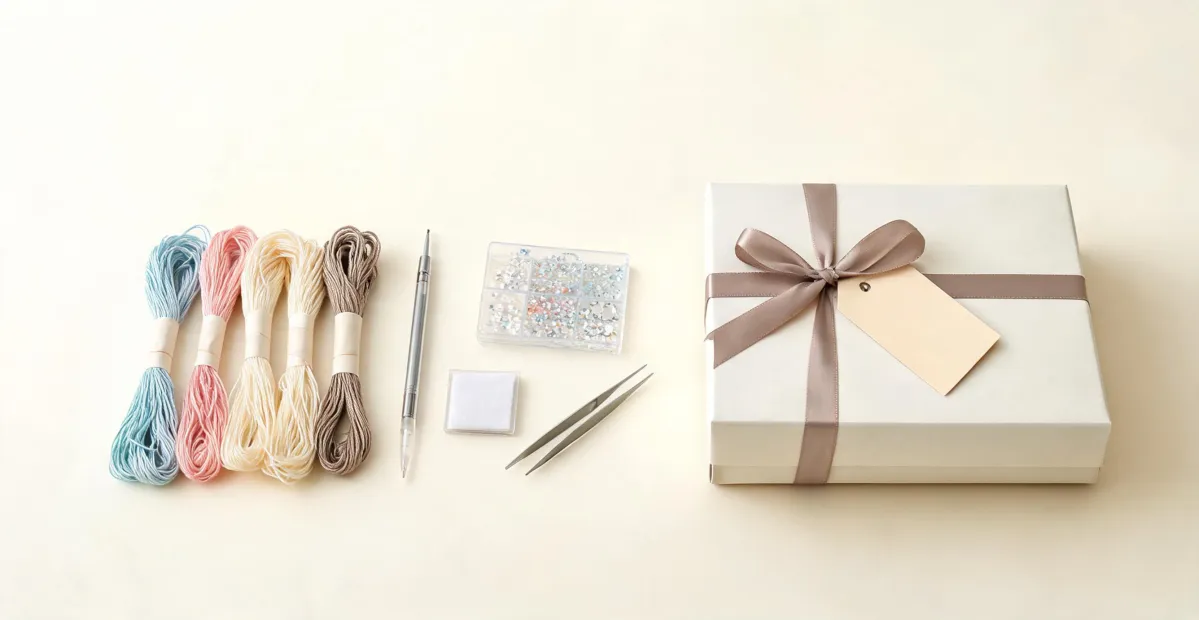
If you're sourcing embroidered ornaments, diamond painting kits, or festive home fragrance packs for your corporate Christmas gifting, stop comparing unit prices first. Start with total cost of ownership (TCO). I learned this the hard way in September 2022, when I approved a $3.50 cross-stitch kit that ended up costing us $6.20 each after color mismatches, rushed shipping, and a 1-week delay that made our client miss their employee party. That single mistake burned $1,200 of budget and a good relationship.
Now, as the person handling gift orders for 4+ years at a mid-size wholesale buyer, I've documented 37 cost traps in our team's checklist. The worst ones always involve holidays – when speed and emotion override logic. Here's what actually matters when buying dmc diamond painting kits, christmas ornament blanks, or any custom craft item in bulk.
Two Truths About Holiday Gift Sourcing That Most Buyers Ignore
1. The lowest quote is usually the most expensive.
From the outside, it looks like you just compare per-unit prices and pick the cheapest. The reality is that cheap vendors hide costs in setup fees, color matching, sample revisions, and minimum-order fine print. A quoted $4.50 per dmc cross stitch kit might balloon to $6.80 after you add a custom logo (which requires a separate digitization fee) and rush shipping because the standard 4-week lead time missed your deadline.
People assume vendors with low unit prices are just more efficient. What they don't see is which corners are being cut – like using generic floss instead of DMC's standardized color system (trusted since 1746). If your client ordered "dmc christmas red" and gets a shade that's off, you're paying for returns and re-dos.
2. Holiday orders are a different beast – plan for 20-30% buffer.
The numbers said ordering in mid-October with standard shipping would arrive by December 1st. My gut said we needed a rush fee guarantee. I went with my gut. Later I learned the cheap vendor's "standard shipping" relied on a freight partner that had a 3-day backlog during peak season. We paid $400 extra for expediting anyway.
Bottom line: Always calculate TCO before comparing vendor quotes. Include unit price, setup fees, shipping (peak season premiums), sample approval costs, potential redo losses, and the time value of a missed deadline.
The Hidden Costs I Track Now (a Checklist)
Here's what I add up for every holiday gift project, based on 47 errors we caught in the past 18 months:
- Setup & tooling fees – embroidery digitization (often $50-150 per design), screen charges for paint-by-number kits
- Color matching rounds – especially critical for dmc diamond painting with 500+ color codes; a mismatch costs $200+ in rework
- Sample approval time – average 3-5 business days per round; if you need 2 rounds, that's 10 days you don't have
- Shipping peak surcharges (like the USPS holiday surcharge that started October 2024) – easily 15-25% more than ground rates
- Redo/replacement costs – when a batch of 500 christmas ornament kits arrives with wrong floss colors
- Opportunity cost of late delivery – we estimate $500/day credibility damage for a corporate client
One example that hurt: In Q3 2024, we compared three vendors for a 1,000-piece order of DMC diamond painting kits. Vendor A quoted $5.90/kit (all-in, with custom design). Vendor B quoted $4.75 but added $650 in separate fees. Total TCO: Vendor A $5,900, Vendor B $5,400 – only 8% less. But Vendor B had a 2-week longer lead time, which would have cost us a contract worth $3,000. The "cheaper" option was actually a loss.
Why DMC's Color Standard Is Worth Paying For (Honestly)
I have mixed feelings about brand premiums. On one hand, generic floss costs 60% less. On the other, when a client requests "dmc christmas red" (that specific shade of deep crimson from the DMC 1746 color chart), the generic supplier can't guarantee it. For B2B orders where color consistency matters across multiple products (cross stitch + diamond painting + home fragrance wrapping), using DMC's system eliminates a huge risk variable. It's basically insurance against returns.
Take this with a grain of salt: If you're ordering plain white dishcloths with no custom color, generic might be fine. But for anything with branded packaging or specific shade mentions, stick with verified DMC supplies.
When Unit Price Still Matters (the Exception)
I'm not always a TCO evangelist. In two scenarios, the lowest unit price is probably the right move:
- One-off test orders – buying 50 pieces for a pilot program where color precision isn't critical
- Commodity items – like plain wooden ornament blanks where the only variable is wood quality (which you can verify with a sample)
But for any holiday gift order where your client's brand is on the line? Always calculate TCO first. I've saved roughly $2,800 annually since adopting this approach, and more importantly, zero missed deadlines.
Pricing as of January 2025. Verify current rates with your supplier; holiday surcharges change annually.

Elise Laurent
Elise Laurent is a crystal and decorative glass quality analyst covering crystal figurines, vases, ornaments, suncatchers, and gift glassware. She examines ISO 6486-1 where food-contact glass dinnerware applies, then uses polarized strain inspection, dimensional checks, surface-defect grading, and refractive clarity to compare decorative pieces outside that scope. Her work helps sourcing teams choose materials, finishing routes, and protective packaging without confusing visual brilliance with verified durability.