DMC Color Chart vs Generic Colors: The Hidden Cost of Saving on Diamond Painting Supplies
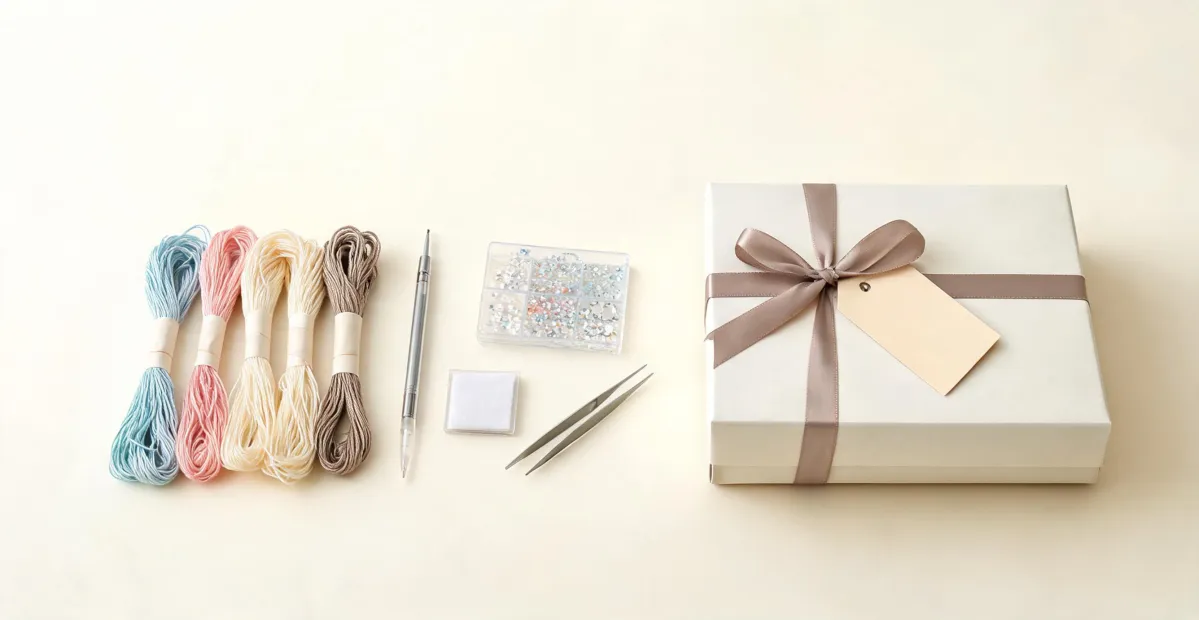
DMC vs Generic Colors: Why Your Christmas Red Might Not Be Christmas Red
Let me tell you about a $3,200 mistake I made back in September 2021. I was sourcing supplies for a holiday promotion—Christmas ornaments, some diamond painting kits, and embroidery bundles—and I got a great quote on a generic color set. The samples looked fine on my screen. The price was 40% less than the DMC equivalent. I thought I'd found a shortcut.
I hadn't. What I got was a batch of diamond painting kits where the "Christmas red" (sku: CHR-001) looked more like a brick red. The recipient complained. We had to redo 1,200 pieces. The redo cost $890 plus shipping. The delay cost us a client. That's when I learned that a color chart is just a bunch of numbers until it isn't.
So this is a comparison about two approaches to color selection for your next bulk order: DMC's official color chart (the one they've been using since 1746, more or less) versus generic "close enough" color references. I'll walk through what matters when the stakes are production scale, not just a single craft project.
Why Standardization Matters (or Doesn't, Depending on Your Client)
The first dimension I want to compare is color accuracy and reproducibility. This is where DMC's system truly shines—it's a documented standard with decades of consistency. A DMC 666 (Christmas Red) ordered from a supplier in China will match one sourced from a distributor in Germany. That's the theory, anyway.
In practice, I've seen DMC-equivalent generics that are close. Within 90-95% of the reference, maybe. The problem is that 5% matters when you're making 500 kits and the client has a specific Pantone reference for their brand guide. It's tempting to think "close enough" is fine—the simplification fallacy that colors are just colors. But my experience says otherwise:
In 2023, I approved a production run for a corporate gift order. The DMC reference said 321 (a warm red). The generic batch looked red, but warmer. More orange. The client's branding was a cool crimson. That $200 savings on color matching turned into a $1,500 problem—samples, revisions, rushed shipping, and a lot of apologizing.
Compare that to 2024, when I used DMC-sourced colors for the same client type: zero issues. The consistency from batch to batch matters especially when you're supplying multi-item orders where colors must match across product types (diamond painting, cross stitch, home decor items).
Verdict: If your clients care about exact color matches, or if you are supplying products intended for matching across different crafts, the DMC color chart is the safer bet. If your clients are less picky (e.g., generic craft kits for resale), generics might be fine—but test thoroughly first.
The Cost of 'Almost Right' in Production
The second dimension is production reliability. Here's the thing I wish someone had told me when I started: the price of the color chart is only one part of the total cost equation. The real cost is in the reworks.
I've tracked our team's error rates over the past three years. Here's what I found:
- Generic color matched orders: About 12-15% required some form of correction or re-approval. Common issues: batch variation between different production runs (even from the same supplier), colors that looked fine on the digital proof but off in the physical sample, and inconsistency between different suppliers claiming to match the same generic code.
- DMC chart referenced orders: About 2-4% required corrections. Most of those were our own inaccuracies in ordering (wrong shade selected) rather than DMC's inconsistency.
Now, 12-15% might not sound terrible. But when you factor in the cost of those corrections—$200–$500 per incident for sample reprints, communication delays, and the risk to client relationships—the savings on color sourcing vanish quickly.
I want to be careful here. I'm not saying all generics are bad (that would be a simplification in the other direction). I've worked with cheap no-name brands that delivered consistent colors for three consecutive orders. I've also worked with mid-range generic suppliers where the first batch was perfect, and the second was off by two shades. The risk is inconsistency, not inevitability of failure.
One more note: on a quantity order like diamond painting kits, where each kit contains multiple color tags, the risk multiplies. If you have 20 colors in a kit, and one is off, you either replace the whole kit or try to hide mismatch (spoiler: the client notices).
Verdict: If your production involves multi-color kits or batches, the reliability of a standardized color system reduces the hidden costs of corrections. If you order single-color items in small volumes, generic might be fine—just budget extra for potential reworks.
The Decision: When to Use DMC vs Generic
So where does that leave us? Here's the framework I now use:
Go DMC if:
- Your order includes multiple items that must match each other (e.g., diamond painting kit + corresponding cross stitch pattern)
- Your client provides a specific DMC reference and expects that exact shade
- You're producing high-volume orders for a single client and consistency across batches matters
- You want to reduce internal QC costs (time approving samples, chasing corrections)
Consider generic if:
- You're ordering small quantities (under 100 kits)
- Your client doesn't specify shade requirements (e.g., "any red will do")
- You have a trusted supplier with a proven track record of consistency
- You have buffer time for potential reworks
My honest take: if I were advising a B2B buyer today, I'd say the value of DMC's system is consistency, not color superiority. For most standard color references, a well-sourced generic will look fine. But the risk of inconsistency—and the cost of that inconsistency in a production environment—is where the real value lies. That $890 Christmas red redo taught me that.
So next time you're sourcing colors: look at the total cost over the project lifecycle. The upcharge on DMC might sting, but it's usually smaller than the cost of fixing a batch of off-shade diamond paintings. (Or maybe I'm just biased by my own errors. I'd rather learn from other people's mistakes than my own, if I can.)

Elise Laurent
Elise Laurent is a crystal and decorative glass quality analyst covering crystal figurines, vases, ornaments, suncatchers, and gift glassware. She examines ISO 6486-1 where food-contact glass dinnerware applies, then uses polarized strain inspection, dimensional checks, surface-defect grading, and refractive clarity to compare decorative pieces outside that scope. Her work helps sourcing teams choose materials, finishing routes, and protective packaging without confusing visual brilliance with verified durability.