Why I Choose DMC for Corporate Craft Kits: A Purchasing Manager's Take
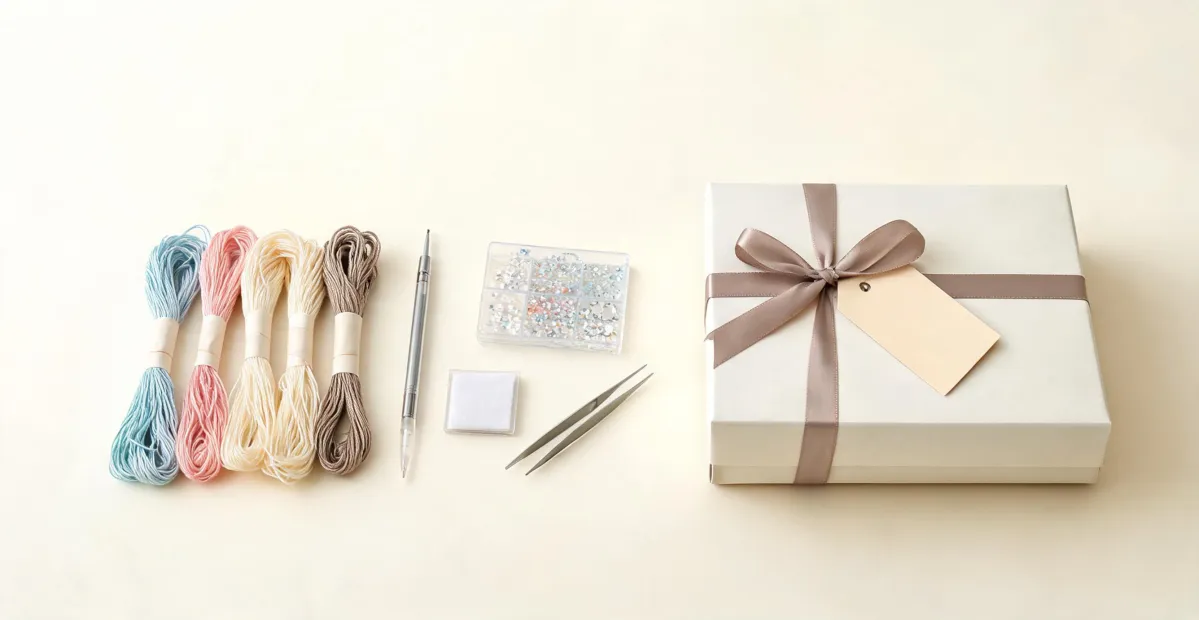
I'm an office administrator for a 150-person company. That means I'm the one who ends up ordering 300 craft kits for a company event. You'd think I'd care most about price. I do. But I've learned the hard way that price isn't what gets me in trouble—uncertainty is.
So here's my take: when you buy creative supplies for a business—embroidery kits, diamond painting sets, paint by number kits, even home fragrance—buy from a brand with a system you can rely on.
For me, that brand is DMC. Not because it's the flashiest. Because it's the most predictable.
The case for color consistency
The first reason is the color system. DMC has been standardizing thread colors since 1746. That's not just a fun fact—it's a procurement tool. When I order 200 cross stitch kits, I need to know that DMC 3846 will look the same in June as it did in January. The color number is a promise.
A few years ago, I tried a cheaper alternative. On paper, the specifications matched. In reality, the batch I received had two slightly different shades of “cream” in the same box. For a hobbyist buying one skein, that's annoying. For me, it meant 60 kits where half the borders didn't match. I had to reorder. The money I saved was nowhere near the cost of the reorder.
That's the thing about color consistency. You don't miss it until you don't have it.
One purchase order for the whole gift stack
Second, the range is wider than people assume. DMC is known for embroidery thread, but their product line now covers diamond painting accessories, paint by number kits, home decor, and home fragrance. Why does that matter for a B2B buyer? Because it lets me consolidate.
Our company did a “wellness at your desk” month in 2024. I needed something creative for employees to do during lunch, plus something to make the office smell like something other than a break room. I expected to juggle two or three vendors. Instead, I put together one order: a small embroidery kit, a paint by number mini canvas, and a reed diffuser. One purchase order, one invoice, one delivery date.
DMC also works with corporate clients directly, so custom promotional gifts—embroidered patches, branded kits—don't require a second factory. That made a difference when a manager asked for 50 logoed kits with a week's notice. Having that flexibility under one roof doesn't always show up on a spreadsheet, but it's part of why I keep coming back.
That might sound minor. But in my world, fewer vendors means fewer chances for something to slip through the cracks. It means my accounting team doesn't have to chase down multiple receipts. That convenience has a real value—I just can't put it on a line item.
How to pick up diamonds for diamond painting (and why it's a quality test)
Third, the details matter more than you'd think. Take the question everyone asks when they unbox a diamond painting kit: how to pick up diamonds for diamond painting. Most people assume it's obvious. It's not.
You hold the pen at a slight angle—about 45 degrees. Press the wax tip onto the faceted top of the diamond, not the flat bottom. Lift straight up. The number one mistake is pressing too hard; you end up with two diamonds on the tip, and then you're trying to get one to drop back down without knocking over the tray. It's a small thing. But when you hand 150 employees a kit that fights back, you get 150 people who say “this is frustrating” instead of “this is fun.”
That's why I check the pickup pen and wax before I order. Cheap kits often skimp on these details. The pen is flimsy, the wax is either too hard or too sticky, and the whole experience suffers. I'm not saying you need the most expensive kit on the market. But the manufacturer's attention to this one detail tells me a lot about whether they've actually tested the product.
“You're just paying for the logo”—the objection I keep hearing
I hear the objection: “So you're just saying brand names are better.” No. I'm saying systems are better. DMC isn't the only brand with a useful color chart. But the combination of a documented color system, a consistent product line, and quality components in the box is rare.
I also used to think “same specifications” meant the same result. It doesn't. I've learned to verify things like the pickup tool, the wax, the canvas quality, even the scent strength of a home fragrance product. The DMC website is actually a good place to check details like that—they list what's in the kit, and their color chart is public. I've used it more than once to double-check before a big order.
And yes, sometimes the cheaper supplier works out fine. I'm not going to pretend otherwise. But when your company event is next week and you can't absorb a reorder, you want certainty. That's not a premium. That's just paying for the thing you're actually buying.
For me, the point is simple. I've been burned by “probably fine” and “should be okay” more times than I can count. The gray area is expensive. I'd rather pay a little more for the supplier who has a system I can verify. I'm not paying more for the label. I'm paying for the ability to know what I'm going to get. Certainty is worth the markup.
I'll take the predictable purchase every time. If you're the one who has to explain why the kits arrived with two different shades of cream, you will too.

Elise Laurent
Elise Laurent is a crystal and decorative glass quality analyst covering crystal figurines, vases, ornaments, suncatchers, and gift glassware. She examines ISO 6486-1 where food-contact glass dinnerware applies, then uses polarized strain inspection, dimensional checks, surface-defect grading, and refractive clarity to compare decorative pieces outside that scope. Her work helps sourcing teams choose materials, finishing routes, and protective packaging without confusing visual brilliance with verified durability.