How to Buy DMC Products in Bulk: A Cost Controller's 5-Step Checklist
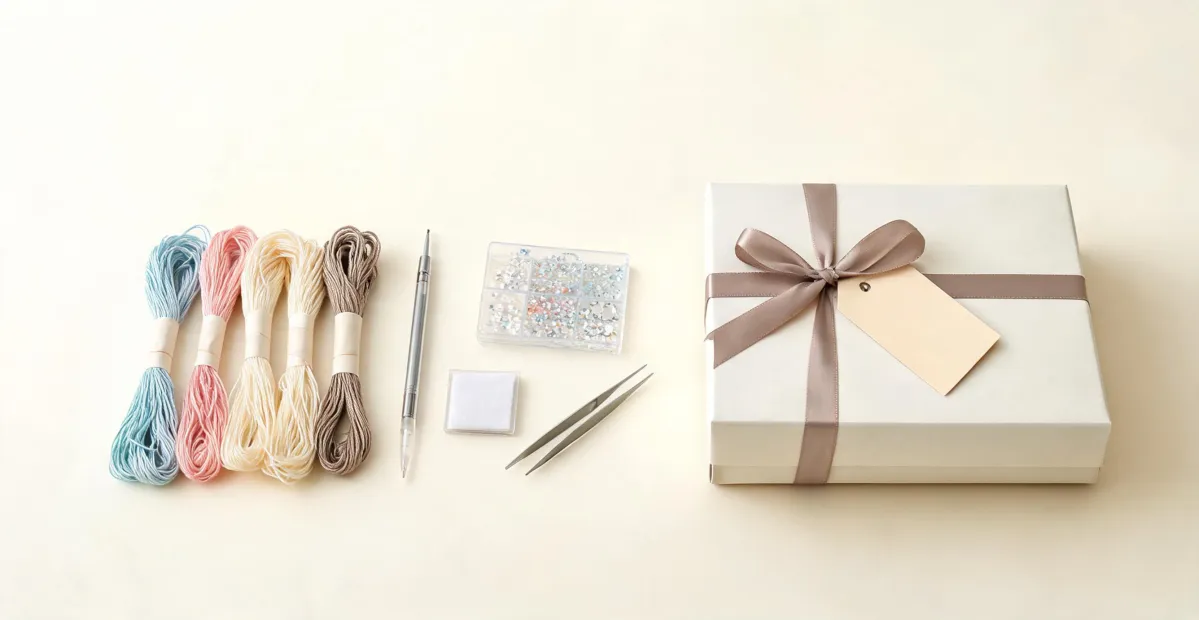
If you're in charge of sourcing DMC products for a gift company, a craft store, or even a corporate client, you've probably landed on dmc.com, looked at the login button, and asked yourself: "Am I even looking at the right page?"
I've been a procurement manager at a 35-person gifts and DIY distribution company for six years. I manage an annual budget of about $280,000 across crafts, textiles, and home fragrance. Over that time, I've placed dozens of DMC orders, compared quotes from 40+ vendors, and made some expensive mistakes.
This is the exact checklist I use when buying DMC in bulk. It's not about getting the lowest unit price—it's about avoiding surprises. There are five steps, and the last one is the one most people skip.
1. Know what "DMC" actually means in cross stitch
Here's the thing: a lot of buyers think DMC is just a brand name. But in cross stitch, DMC means something very specific—it's a standardized color coding system used in almost every pattern. When a pattern says "DMC 310", it's referring to a specific shade of black. DMC 666 is a bright red. That system is essentially the industry default.
Why does this matter for your budget? Because standardization cuts down on errors. In 2023, we ordered 1,500 cross stitch kits from a cheaper supplier who claimed their colors were "DMC equivalent". We didn't check the samples carefully. When the kits arrived, the red DMC 666 was actually orange-red. We had to reprint 400 instruction cards and swap threads. The "savings" from that cheaper supplier vanished.
The conventional wisdom is that premium brands are always overpriced. For DMC specifically, my experience says otherwise. The color consistency alone has saved us hours of rework and eliminated customer complaints.
If you're comparing color accuracy with another supplier, ask for their tolerance. In color management, the industry standard is Delta E < 2 for brand-critical colors—that's from Pantone's guidelines. If a supplier can't tell you the tolerance in writing, beware.
2. Use the right DMC login for wholesale
You might have tried to log into dmc.com and found that the normal consumer login doesn't show wholesale prices. That's because DMC separates consumer and trade accounts.
Here's what I learned the hard way: In my first year, I registered as a regular user (rookie move), got a login, and then couldn't see the B2B catalog. It took two emails and a phone call to the support team to get a trade account set up. That cost me a week of delays.
So when you hit the DMC login page, look for "Professional" or "Trade" access. Usually you need to upload a business license or tax ID. Once that's approved, your login gives you access to bulk pricing, downloadable product sheets, and sometimes even a dedicated account manager.
Set up two-factor authentication if they offer it. It's a tiny step that prevents a mess later.
3. Build a product mix that actually sells
DMC's range isn't just cross stitch floss. You can order:
- Embroidery kits and cross stitch supplies
- Diamond painting accessories – canvases, drills, pens, and trays
- Paint by number kits
- Home decor items like cushions, wall art, and tableware
- Home fragrance products, including wax beads, candles, and diffusers
From a cost perspective, you want to choose items with stable demand and high turnover. For my company, diamond painting is a seasonal bestseller, but the accessories have a short shelf life due to packaging. Wax beads, on the other hand, are year-round and have a much longer shelf life. So I keep wax beads on auto-replenishment and order diamond painting kits only in pre-sold quantities.
When you're on the DMC wholesale site, download the product data feed if they have one. That way you can compare item weights, sizes, and case packs—critical for freight calculation.
4. Calculate total cost, not unit price
Here's where most procurement people trip up. You get two quotes:
- Vendor A: $3.20 per embroidery kit, but shipping is $300 flat for a 500-piece order and there's a $50 handling fee.
- DMC: $3.85 per kit, free shipping over $1,500, no handling fee.
Vendor A's total for 500 kits: $1,600 + $300 + $50 = $1,950. Per unit: $3.90.
DMC's total: $3.85 × 500 = $1,925. Per unit: $3.85.
Wait, it's a $25 difference—basically nothing. But what about quality risks? With the cheaper vendor, we experienced a 4% defect rate: loose canvases, missing beads, off-color floss. That's 20 defective kits, each requiring a replacement or refund. At a $15 replacement cost (shipping + handling), you just added $300 to Vendor A. Now the real TCO is $2,250, a 16% jump.
So when you compare DMC login quotes, don't just stare at the unit price. Add freight, customs (if importing), currency conversion, and the cost of potential rework. Build a simple spreadsheet if you don't have one. I did that after getting burned on hidden fees once, and it's been worth every minute.
5. Test samples before you commit – including melting wax beads
I can't stress this step enough. Before a bulk order, request samples for each product category. But the one that most people forget is home fragrance. If you're ordering wax beads, you need to test how they melt, because that's exactly what your customers will do.
Here's a quick guide to melting wax beads at home (or in your office) to check quality:
- Put a small amount of beads in a microwave-safe bowl. Start with 30 seconds on low.
- Stir carefully, then heat in 15-second intervals until melted.
- The ideal melting point is between 70°C and 80°C (158°F–176°F). If it smokes, the beads are too hot or low-quality.
- Let it cool and check the surface. It should be smooth, not gritty or oily.
- Smell the scent throw. Strong fragrance right after melting isn't enough—it should still have a subtle scent once hardened.
This test takes five minutes and can save you from ordering 2,000 bags of wax beads that clump or have an unpleasant chemical smell.
Also, test diamond painting drills and canvas. Use a magnifier and check if the grid lines are straight. Check if the drill colors match the printed DMC numbers. We once received drills where the "DMC 820" was noticeably darker than the canvas legend. We didn't catch it because we only tested the floss. Don't be us.
Two more things to keep in mind
First, DMC's wholesale login often requires a minimum order. It changes depending on the region and the season, so confirm it before you build your order. Second, be realistic about shipping times. In Q3 2024, our freight forwarder warned us of a 10-day delay. We had to pay a rush fee to meet our deadline—that fee wiped out the small discount we'd negotiated.
Finally, don't expect DMC to be the cheapest on paper. They're not. But when you factor in the cost of the color system, the reliability of delivery, and the low defect rate, the real TCO is often better than the 'cheap' imports. In the six years I've tracked this, DMC has only made our job easier.

Elise Laurent
Elise Laurent is a crystal and decorative glass quality analyst covering crystal figurines, vases, ornaments, suncatchers, and gift glassware. She examines ISO 6486-1 where food-contact glass dinnerware applies, then uses polarized strain inspection, dimensional checks, surface-defect grading, and refractive clarity to compare decorative pieces outside that scope. Her work helps sourcing teams choose materials, finishing routes, and protective packaging without confusing visual brilliance with verified durability.