DMC Holiday Rush: Why Saying 'I Don't Know' Is the Most Professional Thing
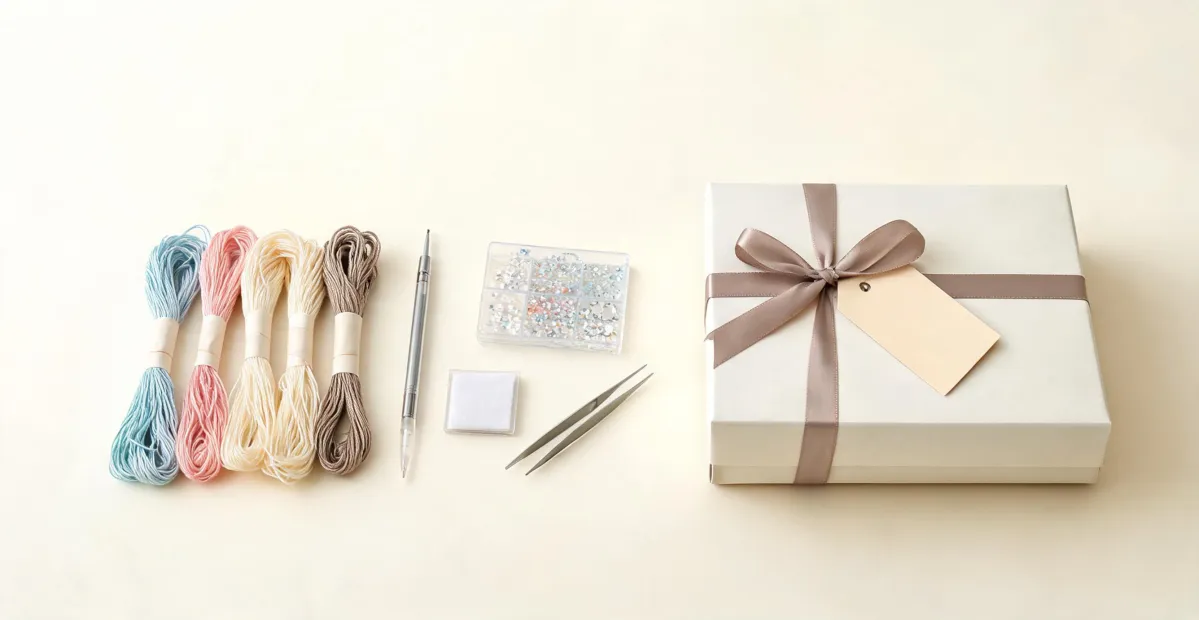
I coordinate rush orders at dmc, a company that has been making embroidery and craft supplies since 1746. In the last four years, I've personally triaged close to 200 emergency jobs—maybe 180, I'd have to check the CRM. The lesson that's stayed with me through every single one is this: the most professional thing I can say to a client is "this isn't what we do, and here's who can help."
I didn't start out that way. I thought being a good vendor meant being a universal key. A customer asks for DMC diamond painting kits and a playlist in the same breath? I'd try to solve both. A caller wants 5,000 name badges and also asks whether cross stitch needles are allowed in carry-on luggage? I'd mumble something about TSA and hope. It took three years and about 150 orders to understand that this approach was hurting more than helping.
When a Christmas ornament order meets a Run DMC search
Just before the holiday rush last year, a conference organizer called at 9 a.m. needing 800 branded Christmas ornaments in hand by Friday—roughly 36 hours later. Our normal turnaround is five business days, so I was already deep in production planning. Right at the end of the call, she said, "By the way, do you have that Run DMC Christmas song we could play at the booth?" It threw me for a second, because our page does get a lot of people searching for "run dmc christmas songs"—we're the craft DMC, not the hip-hop group.
I could have said "sure," googled it, and kept her on a false thread. Instead, I said, "That's not our department. We're not a music licensing company. But the ornaments—we can do those. Here's the exact deadline: Friday, 4 p.m."
What surprised me was her gratitude. She told me a previous supplier had promised to overnight swatches, then backtracked late in the process. That supplier had said yes to everything and failed at the one thing that mattered. My "no" to the playlist was, in her eyes, a clear signal that my "yes" to the ornaments actually meant something.
DMC diamond painting, cross stitch, and the TSA question
Our core—DMC diamond painting, cross stitch supplies, embroidery, custom promotional gifts like name badges and Christmas décor—is where we have deep expertise. The DMC color system, which has been referenced in stitching charts for generations, gives us a precise language for color matching. If a client's logo uses a specific teal, we can identify the closest DMC thread number and guarantee consistency across thousands of kits. That's a real capability, built on decades of standardization.
But a question like "can you take cross stitch needles on a plane?" is not a DMC question. It's a TSA question. I have a rough guess (probably yes if the needle is properly sheathed), but I'm not a security officer, and rules change. So rather than risk someone missing a flight, I point them to the TSA website. That takes me ten seconds, and it tells the client: when we don't know, we'll say so.
(Note to self: we really should turn this list of questions we don't answer into a public FAQ page. Save the customer service team some time.)
Why Admitting You Don't Know Saves Money
Here's the counterintuitive part. In an emergency, a wrong answer costs more than a fast "no." Consider a mid-size order of 2,500 custom Christmas ornaments. A client wants to keep shipping costs down by sending them as a letter. But according to USPS Business Mail 101, a standard letter has to be within 6.125 x 11.5 inches and 0.25 inches thick. A typical ornament breaks all three limits. If I told the client "yep, it'll fit," they'd skip the padded flat rate, and half the shipment would arrive crushed. Even if the ornament weighed under an ounce (which it probably doesn't), the dimensions alone push it into parcel territory. That's not vague policy; USPS sets those dimensions. And as of January 2025, a First-Class letter costs $0.73, but a parcel is priced by weight and zone—often $4–6 in my experience, but don't hold me to that. Rates change, so always verify current postage.
So I quote the USPS dimension rule and recommend a parcel service. It's not what the client wants to hear, but it's the difference between a one-time order and a long-term account. When we're transparent about limits, the client can budget correctly. Total cost includes shipping, rush fees, and potential reprint costs. The lowest quote without that context isn't actually low.
To be fair, generalists do exist
And some of them do good work. If a client needs a mixed kit of unrelated products, a one-stop shop can be efficient. I get why that's attractive—it saves procurement calls. I just think it's dangerous in the rush-order world, where the price of an overpromise is time.
The vendor who says "we can do everything" and then doesn't deliver is the biggest risk to a deadline. Per FTC guidelines, claims have to be truthful and substantiated. That's a good standard for us to apply to ourselves and to our suppliers. If you can't prove you can do it, don't claim you can.
The bottom line
Professional boundaries aren't a weakness. They're a form of competence. We don't do everything—what I mean is, we do a few things extremely well. At dmc, that means standardized color systems, rapid production of embroidery and diamond painting, and custom orders like name badges and Christmas ornaments. When a request falls outside that lane—music licensing, TSA regulations, even long-haul logistics—we're honest about it. That honesty is what lets us focus on what we can actually control.
My experience is mostly with mid-size B2B orders, 500 to 5,000 units. If you're a small craft business ordering 50 pieces, your needs might be different. But the principle stays: trust is built on clear boundaries, not vague promises.
So the next time a supplier tells you "that's not our specialty," don't read it as a failure. Read it as a signal that they know their craft well enough to protect yours.

Elise Laurent
Elise Laurent is a crystal and decorative glass quality analyst covering crystal figurines, vases, ornaments, suncatchers, and gift glassware. She examines ISO 6486-1 where food-contact glass dinnerware applies, then uses polarized strain inspection, dimensional checks, surface-defect grading, and refractive clarity to compare decorative pieces outside that scope. Her work helps sourcing teams choose materials, finishing routes, and protective packaging without confusing visual brilliance with verified durability.