Is Diamond Painting Still Popular? What Last-Minute DMC Orders Taught Me About Total Cost
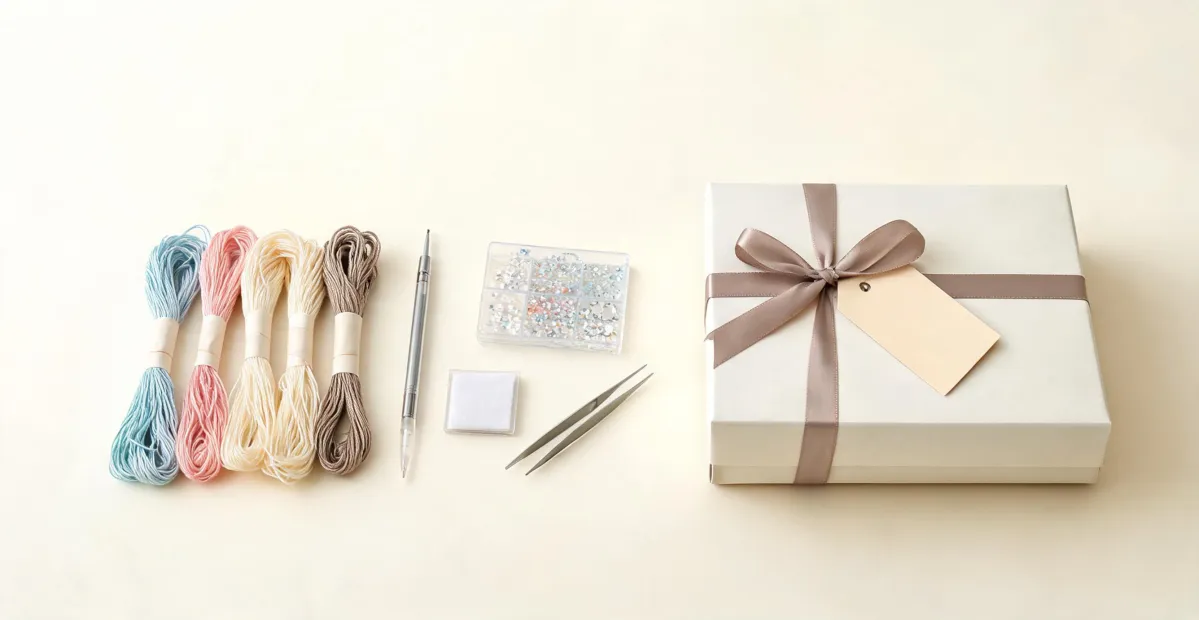
In March 2024, a wedding planner called me at 4:47 on a Thursday afternoon. The wedding was that Saturday. She needed 120 DMC wedding cross stitch kits, personalized with the couple’s initials, assembled as table favors. Normal lead time for a custom kit like that is ten business days. She had about 38 hours—or rather, closer to 13 if you count production deadlines. We got it done, but it took $320 in rush fees, three phone calls to a packaging supplier, and a lot of crossed fingers.
I’ve coordinated rush orders for years now. At our company, Q4 2024 alone produced 47 rush jobs, with 95% on-time delivery—the 5% that failed had one thing in common: less than 48 hours of buffer. So when someone searches “is diamond painting still popular?” or emails “can you do it by Friday?”, I hear the same underlying question.
It’s not a question about trends. It’s a question about risk.
The Question Nobody Asks
Diamond painting had a huge moment during the lockdown years. People bought kits, finished them, shared them, and some inevitably moved on to the next hobby. So yes, the search volume for “is diamond painting still popular?” makes sense.
But in my role triaging custom orders, that question isn’t really about diamond painting demand. It’s about whether a store owner should stock inventory, or a wedding planner should trust a custom kit supplier, or a buyer should invest in a full product line. That’s a risk and cash flow question, not a popularity contest.
And the answer depends less on Pinterest trends than on your supply chain.
Why “Popular” Is the Wrong Question
Here’s what usually gets missed. The opposite of “popular” in crafts isn’t “nobody wants it.” It’s “out of stock.” Or “shipped late.” Or “the shades don’t match.”
When a customer asks for a DMC embroidery kit, the DMC part matters more than the word embroidery. DMC’s standardized color system gives every thread a fixed reference number. The brand has been trusted since 1746, and that color language is the reason DMC appears in wedding cross stitch kits: because if you’re making 120 favors, you need to know that the red in the first batch will match the red in the last batch. Search “wedding cross stitch kits DMC” and you’ll see what I mean—standardized thread, custom packaging, and a deadline.
It’s tempting to think you can compare unit prices on identical kits. But identical specs from different vendors can produce wildly different outcomes. I’ve seen a “cheap” kit use floss that bled in the wash. The bride planned to frame the final piece. That $3 per kit difference became a refund, a bad review, and a rush replacement—none of which appeared in the original quote.
People also think rush orders cost more because they’re harder to execute. Actually, they cost more because they’re unpredictable. They disrupt planned workflows. They force fast decisions. They leave no room for quality checks. The work itself isn’t difficult. The uncertainty is.
Quick detour for anyone who found this through “custom tours DMC France”: that’s a different DMC entirely—destination management, not thread. But the total cost rule follows you there too. A DMC that quotes rock-bottom prices for a custom tour but leaves out contingency for weather delays or hotel changes has a higher total cost than one that plans for surprises. Same acronym, same math.
The Total Cost of Waiting
Waiting until the last minute doesn’t just add a rush fee. It adds costs that most people never put on the same spreadsheet. I do not mean the unit price of the kit. I mean the total cost of getting the right thing to the right place at the right time.
Here’s where that total cost tends to hide:
- Shipping and rush fees. According to USPS (usps.com), as of January 2025, First-Class Mail large envelopes cost $1.50 for the first ounce and $0.28 for each additional ounce. A 4 oz wedding cross stitch kit costs $2.34 to ship by First-Class Mail. Multiply that by 120 favors and you have $280.80 before packaging. Add overnight shipping because you waited, and the number jumps fast.
- Time spent fixing mistakes. Rushed work is error-prone. Every hour your team spends re-packing, re-printing, or reassuring a nervous client is an hour that could have been spent on something else.
- The risk of failure. If a custom home fragrance order for a corporate event goes wrong, it’s not just a return. It’s a venue without welcome gifts, an executive without a branded experience, and a procurement person with a difficult conversation.
That last one is the cost that wakes me up at night. In 2024, we lost a potential repeat contract because a client tried to save money by not paying for a pre-production sample of custom home fragrance sets. The production vendor used a lower-quality oil that didn’t match the approved scent reference. The client was furious, and honestly, they had every right to be (not that a sample would have fixed everything, but it would have caught the scent issue). The sample cost $120. The lost contract was worth $6,000 more.
Per FTC guidelines (ftc.gov), claims like “recyclable” also have to be substantiated. If you’re designing custom packaging that says “eco-friendly” but the material isn’t accepted in most local recycling programs, that’s a legal exposure—not just a marketing line. Another hidden cost that starts with a lowercase “r” and ends with “isk.”
I only became a true believer in total cost thinking after ignoring it. A client found a vendor at $4.80 per unit instead of our $6.20 quote. The vendor’s packaging was wrong, so the client’s team spent five hours re-packaging 200 embroidery kits. At an internal labor rate of $150/hour, that’s $750 of unplanned cost. The “cheap” option was expensive. I haven’t compared unit prices alone since.
What Actually Works
The solution isn’t “never order last-minute.” In my world, last-minute orders are part of the job, and sometimes they’re genuinely unavoidable. The solution is to make the total cost visible before you commit to a vendor.
When I’m triaging a rush order, I ask four questions:
- What’s the real deadline? Not the event date—the last possible ship date.
- What’s the absolute must-have? Which details can be simplified without ruining the gift?
- What will a missed date actually cost? Client trust, penalties, lost placements?
- Can the vendor guarantee a match? For DMC, that match is built into the color system. For other products, it depends on their process.
Then calculate the total cost: unit price + setup fees + shipping + rush fees + replacement risk + the cost of failure. Compare vendors that way. It’s a little more work upfront, but it’s far cheaper than discovering the true cost after the fact.
We now require a 48-hour buffer on all custom orders because of a 2023 incident. That policy has cost us a few rush jobs. It has also saved us a lot more. The clients who start with a buffer tend to be the same ones who end up satisfied—and the same ones who order again.
So, is diamond painting still popular? I can’t speak to every trend. But I can tell you that a wedding cross stitch kit with DMC thread, a well-made embroidery kit, and a properly planned home fragrance order all have one thing in common: their value shows up in the details, not the unit price. If you wait long enough that those details become a gamble, you’re not saving money. You’re just deferring the risk.
A cheap kit that doesn’t match isn’t a bargain. It’s a liability with a bow on it.

Elise Laurent
Elise Laurent is a crystal and decorative glass quality analyst covering crystal figurines, vases, ornaments, suncatchers, and gift glassware. She examines ISO 6486-1 where food-contact glass dinnerware applies, then uses polarized strain inspection, dimensional checks, surface-defect grading, and refractive clarity to compare decorative pieces outside that scope. Her work helps sourcing teams choose materials, finishing routes, and protective packaging without confusing visual brilliance with verified durability.