DMC Shop Guide: Name Badges, Diamond Painting, and How to Choose Wedding Photo Book Size
Before You Order: Which DMC Do You Mean?
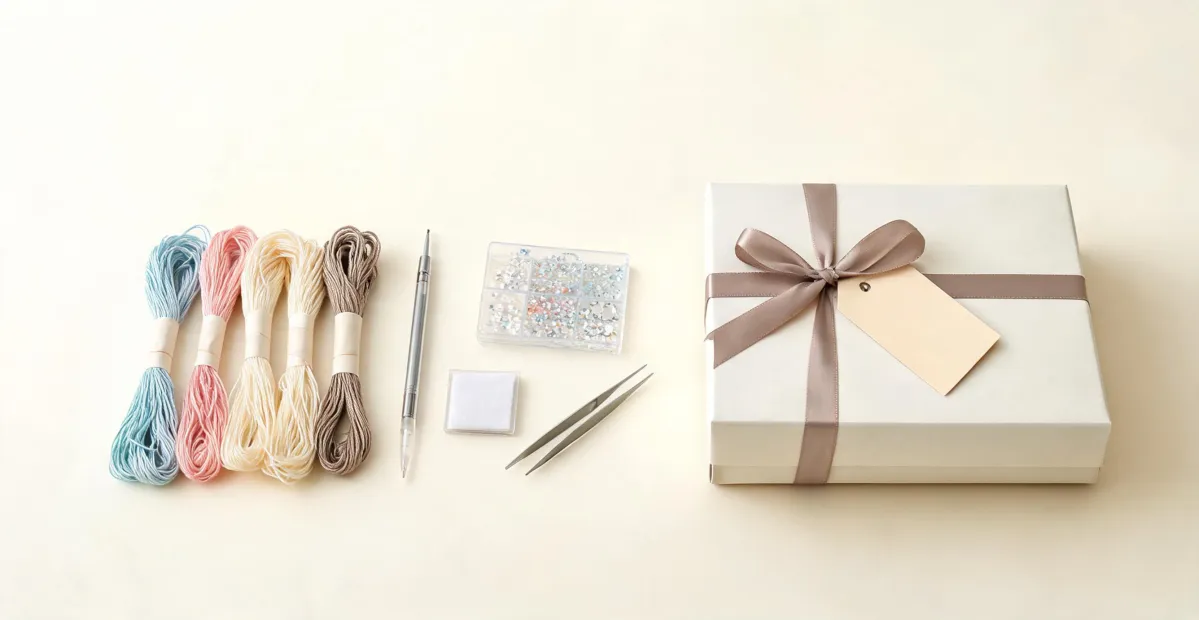
If you searched for custom tours DMC France and ended up here, let me save you some time. DMC France is not a travel company. It's the 1746 French textile brand behind the DMC color chart. The DMC shop sells embroidery floss, cross stitch supplies, diamond painting accessories, paint by number kits, home decor, and custom promotional gifts for business buyers. I don't book tours, and I'd rather tell you that now than after a long email thread.
I've handled custom craft orders for about eight years. In that time, I've personally made—and documented—fourteen significant mistakes, totaling roughly $16,000 in wasted budget. This guide is the checklist I use now so you can skip the expensive part.
There's no single right answer for a custom order. A name badge, a diamond painting kit, and a wedding photo book are all 'custom products,' but they require completely different decisions. I'll walk you through each scenario, then give you a simple way to know which one you're in.
Scenario A: Custom Embroidered Name Badges
Custom name badges are one of the easiest orders to get wrong. The embroidery is usually fine. The mistakes tend to be in the backing and the spelling.
- Washable uniforms: Use a hook-and-loop backing so badges can be removed and swapped before washing.
- Events and lanyards: Use a badge holder or clip. An embroidered patch alone won't fit a lanyard slot.
- Heavy workwear: Use a sew-on badge. Iron-on might work for a week, not for a season.
The second step is proofreading. I know it sounds basic, but in 2018 I approved 'Stephan' on 45 badges. The client had written 'Stephen' in the email, twice. The redo cost us about $540 and a week of lead time. Now two people check every proof, and we read the names out loud.
Then there's color. DMC thread numbers are a standardized system, and that's a real advantage for embroidery. If you hand a supplier a Pantone number, ask them to map it to the closest DMC shade. Don't trust a screen. Pantone's own guidelines say colors can vary by substrate and method. For brand-critical colors, try to keep tolerance under Delta E 2, but in thread that's hard to hit exactly. Order a DMC thread card or a sample swatch before production. Reference: Pantone Color Matching System guidelines.
Scenario B: Custom Diamond Painting Kits
Custom diamond painting kits are a different animal. They work great for team building, wedding favors, or turning a team photo into wall art. But they only work when the source image has enough resolution for the canvas size.
The rule I use: max print size = pixel width / 300 DPI. As of January 2025, 300 DPI is still the standard minimum for commercial print. A 3000 x 3000 pixel image is enough for about a 10 x 10 inch print. A 6000 x 6000 pixel image gets you to 20 x 20 inches. If you push beyond that, the printed background gets soft and the chart becomes harder to follow.
Here's the counterintuitive part: when someone sends me a low-res photo, I suggest a smaller canvas, not a bigger one. A 50 x 50 cm kit from a badly cropped logo looks blurry. The same logo on a 30 x 40 cm canvas looks fine. Bigger isn't always better when the source image is the limit.
DMC's color standard matters here too. The color numbers on the printed canvas match the drill bags, and the system is consistent across batches. If you've done a kit where a color shifts halfway through, you know why that's so important. On a canvas with thousands of drills, you don't want to discover that after the first day.
Scenario C: How to Choose Wedding Photo Book Size
This is the request that often doesn't belong in a craft supply order. DMC doesn't make photo books. And if a vendor says they can handle embroidery, diamond painting, and photo books with equal quality, ask more questions.
Photo book production is its own trade—or rather, its own set of trades. The supplier who embroiders a sharp name badge and the supplier who binds a wedding album are rarely the same person. The vendor who says 'this isn't our strength, here's who does it better' is the one I trust for everything else. That's not a polite phrase. It's a signal that the supplier knows their limits.
The conventional wisdom is that bigger is better for a wedding album. My experience with custom orders suggests otherwise. Here's the practical size guide I give people:
- 8 x 8 inches: Intimate and easy to hold. It feels more like a memory book than a formal wedding album. Good for couples who don't want a big object on the shelf.
- 10 x 10 inches: The safest default. Square layouts work with landscape wedding photos, and it fits a normal bookshelf without overhang. If the couple is undecided, I recommend this because it's way more likely to actually get used.
- 12 x 12 inches: Gorgeous on a coffee table, but it's the one couples often store in a closet because it doesn't fit on standard shelves. Bigger is not automatically better.
- A4 / 8.5 x 11 inches: Better for an editorial timeline with a lot of text. It feels less like a gift book and more like a documentary.
Resolution and paper weight
Before you choose a size, check the resolution. At 300 DPI, a 10 x 10 book needs roughly 3000 x 3000 pixel photos. A 12 x 12 book needs 3600 x 3600. Most modern phones can handle 10 x 10, but if your album includes older smartphone photos or film scans, 12 x 12 will look soft. Paper weight matters too. Standard photobook pages are often 80 lb text / 120 gsm. Premium albums use 100 lb text / 150 gsm. The heavier paper reduces bleed-through and feels more like a book.
So Which Scenario Are You In?
Use this quick decision tree before you contact a supplier:
- Something to wear or attach to clothing? → Custom embroidered name badge.
- Something to create as a group or turn a photo into art? → Custom diamond painting kit.
- Something to preserve and read like a book? → Specialist photo book printer, not a craft-supply order.
My Pre-Approval Checklist
Once you know your lane, I run the same five-point checklist before approving anything:
- Check every name and word with two people.
- Divide pixel width by 300 to find the maximum print size in inches.
- Match colors by system numbers, not by screen. Use Pantone for print and DMC numbers for thread and diamond painting.
- Order a physical sample. A $15 sample is cheaper than a $1,000 redo.
- Ask the supplier what they won't do. The 'not our specialty' answer is a good sign.
The sample rule is not theoretical. In September 2022, I ignored a DMC rep who warned me that a company logo was too low-res for a 50 x 50 cm diamond painting canvas. I approved it anyway. The finished print looked soft, and we re-made—if I remember correctly—about 250 kits. I want to say the total cost was around $3,000, but don't quote me on the exact number. I've never skipped a sample order since.
So start with the use case. That will tell you which scenario you're in, which supplier you need, and exactly what to check. It also prevents the most expensive question in custom ordering: 'Why didn't anyone catch this before we printed?'

Elise Laurent
Elise Laurent is a crystal and decorative glass quality analyst covering crystal figurines, vases, ornaments, suncatchers, and gift glassware. She examines ISO 6486-1 where food-contact glass dinnerware applies, then uses polarized strain inspection, dimensional checks, surface-defect grading, and refractive clarity to compare decorative pieces outside that scope. Her work helps sourcing teams choose materials, finishing routes, and protective packaging without confusing visual brilliance with verified durability.