DMC Cross Stitch Christmas Ornaments vs Paint by Number Kits: A Buyer's Guide
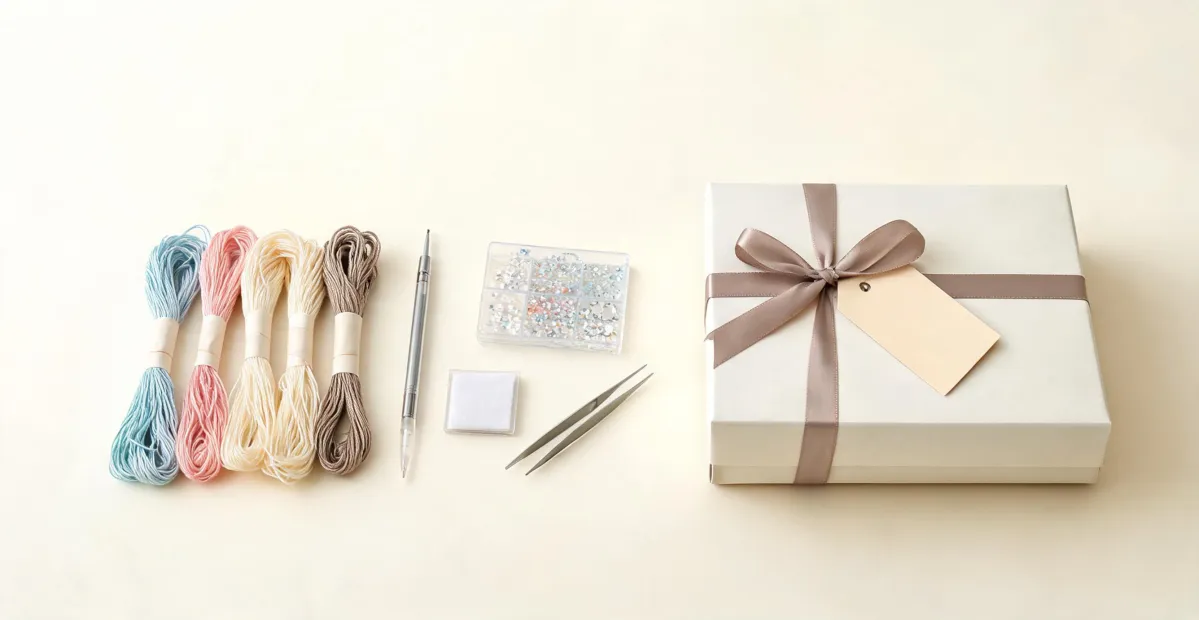
I'm the office administrator for a 200-person company. I manage most of the craft and holiday-product ordering—roughly $15,000 annually across about six vendors. I report to both operations and finance, so I get asked to justify every line item. That's why this comparison isn't a cute craft blog post. It's a once-a-year procurement decision that affects how the whole team spends an afternoon.
Let me start with a clarification: when I say DMC, I mean the thread company, not the rap group. But that doesn't mean I don't have a playlist of Run-DMC Christmas songs in my office. If Christmas in Hollis comes on while we're packing holiday kits, that's just the soundtrack to a very productive afternoon.
I'm comparing DMC cross stitch ornament kits against paint by number kits. Both can produce a finished Christmas ornament. Both are popular with employees. But they don't behave the same way in procurement, shipping, or after the box is opened.
Why Cross Stitch vs Paint by Number Is a Real Comparison
It's tempting to think you can just compare unit prices and pick the lower quote. But that advice ignores the total cost. A cross stitch kit with a tangled skein of DMC floss is still usable. A paint by number kit with a dried pot of paint is often a replacement. What I mean is that the cheaper kit can become the more expensive one once you factor in reshipment, employee frustration, and the time you spend explaining how to fix something that should have worked out of the box.
Here's something vendors won't tell you: standard included paint doesn't mean paint that will survive a warehouse in July or a delivery truck in December. The pots are small, and the seal quality varies. Cross stitch floss doesn't have that failure mode. It can tangle, but tangle is not a doorstop.
Dimension 1: Setup and Learning Curve
Cross stitch starts slower. A first-timer needs to separate the strands of DMC floss, thread a needle, and follow a chart. That can take twenty minutes before anything looks like an ornament. But the materials don't spoil, and the project can be set aside for a week without damage.
Paint by number is faster to start. Open the pots, dip the brush, and go. For a team event where people want instant satisfaction, that's a real advantage. But the convenience is fragile. If a lid is left off, or a pot is already cracked, the craft becomes wait, what do I do now?
The surprise wasn't the cross stitch learning curve. It was how fast paint pots dried out when someone just peeked and didn't seal them properly. (Unfortunately, that was a Thursday before a Monday event. I remember that week too well.)
Verdict: Paint by number wins for getting started fast. Cross stitch wins for reliability.
Dimension 2: Finish Quality and Repeatability
For procurement, repeatability is everything. According to DMC's official materials (dmc.com), the company dates back to 1746, and its floss color numbering system is the reference standard in embroidery. That matters when you're ordering in bulk. A DMC red is still in the same red family, and you can reorder by number instead of relying on a factory's memory. If an employee loses a skein, you can replace that number instead of replacing the whole kit.
Paint by number is different. The paints are mixed once, in quantities matched to that specific kit. There is no reorder pot 309 option. If one pot dries out, the rest of the kit is still waiting, and you're stuck trying to match a color from memory or improvising with a replacement. That can be fine for a one-off art piece. It's less fine when you're trying to give 40 employees the same experience.
I have mixed feelings about paint by number kits. On one hand, they get non-crafters engaged in a way that stitching sometimes doesn't. On the other, I've had more dried-paint problems with them than with every cross stitch kit I've ever ordered. That tradeoff is real.
Verdict: Cross stitch wins for consistency, custom branding, and easy resupply. Paint by number wins for a looser, more artistic finish that doesn't need to match anything.
Dimension 3: Shipping, Storage, and Dried Paint
This is the dimension that keeps me awake in November. Holiday orders arrive during the busiest shipping window of the year, and warehouse conditions are not exactly climate-controlled.
Cross stitch kits are flat, dry, and compact. I've stored hundreds without a single ruined floss card. DMC floss can tangle, sure, but tangles are temporary. A paint pot that has dried out is permanent unless you catch it early.
Paint by number kits contain liquid paint pots, brushes, and canvas. They are more sensitive to heat, cold, and rough handling. The paint can separate if it freezes. The lids can crack in transit. None of that is a disqualifier, but it's a reason to check the seals, store the kits upright, and order at least one backup for the project.
That brings me to the one question I hear from almost every manager: what do we do with dried paint?
How to revive dried paint by number paint
If you open a paint by number kit and find a pot that looks crusty, don't throw it away. Most of the time, the paint is not fully dead.
- Gently break up the surface crust with a toothpick or the back of the brush.
- Add one to two drops of warm water. Not a stream, not a spoon. Drops. Too much water turns acrylic into a watery wash that won't cover evenly.
- Stir slowly for a full minute, then let the pot sit for ten to fifteen minutes.
- Stir again. If it's still stiff, add one more drop and wait another ten minutes.
- Test the revitalized paint on a scrap of paper or the edge of the canvas before you start painting.
That process sounds simple because it is. The difficult part is patience. I learned this the hard way when a well-meaning helper added a capful of water to three pots. They became translucent, and the employee had to repaint the same area four times.
Verdict: Cross stitch is more forgiving in shipping and storage. Paint by number is salvageable, but only if you catch the problem before the paint turns into a rock.
Dimension 4: The Music Factor (Yes, Really)
Atmosphere affects whether the team actually finishes the project. If you're organizing a craft afternoon, the soundtrack is part of the plan.
Cross stitching is quiet and rhythmic. It pairs well with steady, upbeat music. If someone asks me to put on Run-DMC Christmas in Hollis, I know exactly which song they mean: the 1987 classic with the twinkling bells, the oversized glasses, and a video that looks like a holiday sweater you'd be scared to unwrap. It's fun, it's not saccharine, and it absolutely belongs on an office crafting playlist.
Paint by number is more task-oriented. People are mixing, dipping, and covering small sections. Music still helps, but the rhythm is less connected to the craft. The bigger risks are the brush drips and the paint pots.
Verdict: Cross stitch pairs better with Run-DMC Christmas songs. Paint by number pairs better with something simple and low-distraction if you need people to focus.
So Which Should You Order?
If you have a patient, detail-oriented team, choose DMC cross stitch ornament kits. You get consistent product, easier inventory, a standardized color system, and a finished ornament that will hang on a tree for years. Customization is also a natural fit: initials, a company year, or a simple logo can be added to a cross stitch pattern. For larger orders, ask about bulk and customization options; the sample matters more than the sales sheet.
If you have a team that wants instant creative gratification, or if you're planning a one-hour workshop, choose paint by number. Check the pots before you distribute them, keep this revive guide handy, and accept that each finished piece will look a little different. That's the charm—and the risk.
And if you're ordering for a smaller group, don't let anyone make you feel like your order is too small to ask questions. The vendors who treated my early $200 trial order seriously are the ones I still use for larger quantities. Good sourcing is about fit, not just size.
Bottom line: Want reliability and repeatability? Cross stitch. Want low friction and a unique art piece? Paint by number. Want me to survive December? Put on Run-DMC Christmas songs, keep a bottle of water near the paint pots, and always order one backup kit. As of January 2025, at least, that's the plan that works for our office.

Elise Laurent
Elise Laurent is a crystal and decorative glass quality analyst covering crystal figurines, vases, ornaments, suncatchers, and gift glassware. She examines ISO 6486-1 where food-contact glass dinnerware applies, then uses polarized strain inspection, dimensional checks, surface-defect grading, and refractive clarity to compare decorative pieces outside that scope. Her work helps sourcing teams choose materials, finishing routes, and protective packaging without confusing visual brilliance with verified durability.