I Started Asking About DMC Color Charts After a $1,400 Corporate Gift Mistake
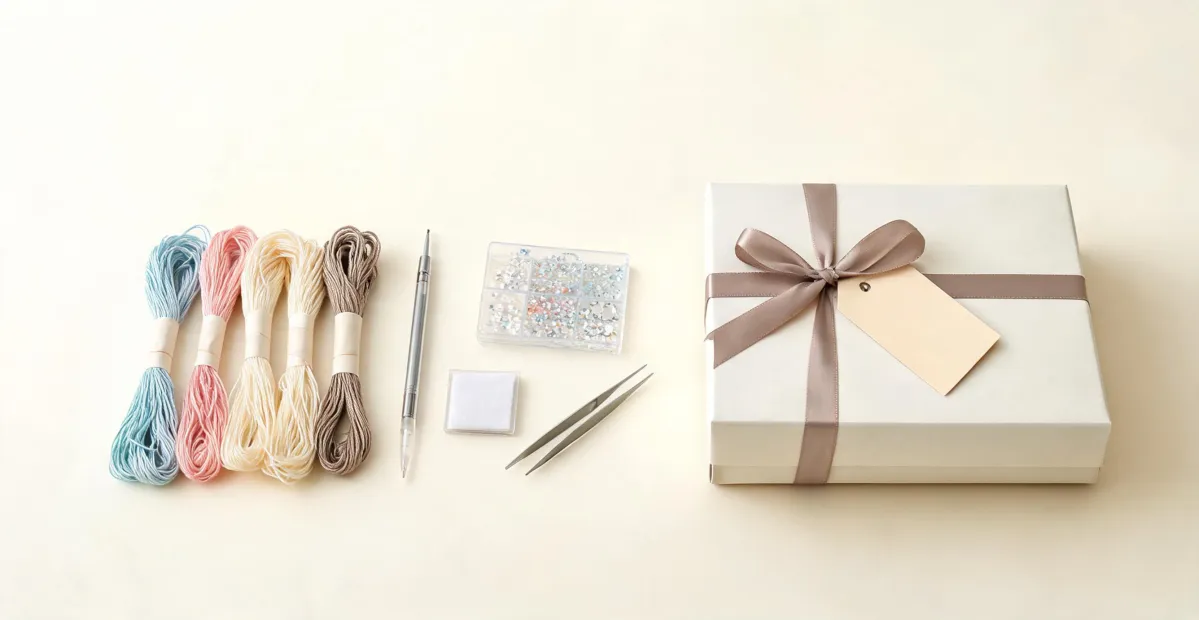
I Approved a 'Perfect' Order and It Wasn't
Last spring, I signed off on 200 branded glass coasters. The sample was spot-on. The price fit our budget. The delivery date worked. And then the production run showed up in a slightly different blue than our logo. Not a huge deal, but when you're giving them to clients, 'slightly different blue' is the thing people notice.
Before that order, I'd never asked about DMC color charts, name badge print specs, home fragrance oils, or suncatcher paint formulas. I didn't even know those were questions. After the order, I started asking all of them.
I'm an office administrator for a mid-sized company. I handle most of our purchasing—somewhere between 60 and 80 orders a year, from office supplies to marketing giveaways. I'm not a product engineer. I'm the person who says 'can you have it by Friday?' and then prays.
So this isn't a manufacturing tutorial. It's a confession from someone who learned the hard way that specs are not just for engineers.
The Surface Problem: Bad Promotional Gifts Look Like Bad Luck
My first tendency was to blame the supplier. And sure, there were suppliers who did sloppy work. But after a few failures, I noticed a pattern: I was buying products without understanding what made them good.
A custom name badge is a good example. We ordered badges for a three-day trade show. They looked great on the table. By day two, the printed names started to smudge, and the plastic badge holders were cracking. I was annoyed, but honestly, I'd never asked about the blank or the printing process. I just picked a basic all-inclusive badge kit and moved on.
That's the surface problem. You think you need a vendor who sends pretty samples. Actually, you need a vendor who can explain the boring stuff under the pretty surface.
The Deep Cause: Products Are a Chain of Invisible Decisions
Everything in a promotional order is a series of specifications, and every spec has a consequence.
DMC Color Charts and Diamond Painting Kits
Let's start with the DMC color chart for diamond painting. I didn't know what that was until last year. Now I care about it more than almost anything else in a craft kit.
In diamond painting, the design is a grid of symbols. Each symbol is linked to a color number. The DMC color system is the common language for that—a set of standardized colors used across embroidery and diamond painting. DMC has been around since 1746, and the color chart is one of those quiet industry standards. When a supplier uses DMC numbers, you can produce a kit where the drills from one batch match the drills from another. When they don't, you get a painting that looks muddy or washed out, and there's no way to fix it after the fact.
The DMC color chart for diamond painting isn't just decoration. It's a quality-control document. If a supplier can't share it or explain it, they're probably not making your kit to a standard.
That's a deep issue because customers don't think to ask about it. They see a pretty box and assume the inside will match the picture. The vendor might assume you know what to check. And now you're two assumptions deep into a gift that misses the mark.
Name Badges Are Not All Equal
Custom name badges seem simple. They're not. There's the badge holder, the insert, the printing method, and the lamination. If you're printing a logo, resolution matters. The industry standard for commercial print is 300 DPI at final size; if your logo is a 72-DPI screenshot from a website, no printer can make it crisp. And color? That's where Pantone references come in. A professional print shop can match your brand color, but they need to know the target. Brand-critical colors are often held to a Delta E of under 2 in Pantone's matching guidelines. That's a scientific way of saying 'really close.' If your supplier can't talk about that, you're relying on their eyeballs.
For a name badge, the material matters too. Poor-quality lanyards fray. Flimsy clips break. Badge reels snap. None of those things are accidents. They're material choices made by someone else, and you only find out about them when your sales team is walking into a meeting with a broken clip.
Home Fragrance Is Chemistry, Not Decoration
Home fragrance products are another hidden-spec minefield. It's not just about whether the candle smells nice. Fragrance oil quality, wick type, wax blend, and the amount of fragrance load all affect whether the product burns cleanly and safely. If a supplier can't provide basic ingredient and safety documentation, I walk away.
I once picked a reed diffuser set for client gifts because the packaging looked elegant. It smelled amazing in the sample. Then we got 120 boxes, and the fragrance was noticeably weaker. The supplier had changed the fragrance oil concentration without telling me. The box looked identical. The scent wasn't. That's a spec, not a vibe.
What Is Suncatcher Paint Made Of? You Should Know.
Now for a question I never expected to ask: what is suncatcher paint made of? But it's actually a great example of why materials matter. Suncatcher paint is usually acrylic-based—pigment particles suspended in a clear binder, often water-based. But not all acrylic paint is equal. Some formulas dry yellow, some don't adhere to glass, some fade quickly in sunlight. For a suncatcher kit, you want a transparent, lightfast paint that stays flexible enough not to crack.
If you're ordering a craft product for customers, you need to know whether the paint is non-toxic, and how it behaves on different surfaces. It's not enough to say 'it's paint.' There are dozens of formulations, and they're not interchangeable.
What Ignoring These Details Costs You
For me, the cost was more than the reprint invoice.
I still kick myself for not asking about color tolerance before that coaster order. If I'd asked 'can you match Pantone 286 C within Delta E 2?' the printer would have flagged the substrate issue before production, not after.
Instead, we paid $1,400 to redo the order. The first 200 coasters went in a storage bin. The client who received the wrong blue? They didn't complain, but I saw the photo they posted. The logo looked off. That photo didn't say 'brand consistency.' It said 'office administrator cut a corner.'
Then there's the stress of deciding. Even after choosing what seems like the safer vendor, I keep second-guessing. Did I ask enough questions? What if the production batch differs from the sample? The two weeks before delivery are not fun.
And here's the bigger hidden cost: internal reputation. When an order shows up late or wrong, people remember. It doesn't matter that you were busy or that the supplier's contract was vague. In a company, the person who orders is the person who owns the outcome.
I've also learned that a supplier who can't explain their own product is a risk. Not necessarily a dishonest one, but a risky one. If they don't know what's in their home fragrance oil or why a DMC color chart matters, they can't help you when something goes wrong. In my experience, you end up eating the loss.
What I Do Now: Ask Boring Questions
I didn't become an expert in manufacturing. I just started asking better questions.
- What's the color standard? For craft kits, I ask if they use the DMC color chart for diamond painting — or the equivalent for their product category. For printed items, I ask about Pantone references and acceptable Delta E.
- What's in it? I ask for ingredient lists, material data sheets, and safety documentation. For home fragrance, that means knowing the oil and wax basics. For suncatcher paint, that means asking whether it's acrylic-based, water-based, and lightfast.
- Can I get a physical proof? Not a PDF. A printed name badge, a diamond painting square, a candle sample made in the same batch. That is the only way to verify the obvious.
- What will you do if it's wrong? I want their rework policy in writing, because I've learned that 'we'll fix it' only means something when it's part of the contract.
- How do you explain this to someone new? If the salesperson can walk me through the product specs simply, that's a sign they actually know their product. That's the kind of supplier I want to grow with.
None of this is about being a difficult client. It's about avoiding a bad outcome before it costs you a quarter of the budget. An informed customer is easier to help. Every decent supplier I've met would rather answer ten questions upfront than deal with a disappointed client later.
A DMC color chart is just a piece of paper, but what it represents is predictability. Same with a name badge spec. Same with a home fragrance test report. Same with understanding what suncatcher paint is made of. When you know the specs, you're not gambling. You're buying.
And if you still feel nervous after you place the order? Good. That's normal. But you'll sleep a lot better when the questions were asked before the order, not after the delivery.

Elise Laurent
Elise Laurent is a crystal and decorative glass quality analyst covering crystal figurines, vases, ornaments, suncatchers, and gift glassware. She examines ISO 6486-1 where food-contact glass dinnerware applies, then uses polarized strain inspection, dimensional checks, surface-defect grading, and refractive clarity to compare decorative pieces outside that scope. Her work helps sourcing teams choose materials, finishing routes, and protective packaging without confusing visual brilliance with verified durability.