DMC Custom Craft Kits: A Quality Inspector's Checklist for Name Badges and Cross Stitch Gifts
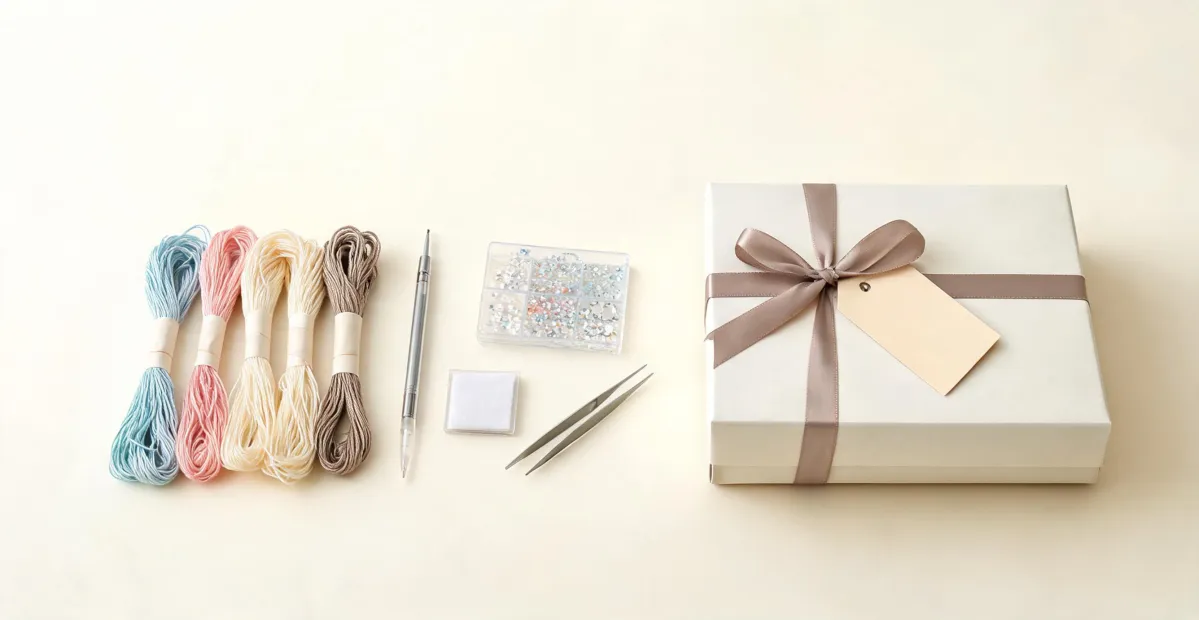
Before you get into the checklist, let’s clear up one search term: DMC is not Run-DMC. The “run dmc christmas song” people are looking for “Christmas in Hollis” — great track, but not what this DMC does. We’re the thread and craft company with roots back to 1746. You can still make festive gift kits, of course.
I’m a quality/compliance manager at a company that supplies custom craft kits for corporate gifts and wholesale. I review roughly 200 unique items a year before they’re approved to ship. In Q4 2024, I rejected 6% of first delivery samples. The issues were not dramatic: a wrong red, a missing diamond drill tray, a printed name badge slanted three degrees off. Basically, all preventable.
If you’re here because you just heard of DMC as a premium craft thread brand, here’s the short version: DMC makes embroidery thread, cross stitch fabric and kits, diamond painting accessories, paint by number kits, and a smaller selection of home fragrance and home decor items. The B2B side is larger than most people realize.
This checklist is for B2B buyers, gift procurement teams, and wholesalers who need custom embroidery kits, cross stitch kits, diamond painting sets, or paint by number kits with their branding. It’s also for anyone adding a custom name badge or hang tag and wondering what to ask the supplier. Five steps, plus the mistakes to avoid.
1. Use DMC numbers, not color names
Everything I’d read about color matching said a color name should be enough. In practice, it isn’t. “Bright red” can be cranberry in one factory and rust in another. DMC’s standardized color system exists to remove that guesswork. Each shade has a number, and the DMC color chart on dmc.com (accessed January 2025) is the reference I use. When you write your spec, include the DMC number: “DMC 321” rather than “red.”
DMC numbers aren’t just for the thread. Put the same number on the chart, the thread pack, and the instruction sheet. That way, any component changes are caught before assembly.
Checkpoint: every thread color on your order should have a DMC number. If a supplier only gives you color names, ask them to translate. It sounds basic, but I’ve had a 5,000-unit order quoted in “bright red” and the sample came out as DMC 350. Not ideal.
2. Specify the dye lot before production
This is the step most people overlook. DMC thread is dyed in batches. The same color number can vary slightly between dye lots. For a single cross stitch project, no problem. For 8,000 kits meant to be identical, a slight difference between boxes makes the unboxing feel off.
Ask for one dye lot across the whole order. If that’s not possible, get a physical swatch from the actual lot and approve that sample. Our internal tolerance is ΔE ≤ 1.5 against the approved swatch. That number isn’t magic; it’s just a clear threshold that prevents “well, it looked close enough” arguments.
If a supplier says “same color, no problem” without checking, don’t take it. Dye lot variance is often invisible until two shades sit side by side. In a kit with 12 colors, the chance of at least one shade shifting is not small.
If your supplier can’t confirm a dye lot, consider that a red flag. Color consistency is the backbone of DMC’s whole system.
3. Define what “custom” means for your name badge
“Custom” is one word with a hundred price tags. A name badge can be a woven label, an embroidered patch, a printed strip on the canvas, or a laser-engraved wooden tag. Each option has a different cost and lead time.
On a 500-kit order we sourced in Q4 2024, a woven name badge added about $0.85 per kit (actually, $0.82 to $0.89 depending on thread count). An embroidered badge with more than 7,500 stitches added about four days to the schedule. Print was the cheapest, but it wore off on fabric tote bags. Woven was the better value for most corporate gift uses.
Choose the name badge placement before production. If it’s on the fabric, avoid the center area where the design goes. If it’s on the packaging, you can use a printed label instead of embroidery and save money. Make the decision early; moving a badge after layout adds cost.
What to do: order one physical proof with your logo at the real size. Digital renders are everywhere. A stitch-out or printed sample shows you how the name badge will actually look on 14-count Aida fabric. This is also the moment to check legibility. A 6pt logo name badge might work on paper, but not on linen.
4. Tear down a full sample every time
Here’s the thing: sample approval usually happens with a pristine mock-up that was assembled carefully. The real factory run won’t get the same love. So before you approve anything, tear one down.
Open the box. Count the thread skeins. Check the needle gauge and the fabric cut size. For cross stitch, make sure the chart says the same fabric count as the actual cloth. For diamond painting, confirm the canvas symbol chart is readable and the drill supply includes at least 10% extra. For paint by number, open one set of paint pots and see if they’re sealed—dried pots are a classic quality failure.
- Full component list: quantity per kit, actual vs. expected.
- Print quality: original logo file vs. final printed fabric/paper.
- Accessories: needles, hoops, trays, adhesives—everything that touches the back of the box.
Also test the packaging itself: box dimensions, inserts, adhesive closures. A beautiful kit in a crushed box fails the final mile.
Why I insist on this: I saved $60 once by approving a rush order without a full teardown. That order had one defective kit in every eight—missing the diamond drill tray. Replacing them cost us $280 plus a hit to the client relationship. Penny-wise, pound foolish.
5. Ask about packaging, safety, and shipping
Now the strange search phrase: “Is it luxury home fragrance brands?” I get asked this by buyers trying to fit DMC into a gifting category. We’re known for craft kits, thread, and embroidery. Home fragrance and home decor are an add-on to our collection. But whether you’re adding a scented candle, a reed diffuser, or a small framed hoop for home decor, the real quality questions are safety and shipping.
If your kit includes any home fragrance item, check for:
- Leak-proof seals on oils and liquid fragrances.
- Wax with a melt point suitable for your shipping route. Seasonal temperature swings matter.
- Warning labels and candle safety instructions.
- Carrier restrictions on fragrance alcohol content.
Also check the small stuff: custom hang tags, instruction booklets, and the item number on the outer carton. One pallet of “identical” kits came through with two different supplier labels and a wrong barcode. It’s not the exciting error, but it’s basically the one that delays your warehouse.
If you’re ordering in bulk, request a pre-production sample in the actual packaging, not a prototype in a nice box. That’s when you catch barcodes, warning labels, and sealing issues.
What this checklist is not
It’s not for fully bespoke manufacturing where you’re inventing a new product from scratch. If you need to engineer a brand-new kit or source a custom-shaped canvas, you’ll need a different process and timeline.
It’s not a luxury fragrance buying guide. If you’re comparing premium fragrance brands, this is the wrong checklist. DMC is a craft and thread brand first; home fragrance is an accessory category in our range. Know which one you actually need.
Also, prices and lead times change. The figures above are from quotes we received in Q4 2024 and checks on dmc.com in January 2025. Verify current wholesale pricing through the DMC Shop before you budget.
This checklist can be used as your PO checklist. Some steps take 15 minutes. Skipping them to save time is exactly how the 6% rejection rate happens.
The most expensive part of a custom run isn’t the badge or the thread. It’s the re-do. Define your colors by DMC number, lock down your dye lot, inspect a full sample, and think about shipping before you place the order. Do that, and your gift recipients will never know how much checking went into their little kit. That’s the goal.

Elise Laurent
Elise Laurent is a crystal and decorative glass quality analyst covering crystal figurines, vases, ornaments, suncatchers, and gift glassware. She examines ISO 6486-1 where food-contact glass dinnerware applies, then uses polarized strain inspection, dimensional checks, surface-defect grading, and refractive clarity to compare decorative pieces outside that scope. Her work helps sourcing teams choose materials, finishing routes, and protective packaging without confusing visual brilliance with verified durability.