Small Orders Deserve the Same Quality Bar. Period.
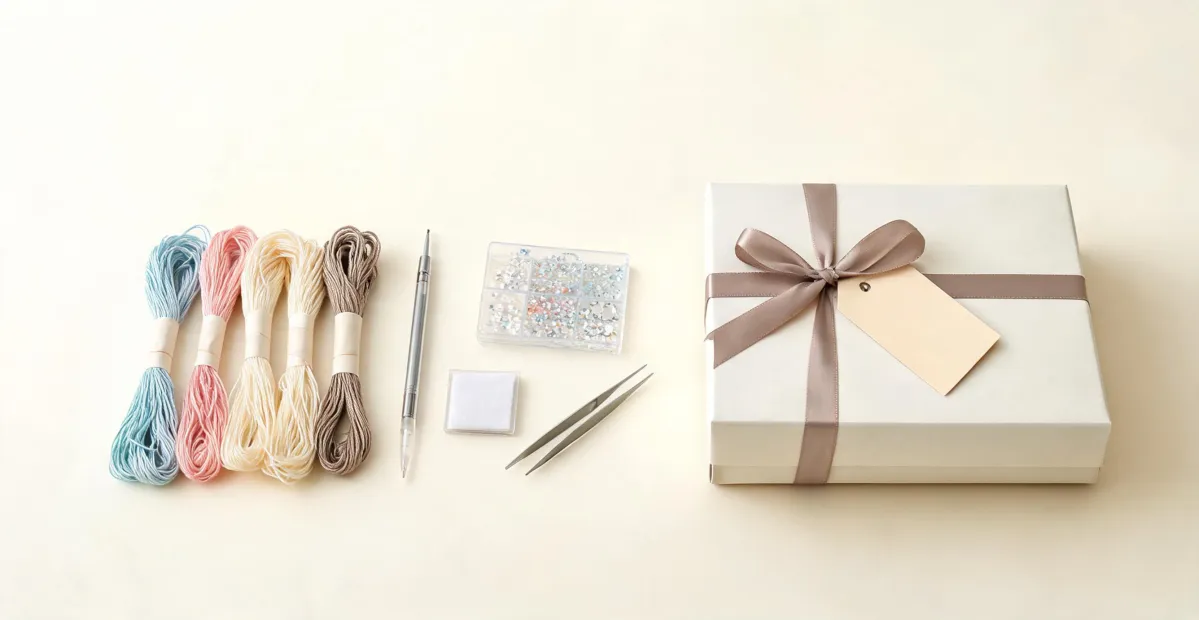
Small Orders Deserve the Same Quality Bar. Period.
If you're treating a 10-unit order with less care than a 10,000-unit order, you're setting yourself up for a fall. Not tomorrow, maybe. But eventually. I know this might get me some side-eye from the operations team, but it's the honest truth from someone who checks every product before it ships.
Quick background: I'm a quality compliance manager at a craft and needlework supplier. I review every product line that reaches customers—roughly 200 unique SKUs a year. In our Q1 2024 quality audit, I rejected 6% of first deliveries. The usual culprit wasn't a spectacular manufacturing failure. It was slight thread color drift from the DMC color chart—the kind that would give an intermediate stitcher a quiet headache. Not dramatic. Just wrong.
The Small-Order Stakes Are Actually Higher
Here's what people miss. When a retailer orders 10,000 embroidery kits, a 1% defect rate is a rounding error. You issue a credit note and move on. But when a boutique shop orders 20 units of the DMC Wild Blooms intermediate embroidery kit, and one spool is off-shade, that's 5% of their inventory. The end customer who buys that kit doesn't blame the manufacturer. They blame the shop. The shop blames us. We lose two relationships at once.
For a small business, one bad box is not a statistical blip. It's a chunk of their monthly income. I've sat on the phone with a shop owner who was almost apologetic about complaining—she said, "I know it's a small order, but my customer noticed." That conversation is the reason I don't buy the "it's just a small order" logic. Ever.
Small Batches Are the Best Early-Warning System
This part sounds counterintuitive, and honestly, it took me a while to believe it myself. Everything I'd read about quality management says to scale inspection effort to order volume. Big risk, big inspection; small risk, small inspection. My experience with our 50,000-unit annual flow suggests the opposite: the defects we caught in small batches were exactly the ones that would have sunk a large run.
Last year, a customer asked us "how to thin paint by number paint." Her pots had arrived so thick that the brush dragged and left streaks. That question was a red flag. We pulled the batch and found the acrylic in the numbered pots was noticeably thicker than our viscosity spec. The issue showed up first in a 12-kit test batch we'd made for a small influencer collaboration. If we'd skimped on checking that batch because it was "just a handful of kits," the same flaw would have rolled straight into a much larger Q4 production run.
Practical tip, while I'm here: if your paint by number pots feel like pudding, add one drop of water at a time and stir, testing on scrap paper until the brush glides. Two drops of acrylic flow medium will fix it without losing opacity. Don't hold me to the exact number of drops—it depends on the brand—but that's the ballpark. And if every pot in the set is thick straight out of the box, that's a batch problem, not a you problem. Send it back.
In our experience, small orders are also where we test new materials before trusting them for larger runs. That might sound backwards, but it makes sense: if a new thread brand or a new paint supplier can't deliver on a short run, you want to find out while your exposure is measured in dozens, not thousands. Sometimes the most valuable thing a small order brings is information.
When "Small" Is a Test Drive
A few months ago, a small staffing agency ordered 30 embroidered name badges for a corporate event. Thirty. Not three thousand. The blue thread in the logo came back reading a touch too green against their brand guidelines. Our project manager said nobody would notice at that size. Put another way: the client's business name was literally on the object. Of course it mattered.
I made the call to redo the batch. The upside of approving it was saving around $200 and two days. The risk was a client's professional image taking a hit in front of their entire event. I kept asking myself: is $200 worth potentially losing the client? It wasn't close.
We could have offered a discount and asked them to accept the color. I've seen that done elsewhere. But then again, a discount doesn't fix the fact that the badge doesn't match their brand. It just pays them to tolerate the mismatch. That's not the same thing.
The redo cost us money in the short term. But when the agency scaled to a 300-badge order six months later, they didn't ask for other quotes. They asked where to send the artwork. There's something satisfying about a small order handled properly—it compounds.
The Christmas Ornament Crunch
The holiday season pushes everything to the edge. One client placed a 120-piece Christmas ornament order with three weeks to their market date. The gold trim paint in our production line kept separating—pigment settled into clumps at the bottom of the pots. The easy move would have been to ship as-is and hope the end customers stirred before painting. But paint separation is a warning sign for viscosity issues, and once you've dealt with paint by number paint consistency, you know that "just stir it" is often wishful thinking.
Had three weeks to decide. Normally I'd run a full corrective action with the supplier and re-test across three production lots. There was no time. I quarantined the batch, ordered a fresh run from our backup supplier, and expedited shipping. In hindsight, I should have flagged the separator issue much earlier with the vendor. But with the market deadline breathing down our necks, I made the best call I could with the information in front of me. The ornaments arrived in twelve days. The client sold out, and their wholesale re-order for this year is already sitting in our pipeline.
But Small Orders Cost More Per Unit
Sure. Let's not pretend the economics are the same. A 10-unit order has worse handling costs, worse freight, worse packaging per piece. All true. That's a pricing and minimum-order problem, though—not a quality problem. If you don't want small orders, set your minimum higher and say no. What you don't do is accept a small order and then quietly lower the standard because it "doesn't justify the attention." That's not strategy. That's a broken promise with extra steps.
I should add that this isn't about being generous. Anyone ordering through the DMC catalog—even a small mixed order of kits, ornament blanks, and name badge materials—is trusting a color standard that's been around since 1746. That trust is the entire foundation of a craft brand. It doesn't scale down.
Bottom Line
Look, I get the operational pressure. Small orders are fiddly. They take up space in the system. They don't move the revenue needle the way big contracts do. But the day you decide that a small client isn't worth the same QC discipline—that's the day your brand integrity becomes negotiable by quantity.
From a purely selfish QC standpoint, small orders are where defects announce themselves first. They're your early-warning system, your cheapest insurance, and—if you treat the person on the other end with basic respect—your most loyal growth channel. Today's 30-badge order is next year's 300-badge order. That's not a platitude. I've watched it happen, and I've watched it fail to happen when the client felt brushed off.
So no, I don't believe in "good enough" for small orders. I believe in the same standard: same care, same color chart, same follow-through. You get what you pay for—but you also get what we promised. And what we promised is on every page of the DMC catalog, regardless of quantity.

Elise Laurent
Elise Laurent is a crystal and decorative glass quality analyst covering crystal figurines, vases, ornaments, suncatchers, and gift glassware. She examines ISO 6486-1 where food-contact glass dinnerware applies, then uses polarized strain inspection, dimensional checks, surface-defect grading, and refractive clarity to compare decorative pieces outside that scope. Her work helps sourcing teams choose materials, finishing routes, and protective packaging without confusing visual brilliance with verified durability.