Why I Chose DMC for a Custom Gift Kit Order—and What It Actually Cost
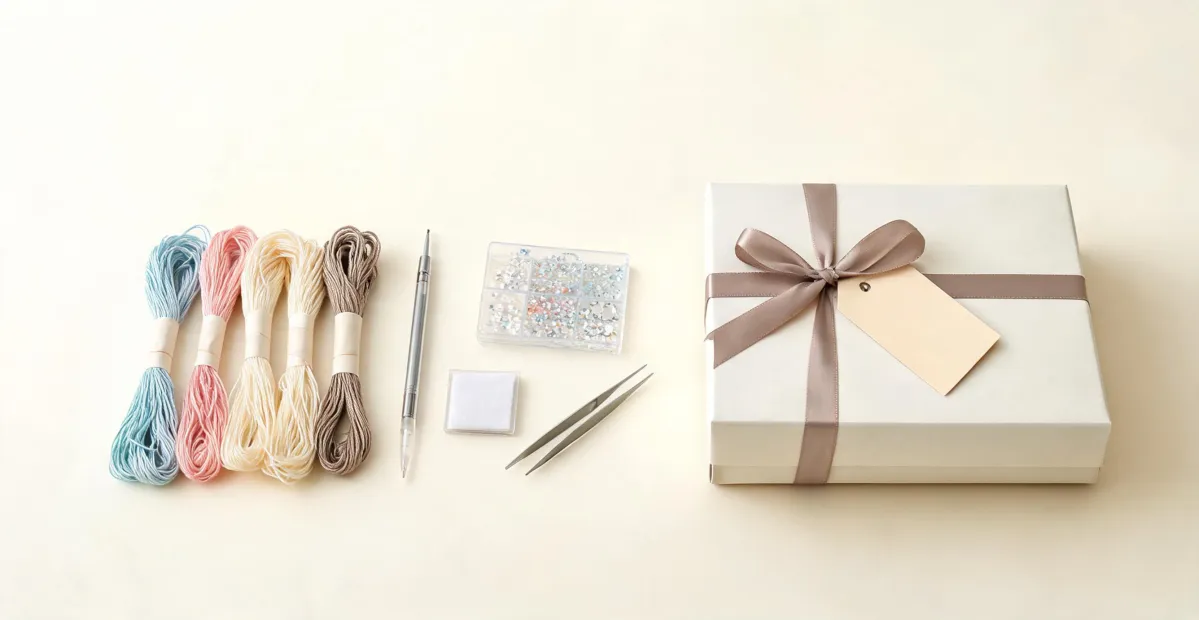
Last January, our creative director forwarded me a request that started with the kind of sentence I've learned to fear: "Can we get a quote for 500 custom gift kits? The launch event is at the end of March."
The kits were supposed to include a small cross stitch pattern, a mini diamond painting canvas, an embroidery floss bundle, and a few home fragrance samples. Not a huge order—about $12,000 in potential spend—but the timeline was tight and the products spanned three different categories. My job was to make the budget work without making the client regret it.
I started with a simple spreadsheet. Three vendors, identical specifications, same quantities, same packaging requirements. The first quote came in at $9,480, not $9,400—I'm looking at the payment processing fee now. The second was $11,800. The third was DMC, at $11,260. My first thought was to eliminate DMC. They were $1,780 over the low quote, and that's way more than a rounding error when you're buying gift kits.
But I've been burned by low quotes before. The vendor failure in March 2023 changed how I think about these decisions. So instead of signing the cheap purchase order, I spent two days investigating what the price difference actually bought us.
The product details I almost ignored
The first clue was the diamond painting pen. If you've ever wondered what is a diamond painting pen, it's the stylus you use to pick up and place tiny resin drills on the sticky canvas. It sounds simple, but a cheap pen with a weak wax tip will drive a beginner crazy. The low-cost vendor's sample pen fell apart after about ten minutes of use. DMC's sample kit included a proper ergonomic pen with a spare tip. Small difference, huge impact on the unboxing experience.
Then I looked at the floss. The client specifically wanted a limited-edition bundle, and DMC had the DMC anniversary embroidery floss pack—24 colors in a collectible tin. I ordered three packs from different production lots and compared them against the DMC color chart. The shades matched perfectly. That's not a small thing when your whole brand relies on color consistency. The low-cost vendor didn't have a color chart at all. Their "matching" colors were approximate, and "approximate" doesn't work in cross stitch.
The home fragrance part was even trickier. I hadn't realized DMC had a home fragrance line until their sales rep sent me a catalog. We tested three scents for our kits. The low-cost vendor's samples smelled more like air freshener than "linen water." We would have had to re-scent 500 units, or worse, ship them anyway and hope nobody complained.
At one point I also looked up custom tours DMC France, because the idea of seeing the color archives in person sounded genuinely useful for a B2B buyer like me. The tour didn't happen—our schedule was too tight—but the fact that DMC's team was willing to walk me through their production process on a video call told me they were treating this order as a relationship, not a transaction.
When I ran the total cost math
The turning point came when I compared total cost instead of unit price. I pulled the USPS pricing page (usps.com) in January 2025 to model shipping. First-Class Mail large envelopes were $1.50 for the first ounce, and each additional ounce was $0.28. Our kits had to fit in that envelope format to stay profitable. DMC's packaging kept the kit at 1.0 ounce. The low-cost vendor's thicker plastic mat pushed it to 1.4 ounces. On 500 kits, that's an extra $140 in postage alone.
There were also the fees that weren't in the quote. The low-cost vendor charged $450 for "setup" and then billed the sample separately. DMC's quote included artwork coordination and a pre-production sample. That $450 setup fee was completely invisible until I asked for the full price schedule.
And then there was the compliance side. Our client wanted to call the kits "premium" and the floss "limited edition." Per FTC guidelines (ftc.gov), claims like that need to be truthful and substantiated. DMC's labels already had lot numbers and product identification. The low-cost vendor's labels were generic. Fixing that ourselves would have meant another print run and a week of extra work.
The uncomfortable wait after signing
Even after I approved the DMC purchase order, I kept second-guessing. What if the anniversary floss pack was backordered? What if the client thought the kit felt too expensive? The three weeks until delivery were stressful. I told our finance lead, "I hope this doesn't blow up."
I want to say the shipment arrived on March 27, but don't quote me on that exact date. Either way, it arrived before the event, the boxes were packed in the right order, and the first sample assembly took less than 15 minutes. That's the moment I stopped holding my breath.
What this order taught me
Final cost was $11,260. The low quote was $9,480. On paper, I "overpaid" by $1,780. In practice, the real difference was smaller. The $140 in extra postage, the $450 setup fee, the replacement pens we would have needed, the compliance risk, the afternoon I would have spent inspecting defective samples—they all came off the price gap. DMC won because their quote was the one that didn't hide the true cost.
And this is where the prevention-over-cure thing comes in. Five minutes of verification beats five days of correction. I built a 12-point TCO checklist after this order. It covers color accuracy, packaging weight, label compliance, sample costs, setup fees, replacement policy, and hard delivery deadlines. That checklist has saved us more than the price difference on this order.
If you're sourcing custom gift kits—for cross stitch, diamond painting, embroidery, home fragrance, or anything else—you don't need to pick the highest quote. You just need to know what the quote isn't telling you. DMC gave me a standardized color system, products I could verify, and a sales team that answered questions before the contract was signed. That kind of transparency has a cost. In this case, it was worth every dollar.

Elise Laurent
Elise Laurent is a crystal and decorative glass quality analyst covering crystal figurines, vases, ornaments, suncatchers, and gift glassware. She examines ISO 6486-1 where food-contact glass dinnerware applies, then uses polarized strain inspection, dimensional checks, surface-defect grading, and refractive clarity to compare decorative pieces outside that scope. Her work helps sourcing teams choose materials, finishing routes, and protective packaging without confusing visual brilliance with verified durability.