Which Promotional Products Are Trending in 2025? A Procurement Manager's Honest Answer
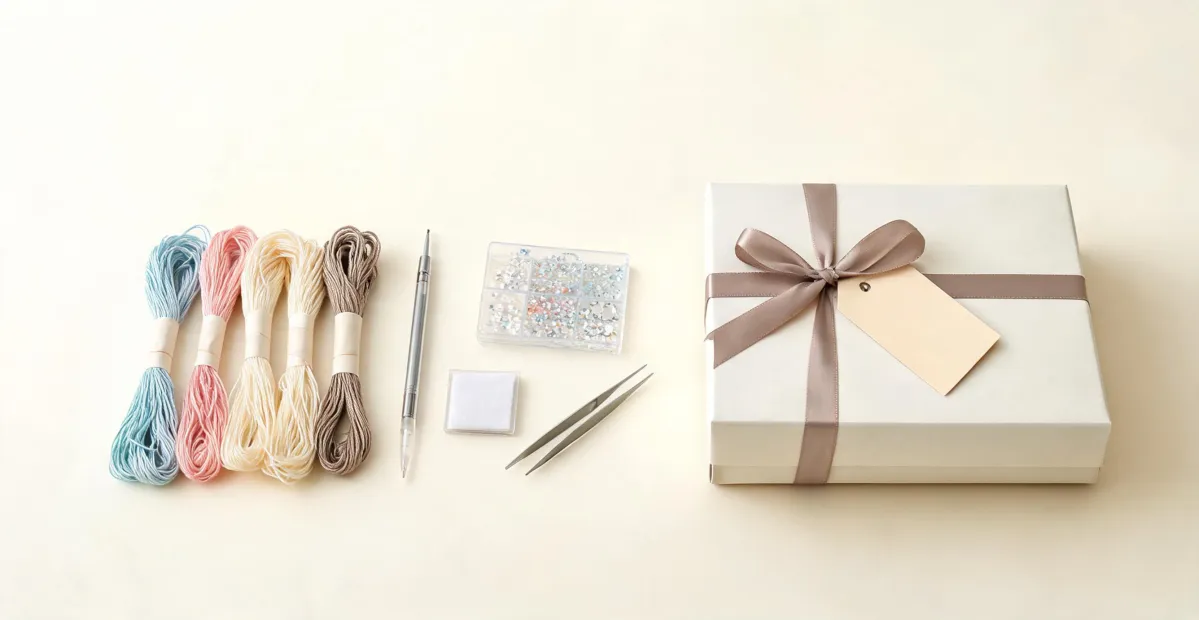
"So, what's going to be trending in 2025?"
I get asked that at least twice a month, usually by a marketing director trying to lock in a promo order before their budget gets clawed back. It sounds like a practical question. It sounds like they're doing their homework. But every time I hear it, I have to stop myself from answering with a question of my own: Why are you asking about trends before you've asked about the people receiving these items?
If you've ever had to explain to your CFO why 400 branded LED keychains are gathering dust in a storage closet, you know that feeling. The problem wasn't the keychains. It was the decision process that made those keychains seem like a safe bet.
I'm a procurement manager. For the past six years, I've managed my company's promotional product and corporate gift budget—about $180,000 in cumulative spending across roughly 200 orders, every line item tracked in our cost system. I've chased trends, gotten burned, built better checklists, and then gotten burned on the stuff I thought I'd covered. Bottom line: most promo product failures aren't trend-selection failures. They're total cost of ownership failures, dressed in trending-list clothes.
I have mixed feelings about trend reports. On one hand, they're useful early-warning signals for consumer behavior shifts. On the other, they've sent perfectly smart teams into decisions that made zero sense for their actual recipients. I read them. I just refuse to make purchasing decisions based on them.
The Surface Problem: Everyone Wants "Trending"
Let's be fair to the question. "What's trending" isn't a dumb question on its face. If you're in gifting or promotional products, you want to give people something they'll actually use—not another logo-stamped stress ball.
But in my experience, "what's trending" is usually standing in for one of three things:
- What won't make us look out of touch?
- What will people actually keep?
- What gets us the most goodwill for the least spend?
All three are legitimate. The problem? The standard trend report answers none of them. It answers a fourth question—"What have other consumers been buying recently?"—and that's dangerously irrelevant to a B2B purchasing decision.
Why "Trending" Is a Consumer Metric, Not a Procurement One
After tracking nearly 200 orders, here's what I've learned: consumer trends and B2B promo success are practically different species.
A consumer trend says, "People are buying embroidery kits and home fragrance sets for themselves right now." That's useful if you're a retailer stocking shelves. It tells you almost nothing about whether a branded embroidery kit will land well with your corporate clients at a February trade show.
I'll be direct: for all the hours marketing teams spend debating which promotional products are trending in 2025, the trend list was never the risk. The risk is that nobody in the room has calculated the total cost of a single unit actually reaching a recipient's hands. The way I see it, the deep problem is the question's framing. "Which promotional products are trending in 2025?" presupposes that "trending" is the metric that matters. It's not. The metric that matters is whether an item survives contact with your actual recipients—at a total cost you can predict.
What the $3.75 unit price really means
Take a product that keeps showing up on 2025 prediction lists: custom home fragrance sets, like decorative candles or reed diffusers. Easy sell—looks beautiful, high perceived value, works for nearly any audience. Here's what a real sourcing comparison looked like in Q3 of 2024.
One supplier quoted $5.20 per candle unit, all-in. Another quoted $3.75, which got my attention. It shouldn't have. The second one charged $0.60 extra per unit for labels, plus a $250 packaging setup fee, plus $180 for scent samples—and freight ran 15% higher because the packaging was bulkier.
Do the math: what looked like a $1.45 per-unit saving turned into a $2.10 per-unit overage. That's a 40% difference hidden in fine print. I built a cost calculator after getting burned on exactly this kind of quote twice.
Now, every promo product I touch goes through a TCO template before we even look at unit price. It covers unit cost, setup fees, packaging, shipping to our warehouse, quality control, distribution to clients, and a rework reserve of 5 to 12 percent depending on the item. That last line item is the kicker. Nobody budgets for it. And it's the one that comes back to bite you.
The Real Cost of Chasing "Trending"
Let me give you a concrete example. In Q2 2024, we were sourcing a promo item for a quarterly client event. A vendor pitched a mini desktop humidifier—all over the trend lists that quarter, tech-adjacent, slightly wellness, decent perceived value. My team loved it. Unit price: $6.15.
I ran the TCO and flagged two issues. First, the logo application required laser engraving, which meant a $350 setup fee and a 10-day lead time. Second, the packaging was flimsy—thin corrugate, and the unit shifted around inside.
I overrode my own concerns because the client event was low-stakes. That was a mistake. The shipment arrived with 11% of the units scratched and about 4% with charging issues. We opened every box, pulled the defective units, waited three weeks for replacements, and then expedited the final shipment to hit the event date. Between inspection labor, replacements, and expedited shipping, that "cheap" promo item cost us about $1,200 more than the premium alternative we'd passed on earlier.
Here's the part no trend list will tell you: low-quality items don't just cost money. They train recipients to ignore your brand. I once watched a client drop a peeling-logo ceramic mug straight into a donation bin within five minutes of receiving it. Her words to a colleague: "These are from that conference." Not the brand. Just "that conference." That's the hidden invoice of a bad promo product, and it doesn't show up on any P&L.
And then there's the "green" problem
Because "sustainable" and "eco-friendly" are predicted to keep dominating 2025 trend lists, you need to know about the regulatory layer.
The FTC's Green Guides (16 CFR Part 260) require environmental claims to be substantiated. If a product claims to be "recyclable," for instance, it must be recyclable in areas where at least 60% of consumers have access to recycling facilities. If a vendor says their item is green but can't show you the validation, that's not just a marketing exaggeration—it's a potential compliance problem. I now ask every vendor for substantiation documents before we put them on our approved list. If they can't produce them, that's a red flag. And I don't use that phrase loosely after 200-plus vendor interactions.
The TCO Test for 2025 Promotional Products
Okay—so if I'm not going to hand you a trending list, what will I give you? This three-question test, which I use for every promo candidate.
1. Would your recipient still have this in a year?
A product that lives on a desk or hangs in someone's home gives you 12 months of visibility. A product that gets tossed after the event gives you zero—actually, negative—visibility. Don't ask "would they like it?" Ask "would this survive a year in their space?"
This is where craft-adjacent categories are genuinely interesting. Embroidery kits and home fragrance sets are consumed slowly; the recipient engages with them over days or weeks. Your brand stays in their sightline far longer than it would with a stress ball that rolls under a desk by Thursday.
2. Does the quality match the story you're telling?
A premium brand handing out a flimsy item is worse than handing out nothing. The item is a physical product claim about who you are.
This is also where stability of supply matters. When we sourced a holiday campaign around DMC cross stitch kits, the standardized DMC color system made the process smoother than I expected. Our design team needed to match specific thread shades across packaging and print materials—like DMC Christmas Green, which is a numbered reference point, not a vague "holiday green." That precision saved us two rounds of proofs and about three weeks of back-and-forth. With other suppliers, color matching has been the single most annoying part of custom merch production.
3. Can you get the full cost breakdown in one sitting?
If a vendor can't itemize setup fees, packaging, freight, and QC expectations in a single conversation, that's a deal-breaker. I'm not claiming they're trying to deceive you. The absence of transparent cost structure is, in itself, useful information.
According to USPS pricing effective January 2025, shipping a single First-Class Mail large envelope (1 oz) is $1.50. Multiply that by 500 promotional mailers, and distribution alone is $750 before you've paid for the product, the labels, or the labor to assemble them. If a vendor's quote doesn't break down these line items, you can't possibly forecast the real cost.
One more caveat: this approach works for us because we're a mid-size B2B company with predictable quarterly ordering patterns. If you're a seasonal business with demand spikes, or a global enterprise sourcing at scale, the calculus might be different. My experience is based on orders in the $500–$15,000 range, mostly domestic. I can't speak to international logistics or the economics of million-unit runs.
Bottom Line
In six years and $180,000 worth of promo orders, the single most expensive mistake I've made was treating "what's trending" as a procurement strategy. It isn't one.
"Which ones will your recipients still have—and still respect—in 2026?"
Ask that instead. It's less exciting and way less Instagrammable than a trending product list. But it's the only approach I've seen survive real budget pressure, real quality failures, and real clients who have seen every gimmick in the book.
Trending is a trap. Total cost thinking is the way out. Trust me on this one—I have the spreadsheet.

Elise Laurent
Elise Laurent is a crystal and decorative glass quality analyst covering crystal figurines, vases, ornaments, suncatchers, and gift glassware. She examines ISO 6486-1 where food-contact glass dinnerware applies, then uses polarized strain inspection, dimensional checks, surface-defect grading, and refractive clarity to compare decorative pieces outside that scope. Her work helps sourcing teams choose materials, finishing routes, and protective packaging without confusing visual brilliance with verified durability.