Business Holiday Gifts: DMC Christmas Ornaments, Cross Stitch Kits, or Greeting Cards
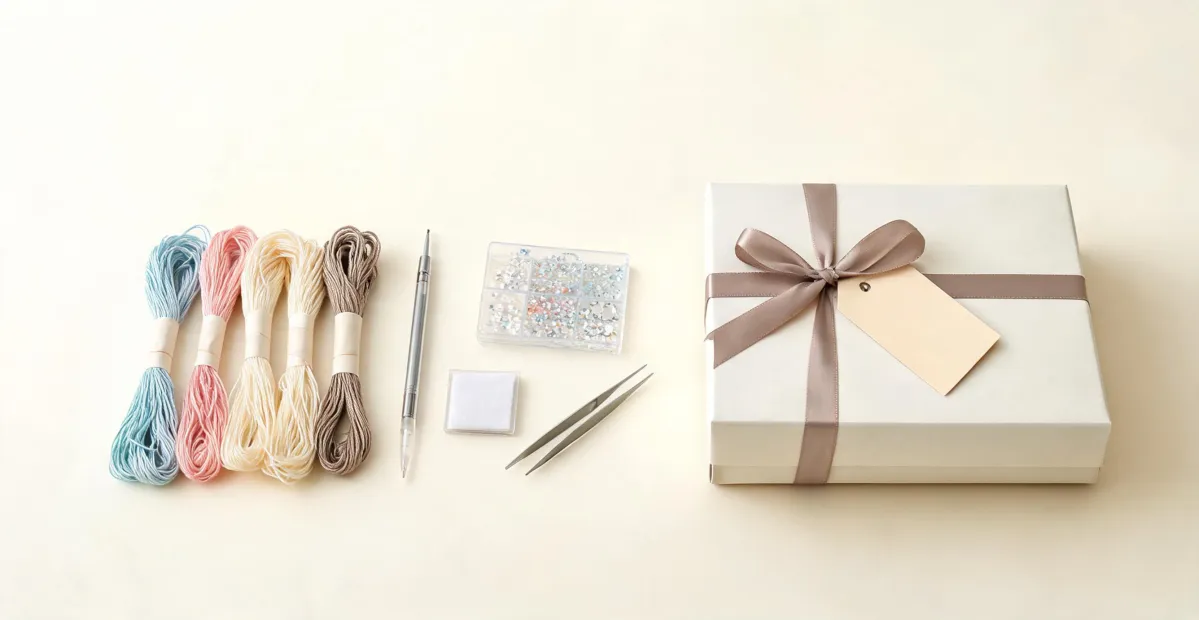
Maybe you clicked this because you've heard the holiday song 'Christmas in Hollis' — the one by Run-DMC — and you're thinking about holiday gifts. Or maybe you're just tired of deciding between Christmas ornaments, cross stitch kits, and greeting cards for your business. Either way, here's the honest answer: there is no single right choice. It depends on your deadline, your budget, and what you want the recipient to do with the thing you send.
I've been a procurement manager at a mid-sized promotional products company for six years, managing a holiday gift budget of about $120,000 a year. In that time, I've learned to stop asking 'which gift is best?' and start asking 'which gift will actually arrive, work, and get used?' This is basically a decision tree, so let's walk through the branches.
Scenario 1: The Deadline Is Real and It's Not Moving
If you've got a holiday event in 10 days and you need 200 takeaways, this is not the year to introduce a DIY kit. It's tempting to order a cute cross stitch ornament kit because it looks thoughtful. But if the box arrives and 40 kits are missing thread, you don't have time for replacements. That's the hidden cost of DIY at the last minute.
For this scenario, buy ready-made Christmas ornaments from a supplier who stocks DMC threads. Or, if the budget is tight, go with greeting cards. And here's the counterintuitive part: pay for rush shipping. In November 2024, I paid $400 extra for expedited production on a $15,000 event order. The alternative was missing the event entirely. That $400 bought certainty, not just speed. Even after approving the fee, I kept second-guessing. What if the expedite didn't actually change anything? I didn't relax until the delivery scan showed 'arrived.'
I've also made the mistake of skipping the final proof because 'the vendor knows what we want.' That was the one time the color chart was outdated. It cost us $800 and a lot of stress. So if you're in this scenario, don't optimize for unit price. Optimize for a vendor who gives you a written delivery date and a way to confirm it.
Scenario 2: DMC Embroidery Floss Packs for Home Decor and DIY Kits
If your company is planning a virtual holiday workshop, a team-building kit drop, or a '12 Days of Christmas' social campaign, the gift itself is the activity. This is where DMC embroidery floss packs for home decor and cross stitch kits shine.
Here's what I mean by total cost of ownership (i.e., not just the unit price but the cost of a disappointing experience). A cheap kit that loses colors or uses brittle thread will generate complaints. A DMC-based kit uses the same color numbers stitchers have used for decades — DMC has been around since 1746 — so if someone loses a skein, you can send a replacement floss pack instead of replacing the whole kit. That's a real cost saving when you're shipping to 300 people.
Roughly speaking, my sweet spot for this scenario is $15 to $30 per recipient, including packaging and shipping. If you're buying kits in bulk, ask the supplier two questions: Are the threads labeled with DMC numbers? And do the instructions assume no prior experience? Cross stitch for absolute beginners needs bigger fabric, clear charts, and at least one photo of the finished piece.
Honestly, I'm not sure why the DIY category keeps growing in a world where nobody has time. My best guess is that 'making something' has become a shared hybrid-work team activity. If that's your goal, budget for a sample order first. We once ordered 500 kits from a new supplier and skipped the sample because the samples at a trade show had looked perfect. The bulk order arrived with off-center printed patterns. Looking back, I should have asked for a pre-production sample. At the time, it felt like an unnecessary delay. It wasn't.
Scenario 3: It's a Small Thank-You, Not a Big Gift
Not every holiday touch needs to be a thing. For small accounts or internal teams, a well-chosen greeting card can outperform a low-cost ornament that gets tossed in a drawer.
If you're the type to type 'is it top-rated greeting card stores' into Google before buying cards, I'd say this: the rating matters less than the message. A $3 card with a handwritten note feels more personal than a $10 generic ornament with a logo slapped on it. That's not just soft thinking; it's cost logic. A card costs less to ship, stores flat, and doesn't need rework.
But here's the catch: a greeting card only works if you have time to write in it. If you're mailing 150 cards and no one on your team has time to sign them before Christmas, you're better off with ready-made ornaments or food (seriously, food is a safe route if dietary restrictions allow).
Which Scenario Are You In?
Still not sure? Here's a quick checklist.
- Need it in hand in less than two weeks? Go with ready-made Christmas ornaments or greeting cards. Skip DIY kits.
- Do you want the recipient to spend 30 minutes making something? Choose cross stitch kits or DMC embroidery floss packs for home decor. Build in time for a sample order.
- Is the goal just to be remembered? A greeting card from a top-rated store is enough. Spend your budget on the note, not the packaging.
- Uncertain about quality? Order one sample before committing to bulk. It's the cheapest insurance you can buy.
One more thing: my experience is based on around 200 seasonal orders in the $10 to $40 per recipient range. If you're managing luxury gifts or ultra-budget bulk giveaways, your numbers will look different. I can't speak to $200 custom boxes — that's a different procurement animal.
Also, the prices I mention are from my own orders in 2024. Verify current rates before you commit, especially with holiday surcharges.
Bottom line: There's a reason holiday catalogs include ornaments, kits, and cards. They serve different needs. The trick is not to pick what's nice. It's to pick what will actually arrive, work, and get used.

Elise Laurent
Elise Laurent is a crystal and decorative glass quality analyst covering crystal figurines, vases, ornaments, suncatchers, and gift glassware. She examines ISO 6486-1 where food-contact glass dinnerware applies, then uses polarized strain inspection, dimensional checks, surface-defect grading, and refractive clarity to compare decorative pieces outside that scope. Her work helps sourcing teams choose materials, finishing routes, and protective packaging without confusing visual brilliance with verified durability.