What Does DMC Mean in Diamond Painting? A Purchaser's Perspective on Color Standards
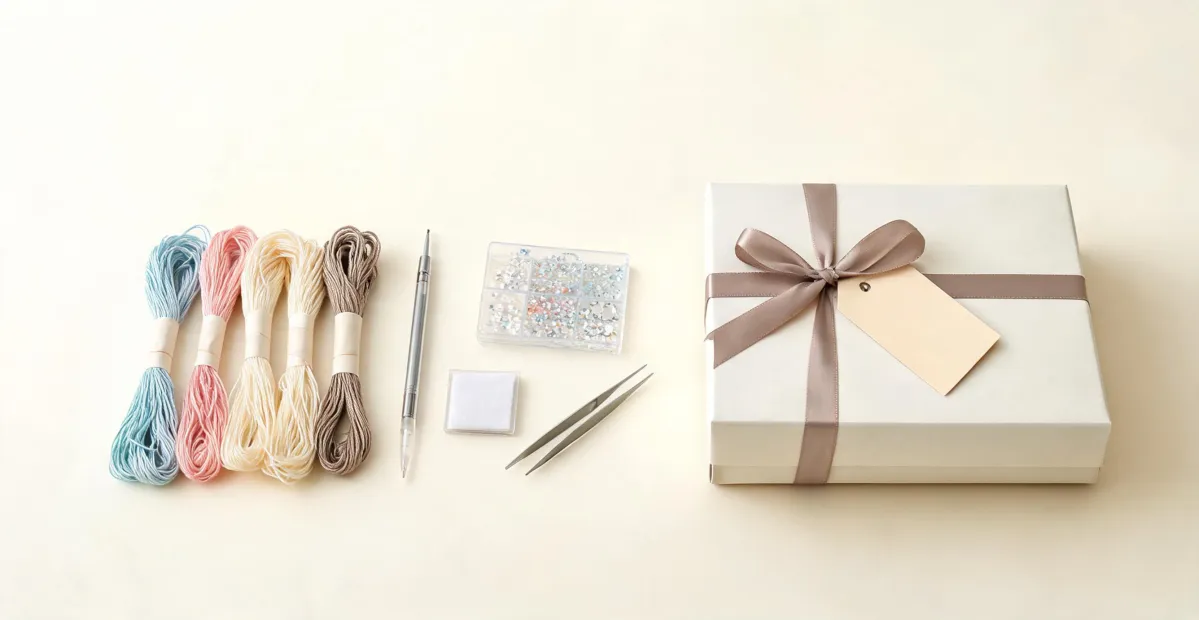
If you've ever searched 'what does DMC mean in diamond painting' into Google, you probably wanted a simple answer. I don't have one—and that's kind of the point. I'm the office administrator for a 60-person company. I manage our corporate gift orders and branded merchandise, roughly $40,000 a year across eight vendors. When I took over purchasing in 2020, I assumed a color code was just a color code. It took one bad batch of embroidered name badges to prove me wrong.
So here's the short version. DMC is a French company, Dollfus-Mieg et Cie, with roots going back to 1746. They make embroidery floss and needlework supplies. In cross stitch patterns, the DMC color number is the private language of thread: each floss has a number, and each number has a specific color. Diamond painting borrows that same language. A chart will mark a symbol, and the key will say something like 'DMC 699'—that means the painter needs a drill in that exact resin color.
You think you're asking about a brand. You're actually asking about a supply chain.
When people ask what DMC means, they usually expect 'it's a brand.' True. But if you stop there, you miss why the term shows up in diamond painting at all. DMC became a standard because the company built a color system that could travel. A color name like 'Christmas green' is useless across borders. One company's 'Christmas green' is another company's 'forest.' But DMC Christmas Green is code 699. That's the whole point.
In the craft world, the DMC code is a kind of contract. It says: the color you see in the sample is the color you can buy in a store, and it's the same color the chart maker had in mind. That's especially important with embroidery kits. A kit can have twenty shades of green. If the package lists the DMC numbers, you actually know what you're giving someone. If it just says 'assorted greens,' you're playing roulette.
The problem with 'close enough'
I learned the hard way. A couple years ago, we ordered custom embroidered name badges for our field team. The logo green in the mockup looked right. The bulk order didn't. The badges came back in a green that was sort of our green—but not our green. When I asked, the vendor said they 'matched to the nearest available thread color.' No chart. No code. No way to verify.
The 'just use a close color' advice is tempting because it saves time. But it ignores the reality that color perception changes. What looks close on a cheap monitor can look completely wrong in daylight on a shirt. In my opinion, the single most underrated spec in corporate buying is a color number. Not a name. A number.
What that cost us
The supplier who couldn't give me a DMC code cost us about $2,400 in reorders and rush shipping. And honestly? The bigger cost was trust. I had to tell the VP that our brand color was 'wrong-ish.' That's not a good look.
Then in 2024, I made a faster version of the same mistake. We had a last-minute VIP gift order: fifty small embroidery kits. The client's event moved up by a week, and I had two hours to approve the purchase before a rush processing cutoff. Normally, I'd check every detail. But there was no time. The sample photo looked nice, so I approved it. The kits arrived with little bundles of floss that had no numbers at all. No labels. No chart. Just a picture of the finished design on the box. Good luck figuring out which shade goes where when a skein slips out.
In hindsight, I should have asked for the DMC reference. But with the deadline, I did the best I could with available information. It still annoys me.
Why this matters beyond keywords
'Are bone china tea cups worth anything' is a search I get in my head when I deal with vague specs. A bone china cup's value usually depends on the maker's mark on the bottom. Not the pattern, not the condition. The mark tells you where it came from and when. Without it, you have a cup but no provenance. A DMC code is basically the maker's mark of embroidery supplies. It tells you exactly what you're holding, so you can verify, replace, or match it.
That's also why I'm transparent with our own vendors. I want the number up front. If a supplier can't tell me the DMC code for the green they used in a name badge, that's a red flag. It's not necessarily proof they're bad—it means they don't want me to hold them to a standard. 'Close enough' is how people end up with 'sort of' corporate gifts.
What I check now
It took a few mistakes, but I've narrowed my buying rules down to four:
- Embroidery and cross stitch kits must list DMC numbers. 'Christmas green' is not enough. DMC 699 is enough.
- Diamond painting charts need a DMC key. If the symbols don't map to standard code numbers, put it back.
- Custom name badges need a thread color reference. Ask for the DMC equivalent or a printed color swatch. If they won't, walk away.
- Check the DMC chart yourself. The chart changes over time, as do dye lots. I keep a current copy for our team (accessed January 2025). Verify any color before you approve a large order.
If you're a one-person shop buying a kit for yourself, this might feel like overkill. You can hold the colors side by side and make it work. In B2B, we don't have that luxury. We order hundreds of identical items and need them to match a brand promise. A code is the only practical way to do that at scale.
One more thing: DMC codes are not magic. I've seen kits that print a DMC number on the package and then use a visibly different dye in the bag. That's a different kind of problem, and it's exactly why I buy from suppliers who are willing to show me the actual color map before ordering. Transparent pricing and transparent specs go together.
So what does DMC mean in diamond painting?
DMC is a company, sure. But when I search that phrase now, I want to know something else: does the kit tell me what I'm getting? A DMC-coded kit is honest by design. A kit without numbers is a mystery.
Honestly, I'm not sure why DMC became the universal language instead of, say, a more modern color system. My best guess is that embroidery floss was already everywhere before the rest of us caught up. DMC got to be the default because it was useful in a world with no other standard. If someone has better insight, I'd love to hear it.
Until then, I'll keep ordering with codes. It saves money, it saves trust, and it means the 'Christmas green' we ask for is the Christmas green we actually get.

Elise Laurent
Elise Laurent is a crystal and decorative glass quality analyst covering crystal figurines, vases, ornaments, suncatchers, and gift glassware. She examines ISO 6486-1 where food-contact glass dinnerware applies, then uses polarized strain inspection, dimensional checks, surface-defect grading, and refractive clarity to compare decorative pieces outside that scope. Her work helps sourcing teams choose materials, finishing routes, and protective packaging without confusing visual brilliance with verified durability.