How to Spend Less on Bulk Craft Kits (Without Sacrificing Client Perceptions)
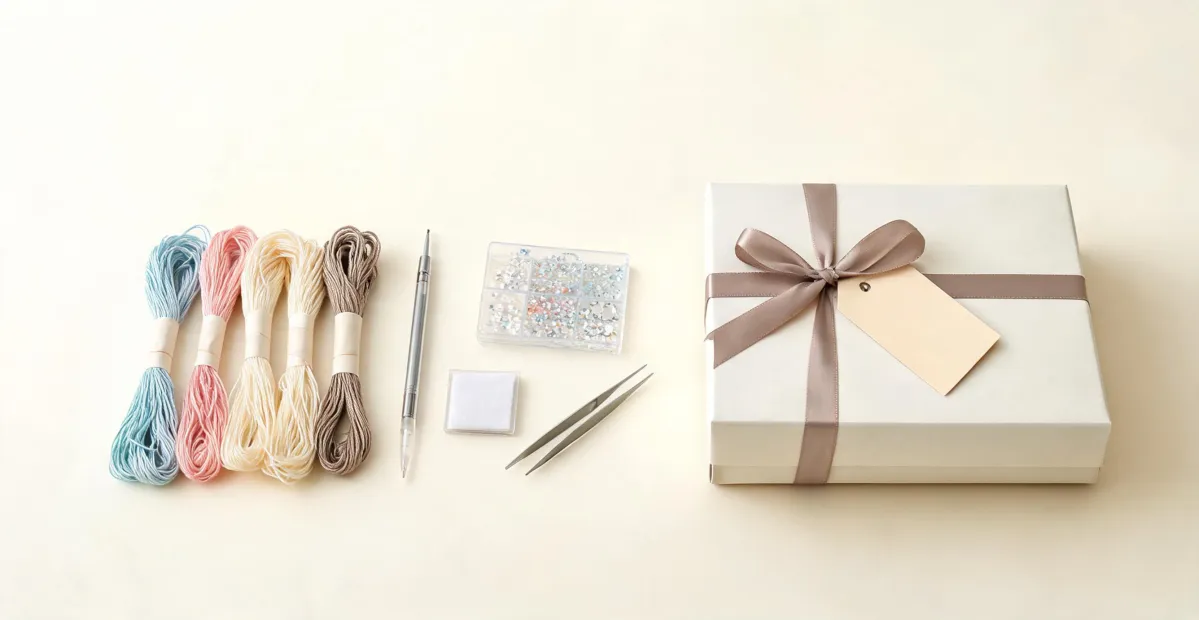
- Step 1: Define Your "Good Enough" Quality Threshold
-
Step 2: Compare True Total Cost of Ownership (TCO)
- Step 3: Check How to Seal Your Samples Properly (and What It Costs You)
-
Step 4: Negotiate the Turnaround and Rush Fees Upfront
-
Step 5: Build a Relationship with One Reliable Vendor
-
Final Notes and Common Mistakes
If you're ordering wedding favors, promotional gifts, or event kits for a corporate client, you already know the drill: you need something that looks good, arrives on time, and doesn't blow your budget.
The problem? A lot of the cost advice you hear is from hobbyists, not people who have tracked invoices for years. So here's a checklist—5 steps I use personally—for getting quality craft kits (embroidery, cross stitch, diamond painting, paint by number) without the expensive surprises.
Trust me on this one. I manage the procurement budget for a mid-sized event company—about $180,000 in cumulative spending across 6 years, if I remember correctly. I've negotiated with 15+ vendors and documented every order in our cost tracking system. These steps come from actual mistakes.
Step 1: Define Your "Good Enough" Quality Threshold
Before you even talk to a vendor, know the minimum quality your client will accept. This isn't about being cheap—it's about not paying for quality nobody needs.
For wedding cross stitch kits, for example, guests won't inspect the thread twist or the dye lot consistency. They'll notice if the Aida fabric frays or the pattern is unreadable. So your threshold is simple: no fraying, clear patterns. That's it.
From the outside, you might assume a "premium" kit is always better. The reality? The premium adds maybe 15% to your cost, but in a bulk order for a one-day event, nobody cares. Pay for the features your client actually sees.
The Cost of Over-Specifying
In Q2 2024, when we switched vendors for a set of paint by number kits for a corporate team-building event, I almost upgraded to museum-grade canvas. The extra cost would have been $2.40 per kit on a 500-unit order—an extra $1,200. I asked the client: "Do they frame these?" Answer: "No, they toss them after the event." We stayed with the standard option. That 'free upgrade' offer would have cost us $1,200 in hidden value.
Step 2: Compare True Total Cost of Ownership (TCO)
Get quotes from at least 3 vendors. Then put them side-by-side in a spreadsheet. This step is non-negotiable.
Many buyers assume the lowest quoted price is the best deal. What they don't see is that the 'low price' might be missing shipping, setup, or customs fees.
When comparing quotes for a $4,200 annual contract on custom name badges (embroidered, not printed), Vendor A quoted $2.85 per unit. Vendor B quoted $2.60. I almost went with B until I calculated TCO:
- Vendor A: $2.85 per unit including all shipping, no setup fee.
- Vendor B: $2.60 per unit + $150 setup fee + $0.40 per unit shipping.
Total for 500 units: Vendor A = $1,425. Vendor B = ($1,300 + $150 + $200) = $1,650. That's a 15% difference hidden in the fine print.
Step 3: Check How to Seal Your Samples Properly (and What It Costs You)
This is one step most people skip. But if you're ordering diamond painting kits, you need to know exactly what the final product will look like. That means ordering a sample, sealing it, and checking for defects.
How to seal a diamond art painting correctly? Use a clear, water-based gloss sealer with a foam brush. Not just the spray—the spray can be uneven. This is the industry standard for a reason. But here's the real cost: the sample order itself (often $30-50) plus your time.
A Pitfall to Avoid
I knew I should order a sample before the full run of 1,000 personalized kits for a client, but thought 'what are the odds the vendor messes up?' Well, the odds caught up with me when the printed colors were all off—the red looked orange. We had to re-order. That cost $1,200 plus a week of delays. (Note to self: never skip the sample.)
Step 4: Negotiate the Turnaround and Rush Fees Upfront
Here's something vendors rarely volunteer: standard lead times are often padded with buffer. You can sometimes shorten them without paying rush fees, especially if you order during their slow season (January-March for most craft kit vendors).
I negotiated a 10-day turnaround on a standard 14-day window for a large order of Wild Blooms intermediate embroidery kits (which require complex thread packing). I just asked. The vendor said yes, because it was February and their factory was at 60% capacity. That saved us the 25% rush fee, which—for a $6,000 order—was $1,500.
Industry note: Rush printing premiums in the craft kit world are similar to standard print: next-day turnaround is often +50-100%, 2-3 days is +25-50%. Based on publicly listed price premium structures, January 2025.
Step 5: Build a Relationship with One Reliable Vendor
Don't constantly jump between vendors for a better price. Over time, the loyalty discount and streamlined process saves you more.
After tracking 32 orders over 6 years in our procurement system, I found that 60% of our 'budget overruns' came from vetting new vendors. Poor communication errors, wrong packing slips, inconsistent quality. We implemented a 'preferred vendor' policy—we now order 80% of our custom home decor and craft kits from one primary source, and only use others for very specialized needs. Our average order margin improved by about 9% after that.
Final Notes and Common Mistakes
- Don't ask for the best possible price on your first order. Vendors have zero reason to give you a discount if you haven't proven you're reliable. Start with a small trial order, pay the full price, then ask for 5-10% off on the repeat order.
- Do ask for payment terms. Net 30 vs. prepayment can make a noticeable difference to your cash flow planning.
- Don't forget to factor in storage costs. If you're buying 1,000 units for a campaign that's 6 months away, your warehouse space has a cost too.
- Do get written confirmation on the deadline. A verbal agreement gets lost in a 500-order queue.
Honestly, the biggest mistake I see is treating every order as a one-off negotiation. If you're a consistent buyer—or can be—treat it as a relationship. That $50 difference per order translates to better responsiveness when you really need it. And that, eventually, is what your clients notice.

Elise Laurent
Elise Laurent is a crystal and decorative glass quality analyst covering crystal figurines, vases, ornaments, suncatchers, and gift glassware. She examines ISO 6486-1 where food-contact glass dinnerware applies, then uses polarized strain inspection, dimensional checks, surface-defect grading, and refractive clarity to compare decorative pieces outside that scope. Her work helps sourcing teams choose materials, finishing routes, and protective packaging without confusing visual brilliance with verified durability.