How to Order DMC Embroidery Kits and Diamond Painting Supplies: A 7-Step B2B Checklist
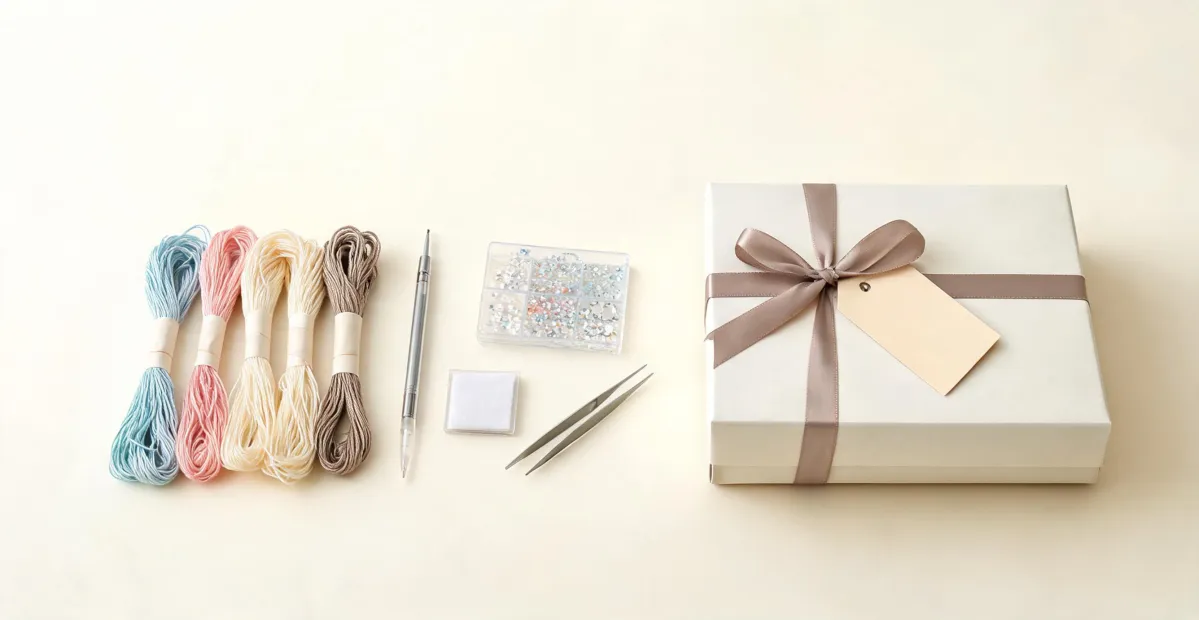
As an office administrator, I’m the one who gets asked to source company gifts, promotional items, and team-building supplies. If your to-do list includes ordering DMC embroidery kits, diamond painting accessories, or home decor items for a corporate event, you need a process that doesn’t fall apart when the invoice doesn’t match your expectations.
This is the exact checklist I use. It works for a 50-person company or a 500-piece custom order. Here’s how to get it right in seven steps.
1. Define the use case and audience
Before you even look at products, ask yourself: Is this for employees, clients, prospects, or a charity event? The answer changes the product tier.
- For employee gifts: go with mid-range kits that are easy to complete.
- For client VIP gifts: choose premium home decor sets or custom-packaged kits.
- For trade shows: pick smaller, lower-cost items, but keep quality acceptable.
Write down the headcount, budget, and drop-dead delivery date. Then you can start filtering suppliers.
2. Pick the right product mix
The craft market today is broader than it was ten years ago. What was best practice in 2015 may not apply in 2025. While cross stitch remains a classic, diamond painting kits and paint by number sets have surged in popularity. Most B2B orders I handle now mix them.
For example, a spring corporate gift box might include a small cross stitch kit, a medium diamond painting canvas, and a home fragrance item. This gives variety without inflating budget.
Don’t stick to just one category. Test a mix to see what resonates with your people.
3. Make the DMC color system your standard
Here’s the step most buyers ignore: standardize colors. DMC embroidery kits use a color code system that’s been trusted since 1746. If you're working with multiple suppliers, use the same DMC references to avoid mismatched threads and beads.
Download a free printable color DMC diamond painting DMC chart and share it with your vendors. It saves endless back-and-forth.
Color accuracy also has an industry benchmark. According to Pantone (pantone.com), the standard tolerance is Delta E < 2 for brand-critical colors. That’s a technical way of saying “don’t accept a shade that looks off.” With DMC codes, you can hold suppliers accountable to a common standard.
4. Confirm customization and bulk order requirements
B2B orders are not the same as consumer purchases. You need to know the minimum order quantity (MOQ), whether the supplier can add your logo, and how custom packaging affects lead time.
In our 2024 vendor consolidation project, we switched from four suppliers to two because one offered custom packaging at a sensible MOQ. That move cut our ordering time by six hours a month.
5. Request samples before placing the big order
Samples are non-negotiable. I still kick myself for not requesting one before a 200-unit cross stitch order. If I'd inspected a single kit first, I'd have noticed the printed pattern was too low-resolution, and we wouldn't have had to reprint all 200 booklets.
Order 3–5 samples from each shortlisted supplier. Test the thread quality, chart legibility, and packaging durability. Then, let one of the team members try the kit. It's the closest thing to a pilot test you can get.
6. Verify logistics, lead times, and invoicing
Now the part that has burned me more than once. Get the delivery date in writing, confirm who covers freight damage, and—critical—ask to see a sample invoice.
From the outside, it looks like all invoices are the same. The reality is international suppliers sometimes issue documents that don’t meet local tax requirements. One handwritten receipt from a “budget-friendly” vendor ended up costing me $2,400 in rejected expenses. Now I verify invoicing capability before any order.
7. Plan for quality control and reorders
When the shipment arrives, don’t just distribute it. Check a random sample against your DMC color chart. Keep a master record of the codes, SKUs, and supplier contact you used.
What is the biggest diamond painting you can order for a corporate display? In our case, we did a custom 100×150 cm diamond painting for a client’s office lounge. It was manageable because we followed the same steps: samples, color checks, and a written lead time. For anything larger, treat it as a custom project and double your delivery timeline.
Final Notes to Avoid Common Mistakes
Here are the mistakes I see buyers make (and I’ve made a few myself):
- Skipping the DMC chart check, then paying for rework.
- Assuming MOQs are flexible without asking.
- Not confirming invoice format before payment.
- Forgetting to keep a sample batch for future orders.
The fundamentals of purchasing haven't changed—clear specs, verified suppliers, and solid paperwork. But the way we execute them has transformed, especially with all the new home decor and diamond painting options available. Use the process above, adapt it to your company’s rules, and your next bulk craft order will survive contact with accounting.

Elise Laurent
Elise Laurent is a crystal and decorative glass quality analyst covering crystal figurines, vases, ornaments, suncatchers, and gift glassware. She examines ISO 6486-1 where food-contact glass dinnerware applies, then uses polarized strain inspection, dimensional checks, surface-defect grading, and refractive clarity to compare decorative pieces outside that scope. Her work helps sourcing teams choose materials, finishing routes, and protective packaging without confusing visual brilliance with verified durability.