How I Learned to Stop Guessing and Use the DMC Color Chart for Holiday Gifts
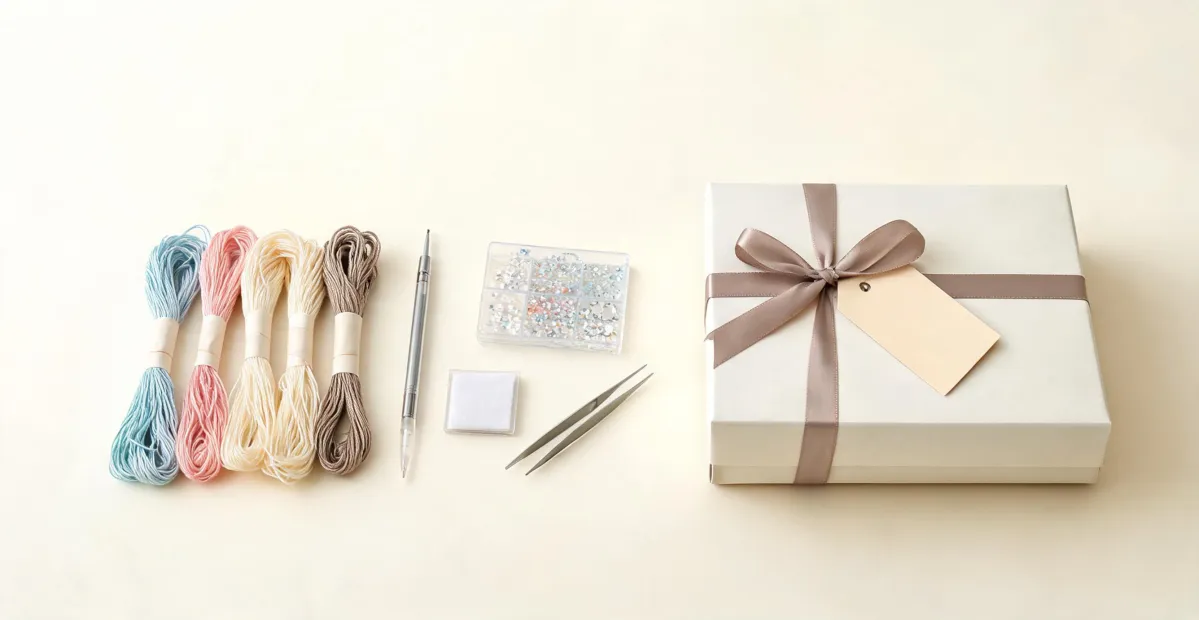
Last November, I got a call from our VP of Operations. 'We need 200 Christmas gift sets for client appreciation—some cross stitch, some diamond painting kits. Can you have them ready by December 10?'
I'd been managing purchasing for about three years at that point. I knew the drill: find a supplier, get samples, place the order, cross my fingers. But this one felt different. The VP mentioned that the kits needed to match specific holiday colors—'that deep red our logo uses, and a gold that doesn't look cheap.'
So I did what any reasonable admin would do: I called three suppliers I'd worked with before. Two of them said, 'Yeah, we can do that. We have a wide selection.' The third one said, 'We can do the kits, but for custom color matching, you'll want to use the DMC color chart. Do you have a copy?'
I didn't. And that hesitation—that tiny moment of not knowing—almost cost me big.
Why the DMC Color Chart Is the Secret Sauce
Let me back up. The DMC color system has been around since 1746. That's not a typo—we're talking pre-industrial revolution. Their floss and thread colors are standardized in a way that most suppliers can't touch. If I say 'DMC 666' (that's a Christmas red), any manufacturer worth their salt knows exactly what I'm talking about. No guesswork. No 'close enough.'
But I didn't know that at the time. I went ahead and ordered from the second vendor—the one that said 'we can match any color.' They sent me a sample. It looked... okay. The red was a bit orange, the gold was more beige. I showed it to the VP. She squinted. 'Not quite,' she said. I had a week to fix it.
That's when I remembered the third vendor's advice. I found a free printable DMC color chart online—literally Googled 'free printable DMC color chart for diamond painting' and there it was. Printed it out, compared it to our brand colors, and realized the problem: the vendor had used DMC 321 (a brick red) instead of DMC 666. The gold was DMC 783 instead of DMC 729. Off by just a shade, but for a client-facing gift? That's a deal-breaker.
I called the vendor. 'Can you use DMC 666 and DMC 729?' Silence. 'We don't have those in stock. But we can order them. It'll take two weeks.' Two weeks. I had five days.
Now I'm kicking myself. If I'd specified the DMC numbers up front, I could have ordered from someone who stocked them. Instead, I ate a $400 rush fee with a third vendor who could deliver in three days—and had the DMC colors in inventory.
Here's a concrete example from that spreadsheet I still keep. The DMC color chart for diamond painting isn't just for hobbyists—it's for anyone doing bulk color-critical work. I still pull up the diamond painting DMC numbers list when I'm sourcing custom kits. It's saved me from at least two similar mistakes since then.
What I Wish I'd Known Earlier
Honestly, I thought 'color matching' was something suppliers just did—like, they look at a swatch and mix it up. Turns out, without a standardized reference like DMC, you're relying on the printer's eyes, which vary. Big red flag.
Put another way: the DMC system is to embroidery what Pantone is to printing. It's the common language. If your supplier doesn't speak it, that's a problem. And if you're buying kits that include cross stitch or diamond painting, specifying the DMC numbers is the difference between 'good enough' and 'exactly right.'
The Real Cost of Skipping the DMC Color Chart
I still regret not asking for the DMC color chart upfront. The supplier I initially chose was cheaper by about $1.50 per kit. Over 200 kits, that's $300 in savings. But the rush fee? $400. The VP's disappointment? Priceless. And I lost three days of my life handling the swap.
Bottom line: if you're ordering custom embroidery kits or diamond painting sets for a corporate gift, ask for the DMC numbers. Get a free printable DMC color chart for diamond painting—it's literally free—and match it against your brand colors before placing the order.
The Tools I Use Now
Here's my current process. I keep a printed DMC color chart taped to my desk. When I'm sourcing holiday ornaments or cross stitch kits, I reference it. I also saved a digital version in my purchasing folder—'diamond painting DMC numbers list' is a document I update every time I find a new useful reference.
For the Christmas gift sets that finally worked? The third vendor delivered on time. The colors were spot-on. The VP loved them. And I learned a lesson: when a vendor says 'we don't do that, but here's who does,' that's actually a good sign. It means they know their limits—and they know what works.
The surprise for me wasn't the color issue itself. It was how easily it could have been avoided. I mean, a simple DMC color chart—available for free—would have saved $400 and a week of stress. Now I tell every new admin I train: 'Get the DMC numbers. Always.'
Oh, and one more thing: if you're buying bone china ornaments or gifts, that's a whole different rabbit hole. I actually had someone ask me recently, 'is there bone in bone china?' I laughed—because no, it's not literal bone. But that's a story for another time. The point is: know your materials, know your color system, and never assume your supplier knows what you mean without specifics.

Elise Laurent
Elise Laurent is a crystal and decorative glass quality analyst covering crystal figurines, vases, ornaments, suncatchers, and gift glassware. She examines ISO 6486-1 where food-contact glass dinnerware applies, then uses polarized strain inspection, dimensional checks, surface-defect grading, and refractive clarity to compare decorative pieces outside that scope. Her work helps sourcing teams choose materials, finishing routes, and protective packaging without confusing visual brilliance with verified durability.