DMC for Business: Choosing Between Cross Stitch Kits, Diamond Painting, Paint by Number, and Name Badges
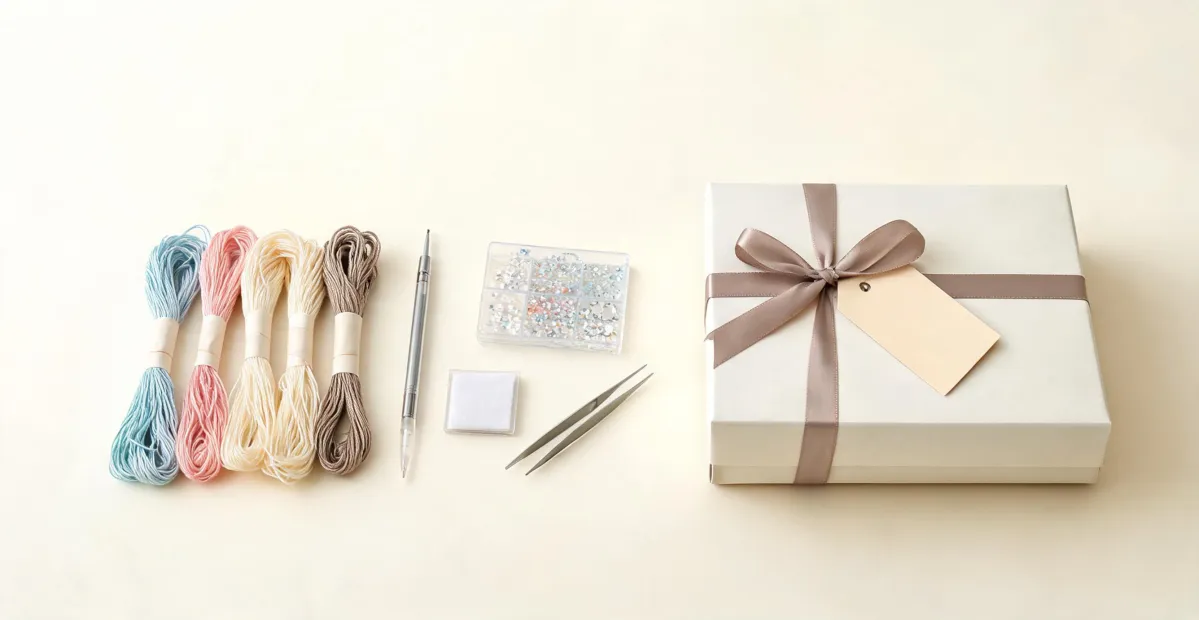
First, a quick note. If you typed in "Run DMC Christmas songs" looking for the rap group—that's not us. We're DMC, the French craft company founded in 1746, best known for a standardized embroidery thread system. Different DMC, but hey, "Christmas in Hollis" is a classic. Now that we've got that cleared up, let's talk about something I deal with daily: choosing the right DMC product for a business order.
I'm a quality/compliance manager at DMC. I review every order before it ships—roughly 200 unique projects a year. Over the past four years, I've rejected about 7% of first deliveries for color mismatches, sloppy seams, or wrong components. Most of those issues trace back to a buyer choosing the wrong product category for their use case. So this isn't a "the more expensive the better" guide. Different situations need different products.
First, Map Your Situation
There's no one-size-fits-all answer. The right product depends on three things:
- Who is receiving it?
- What do you want them to do with it?
- How much time do you expect them to devote?
Let me walk through three common scenarios I see from B2B clients.
Scenario A: You Want Promotional Gifts That Get Used (and Screened)
You're a marketing manager, and your company wants a branded giveaway for a trade show. You're considering cross stitch kits because they seem meaningful, handmade, and Instagram-worthy. Counterintuitive as it sounds, I'd steer many clients toward a smaller project like diamond painting coasters or a paint by number magnet rather than a full cross stitch kit.
Why? A full cross stitch kit can take weeks to complete. Most recipients don't finish it. They post a photo of the kit on social media, mention your brand once, and then it sits in a drawer. A paint by number or diamond painting piece has a better chance of completion because it requires less discrete time—each session can be as short as fifteen minutes.
If you do decide on cross stitch, you'll need a pattern. So, how do you make a cross stitch pattern? The simplest route: use pattern-making software (like Stitch Fiddle or PCStitch). You upload a logo, choose a square size (we generally recommend 14-count Aida, which gives a good balance between detail and time), and the software maps colors to DMC thread numbers. But watch out: low-contrast logos become muddy blobs when converted to stitches. You need to simplify your design before conversion, often removing gradients and reducing to 3–5 colors.
I remember a client who brought us a detailed vector file with twenty colors and asked for a cross stitch pattern. The thread count would have been 40,000 stitches—that's weeks of work. We pushed back and helped them simplify the logo to four colors. The result was actually more recognizable from a distance. So the counterintuitive advice is: don't simply convert your logo. Remix it for the medium.
Scenario B: You're a Retailer Stocking DIY Kits
If you run a craft store, an online gift shop, or a distribution company, your priorities are different. You want consistent inventory, reliable color, and kits that appeal to a broad customer base. In this scenario, choose products based on the DMC color system. Since we've been standardizing these colors for centuries, you can restock a kit years later and the threads will match—within industry tolerances.
Let me rephrase that: not match it to the exact dye lot, but close enough that a new customer won't notice a difference. What does "within industry tolerances" actually mean? For color-critical work, a Delta E under 2 is generally acceptable to trained observers. I check this by comparing thread batches against the DMC color card under daylight-balanced light. If a new batch of red has a Delta E above 3, I reject it. You won't notice that difference on a single kit, but a customer who buys a second kit two years later will.
If you're a retailer, the DMC website has downloadable color charts, product specs, and wholesale information. Search for "DMC website" and you'll land there. Use the color chart to identify which kits include the most useful colors—blues, greens, and earth tones are the fastest movers in my experience. Also consider including paint by number kits in your range; they've been a strong seller for the last few seasons, especially with small framed formats that fit on a shelf.
One pitfall I see from retailers: buying cheaper unbranded floss to "save money." I can't speak to every brand's quality, but our in-house testing has shown that cheap floss often breaks under moderate tension. That kind of inconsistency creates negative reviews and returns. A standardized color system is worth something—it's the promise that the red you buy today is the same red you buy next year.
Scenario C: You Need Name Badges or Custom Decor
Now, what if you're an HR manager or event organizer looking for name badges? That's a different branch of the decision tree. Name badges don't need finishing a kit; they need to be read. An embroidered name badge—like our custom stitched badges on a twill backing—is durable and looks professional. Put another way: it's the last thing you'll have to worry about at a conference. But here's the thing: the thread color matters less than the fabric backing and the stitch density. Choose a backing that matches your company uniform, and specify a sans-serif font for small letters. The DMC thread system gives you the ability to match a badge exactly to your brand's Pantone color, which is nice for corporate identity.
For home decor and home fragrance—like embroidered cushions, decorative woven throws, or scented sachets—the questions change again. The recipient's environment matters. If you're giving gifts to clients in coastal areas, avoid metallic threads; they tarnish. That's not me being dramatic; it's a chemical process.
Here's where I admit a mistake. Last fall, we rushed a batch of custom embroidered tea towels for a corporate holiday order. I skipped the wash test because we were behind schedule. The towels looked perfect out of the hoop, but after the recipient's first wash, two of the six thread colors bled. We replaced the entire order at our cost—$4,800. Our contract now includes a wash test for every dyed thread. That's the kind of pitfall that can ruin a customer relationship, and it started with "what are the odds?"
How to Tell Which Scenario You're In
Still unsure? Answer these questions:
- Is the item meant to be used during the event (like a badge) or after (like a kit)?
- Do you have an existing relationship with the final recipient, or is this a one-off encounter?
- What's your tolerance for follow-through? If you need the gift to create ongoing brand awareness, a product that gets finished and displayed (diamond painting, framed cross stitch) is better than a temporary badge.
Roughly: if you need to brand a person during a conference, choose name badges. If you want them to remember you for months, choose a kit. If you need a product with broad retail appeal, stock cross stitch, diamond painting, and paint by number kits. Don't force one product to serve every purpose.
Quality Checks You Can Do, Too
I'm not a color scientist, so I can't speak to the chemistry of dyeing. What I can tell you from a quality management perspective is simple:
- Always ask for a pre-production sample before a bulk order.
- Check thread count and knot specifications against your approved sample.
- If your design includes text, have someone read it with a magnifying glass. (I've seen a typo make it to a 5,000-unit run.)
- If you're selling kits, test one unit from the first batch. Actually assemble it. It catches pattern errors that a visual inspection misses.
There's also a practical aspect: if your product includes a printed pattern, print a laser copy at 100% scale and check the symbols. In one case, a converted pattern used two symbols that looked identical under low light. Twelve customers called about it in one week. We re-released the pattern with darker symbols.
Need More Details?
If you're ready to explore options, visit the DMC website and look for their wholesale section or contact their B2B team. And if you're here because you're curious about "Run DMC Christmas songs," I hope you found what you were looking for. Even if we're not that DMC, we're happy you stopped by.
Also, if you need a custom cross stitch pattern, the process is now straightforward: choose a grid, choose your thread colors, and use software to convert a simple image. The trick isn't making the pattern—it's choosing which product makes sense for your audience. Quality starts before production, in the planning.

Elise Laurent
Elise Laurent is a crystal and decorative glass quality analyst covering crystal figurines, vases, ornaments, suncatchers, and gift glassware. She examines ISO 6486-1 where food-contact glass dinnerware applies, then uses polarized strain inspection, dimensional checks, surface-defect grading, and refractive clarity to compare decorative pieces outside that scope. Her work helps sourcing teams choose materials, finishing routes, and protective packaging without confusing visual brilliance with verified durability.