Dmc Journal
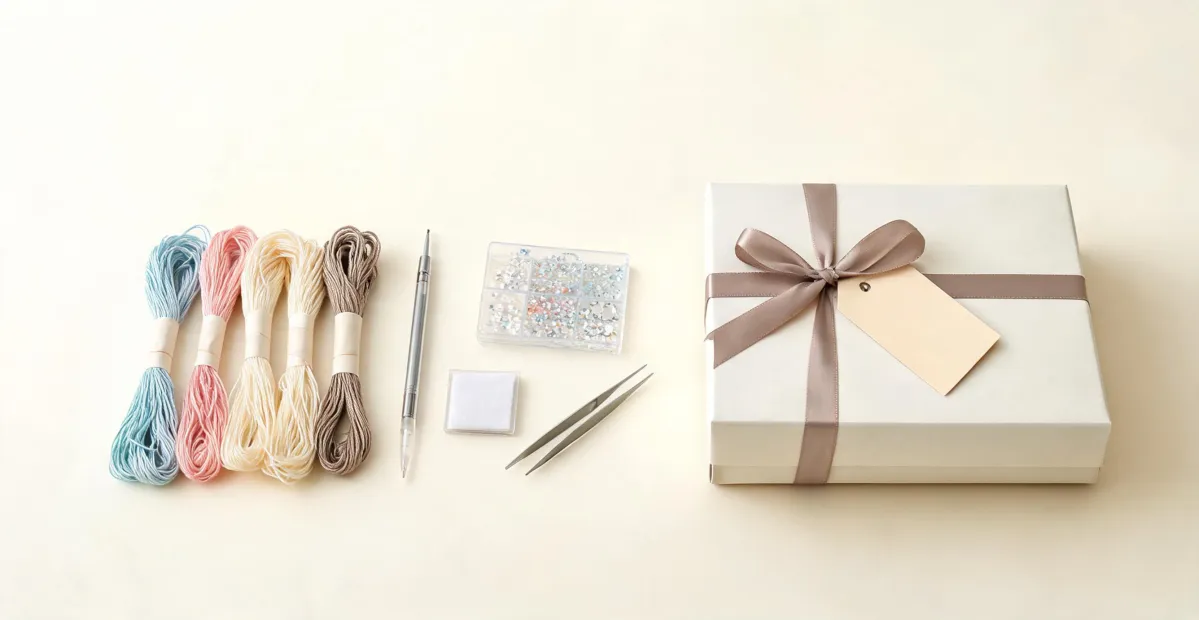 Ask three buyers whether the DMC anniversary embroidery floss pack is worth it, and you'll get three different answers. That's the honest starting point: there's no universal yes or no. To be clear, I do not think the DMC anniversary embroidery floss pack is a bad product. I think a lot of people buy it for the wrong reasons.
I've spent six years as a procurement manager at a mid-size gift-and-craft company. I manage a craft supply budget of around $30,000 a year, which works out to roughly $180,000 in cumulative orders. I've bought DMC floss, embroidery kits, cross stitch supplies, custom promotional gifts, and enough home fragrance to know that purchase decisions rarely come down to the price tag alone.
Before I get to the scenarios, here's the rule I use everywhere: total cost of ownership, or TCO. The sticker price is one part. Shipping, storage, time, risk of mismatched colors, and the cost of redoing a project all belong in the calculation. As of January 2025, USPS pricing for a First-Class Mail large envelope is $1.50, with $0.28 for each additional ounce (usps.com/stamps). That may sound small, but if a 'cheap' supplier ships orders in three separate envelopes, the shipping can wipe out your savings.
Here is the baseline formula I put in every comparison spreadsheet: unit price, shipping and handling, setup and customization fees, storage and handling, and rework or risk cost. If you can't estimate line five, use the supplier's return policy and quality history as a proxy. It's messy, but it's better than pretending every line item is the same.
Ask three buyers whether the DMC anniversary embroidery floss pack is worth it, and you'll get three different answers. That's the honest starting point: there's no universal yes or no. To be clear, I do not think the DMC anniversary embroidery floss pack is a bad product. I think a lot of people buy it for the wrong reasons.
I've spent six years as a procurement manager at a mid-size gift-and-craft company. I manage a craft supply budget of around $30,000 a year, which works out to roughly $180,000 in cumulative orders. I've bought DMC floss, embroidery kits, cross stitch supplies, custom promotional gifts, and enough home fragrance to know that purchase decisions rarely come down to the price tag alone.
Before I get to the scenarios, here's the rule I use everywhere: total cost of ownership, or TCO. The sticker price is one part. Shipping, storage, time, risk of mismatched colors, and the cost of redoing a project all belong in the calculation. As of January 2025, USPS pricing for a First-Class Mail large envelope is $1.50, with $0.28 for each additional ounce (usps.com/stamps). That may sound small, but if a 'cheap' supplier ships orders in three separate envelopes, the shipping can wipe out your savings.
Here is the baseline formula I put in every comparison spreadsheet: unit price, shipping and handling, setup and customization fees, storage and handling, and rework or risk cost. If you can't estimate line five, use the supplier's return policy and quality history as a proxy. It's messy, but it's better than pretending every line item is the same.

DMC Anniversary Embroidery Floss Pack: A Cost Controller's 2025 Guide
Scenario A: You're a maker buying for yourself
If you're stitching for yourself, a standalone embroidery kit is often a better value than a big floss pack. An embroidery kit includes the floss, fabric, needle, and pattern in one purchase. It looks more expensive at first, but the total cost per finished item is lower because you don't have to source the other materials separately. This is where a lot of floss buyers go wrong: they buy the pretty anniversary pack, then realize they still need fabric. Now the pack is only part of the project cost. For cross stitch, the same logic applies. If a project chart calls for 14 DMC numbers, buy those 14 colors, not a 50-color bundle. DMC's standardized color system is a real advantage: you can reorder any number individually later, and it will match. A bundle is a TCO win only if you will use most of the colors. If you just want a couple of colors from it, buy singles. The DMC anniversary embroidery floss pack is a limited collector-style set. It's a great gift or a way to build a palette, but it's not automatically a low-cost supply source. It's kinda like buying a pre-packaged color palette: useful, but not a complete strategy.Scenario B: You're a reseller or custom kit maker
If you sell finished embroidery pieces or make custom kits, a DMC anniversary floss pack can make sense as a base—but only if you treat it like raw material, not a shopping spree. Here's a mistake I made once. I bought a discounted anniversary floss bundle because the per-skein price was lower than standard DMC floss. The spreadsheet looked great. But 22 of the 50 colors didn't appear in any product we sold. That was not savings; that was inventory waiting to become a problem. If I'd divided the pack cost by the usable colors only, I would have seen the real per-skein cost was higher. Put another way: the price per skein is only meaningful if color is the only cost. You also need to count labeling, sorting, storage, and the chance a color sits in a bin for two years. For custom embroidery kits, I now compare the cost of buying a ready-made kit versus sourcing floss and components separately. Sometimes the ready-made kit wins because it reduces labor. Here's how to calculate the real cost of a floss pack for resale: divide the pack price by the number of usable colors, not the total. If a 50-color anniversary pack costs $60 and you can use 30 colors, your effective cost is $2 per usable skein. If you can sell the other 20 colors individually or mix them into kits, fine. If you can't, you're not saving money; you're prepaying for inventory.Scenario C: You're a corporate buyer or event planner
This is where TCO thinking matters most. If you're buying DMC supplies for a corporate event, a promotional campaign, or a private-label order, don't base your budget on a floss pack. Ask for quotes that include freight, customs, setup, proofing, sample shipping, and revision fees. One supplier quoted a lower unit price than the incumbent. I was ready to switch. Then I added their freight and the 'free setup'—which did not include the two rounds of artwork changes. By the time the first sample arrived, the low quote was 14% higher than the incumbent's all-in price. The cheapest quote on paper wasn't cheapest in total. In another case, every spreadsheet pointed to a lower-cost floss supplier. My gut said the incumbent was safer. I overrode my gut and paid for it: 12% of the first batch had color consistency issues, and the redo cost more than the savings. Even after I approved the switch, I kept second-guessing. What if the next dye lot came out different? The two weeks until the sample arrived were stressful. The sample failed, and the annual review took three days of spreadsheet work. Real cost isn't just the purchase order; it's the checking and the worry. If you're planning a corporate craft event, a wholesale incentive trip, or custom tours DMC France for a group, don't start with a floss pack. The price of the tour is not the true cost. Travel, lodging, meals, translation, insurance, and the opportunity cost of the team's time all need to be in the spreadsheet. I planned one custom sourcing visit and underestimated coordination time by about a day. It pushed the trip's TCO up more than the flights did.How to decide which scenario you're in
Still not sure? Run through this:- If you can look at a DMC color chart and point to the specific numbers you'll use this week, you're a maker. Buy individual skeins or a kit.
- If you can sell or transform the colors you don't need, you're a reseller. A larger pack might be okay, but only after you calculate the usable color cost.
- If you need to coordinate a group, a custom program, or a private-label order, you're a corporate buyer. You need a quote, not a bundle.
What about candles on Candle Day 2025?
This may seem like a random pivot, but I keep getting asked 'how much are candles on candle day 2025?' The answer is 'it depends'—different retailers, sizes, and scents. But the useful answer is the same TCO lesson. A candle on sale for $9 is only a bargain if you add shipping and tax, and only if you will actually burn it. A highly scented candle that sits in a drawer because the throw is too strong is not a deal. The math is identical to a floss pack with colors you don't use.A note on claims and standards
If you're selling custom kits or using DMC in a commercial product, keep the FTC advertising guidelines in mind. Claims need to be truthful, not misleading, and substantiated (ftc.gov). The DMC color system is a consistency advantage, but it doesn't make every product claim true. If you're going to say 'colorfast' or 'fade-resistant,' have the test or specification behind it. That proof is also part of TCO, because a claim that gets challenged costs time, credibility, and money. My experience is based on roughly 200 mid-size B2B orders—maybe 180, I'd have to check the procurement system. If you're an individual crafter or an ultra-premium buyer, your numbers will be different. That's okay. The TCO framework still works; the inputs just change.
Elise Laurent
Elise Laurent is a crystal and decorative glass quality analyst covering crystal figurines, vases, ornaments, suncatchers, and gift glassware. She examines ISO 6486-1 where food-contact glass dinnerware applies, then uses polarized strain inspection, dimensional checks, surface-defect grading, and refractive clarity to compare decorative pieces outside that scope. Her work helps sourcing teams choose materials, finishing routes, and protective packaging without confusing visual brilliance with verified durability.