DMC Embroidery Kits on a Business Budget: Which Option Actually Saves You Money?
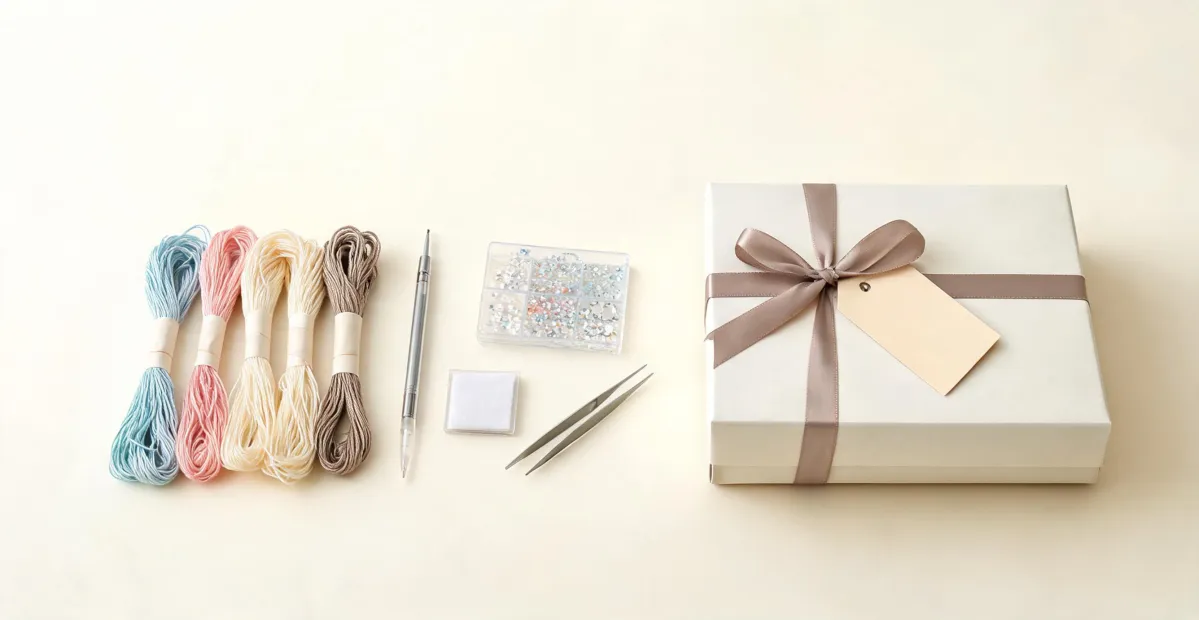
You're sourcing DMC kits for your business. Which way saves the most?
I've been managing procurement for a mid-sized promotional products company for about 7 years now. Every quarter we place orders for embroidery kits, diamond painting sets, and cross stitch supplies — mostly DMC because of the color standardization (trusted since 1746, seriously). But the answer to "what's the cheapest way" depends entirely on what you're actually doing with them.
So let me break it into three common scenarios. I'm not a logistics expert — can't help with shipping routes or carrier optimization. But from a cost-tracking perspective, here's how I evaluate each option.
Scenario A: You're a small business or startup wanting branded gifts
You need maybe 50–200 kits for client appreciation or holiday giveaways. Budget is tight — you want something personal but don't want to blow the bank.
The trap I almost fell into: Buying off-the-shelf kits and adding a sticker with your logo. Sounds cheaper, right? I compared two vendors once. Vendor A quoted $4.20 per kit for a plain DMC cross stitch design. Vendor B quoted $3.50. I almost went with B until I asked the right question: "What's NOT included in that price?"
Turned out Vendor B charged $0.85 per kit for custom labeling ("They're pre-printed bags, you know"), plus $120 setup for the logo die. Vendor A's $4.20 included everything: custom bag printing, design adaptation, and individual wrapping. Total cost? Vendor A: $4.20 x 150 = $630. Vendor B: ($3.50 + $0.85) x 150 + $120 = $772.50. That's a 22% hike hidden in fine print.
"The vendor who lists all fees upfront — even if the total looks higher — usually costs less in the end."
What I do now: Get quotes from at least three vendors, ask specifically for a breakdown of setup, labeling, and packaging fees. And always request a sample before the bulk run. Saved us from a $1,200 redo once when the "free pattern adaptation" turned out to be a low-res disaster.
Scenario B: You're a mid-size company running a seasonal promotion
You need 1,000–5,000 kits for a trade show or a Christmas campaign. Consistency matters — every kit should look and feel the same. You're also under a tight deadline. (Funny enough, some people search "run dmc christmas song" thinking it's related — nope, but our DMC Christmas cross stitch patterns are very real.)
Key cost driver here: turnaround time. I tracked our last three Q4 orders. Standard delivery (10 business days) cost about $5.50 per kit for a 1,200-unit diamond painting kit. We needed it in 5 days because the trade show date moved. Rush premium: +40% on the base price. That's an extra $2.20 per kit — $2,640 total. What I learned: the "cheapest" vendor with a 3-week lead time looked great on paper until we added the rush fee. Put another way: if you know you're always going to need rush, bake it into the TCO from the start.
Another hidden cost: Color matching. DMC's standardized system helps, but some suppliers offer "similar" floss at lower prices. One supplier we tested was using generic threads that looked fine in daylight but shifted under fluorescent lights. We had to re-kit 400 units after customers complained. Net loss: about $1,800 in replacement and shipping. Now we only buy from vendors who can prove they use authentic DMC floss — and we ask for a color consistency report. Transparency matters more than the upfront discount.
Scenario C: You're an eCommerce reseller needing inventory for multiple SKUs
You stock 20+ different kit designs (embroidery, diamond painting, paint by number). Your margins are thin, and you need to turn inventory fast. The question isn't "cheapest per kit" — it's "what's the total cost to carry this SKU for 60 days?"
I made a classic penny-wise mistake here. Saved about $0.30 per unit by ordering from a discount wholesaler. But their packaging was flimsy — 8% of the kits arrived with crushed bags or missing components. Refunds and replacements ate into that saving fast. The 'budget vendor' choice looked smart until we saw the defect rate. Net loss: way more than the original 'expensive' quote from a reliable supplier.
What I do now: Build a simple cost calculator. Factors I include:
- Base unit price
- Shipping per unit (not total — volatile when orders vary)
- Expected defect rate (ask the vendor for their QA stats, or start with 3–5% if unknown)
- Warehousing cost per unit per month (if you hold inventory)
- Reorder lead time → safety stock costs
For example, a $3.50 kit with 5% defect rate and $0.40 shipping has a true cost of about $4.08. A $3.80 kit from a premium supplier with 0.5% defect rate and free shipping over $5,000 (which we hit anyway) works out to $3.82. The higher-priced option is actually cheaper. Plus, fewer customer complaints mean less time on support.
How to figure out which scenario you're in
Ask yourself three questions:
- What's your order volume? Under 200 units? You're in Scenario A. Over 1,000? B or C depending on whether it's a one-time promo or ongoing stock.
- What's your tolerance for variation? If every kit must match perfectly (brand colors, packaging), you're in B. If mixing designs is fine, C is more flexible.
- What's your timeline flexibility? Can you wait 2–3 weeks? Then you can negotiate better rates. Need it next week? Accept that rush costs are baked in — and ask vendors to show you the rush fee upfront, not buried in a "shipping surcharge."
Bottom line: there's no universal 'cheapest' option. The cheapest on paper is often the most expensive after hidden fees, defects, and rush charges. A transparent vendor who lists every cost — even if the total looks higher — almost always saves you money in the end. I've learned to ask "what's NOT included" before "what's the price." Start there, and you'll make better calls.
Based on publicly listed DMC B2B wholesale pricing (January 2025): Basic embroidery kit (500+ units): $3.50–$5.00. Premium kit with custom bag and DMC-certified floss: $5.50–$8.00. Current rates vary by volume and customization; always verify with current quotes.

Elise Laurent
Elise Laurent is a crystal and decorative glass quality analyst covering crystal figurines, vases, ornaments, suncatchers, and gift glassware. She examines ISO 6486-1 where food-contact glass dinnerware applies, then uses polarized strain inspection, dimensional checks, surface-defect grading, and refractive clarity to compare decorative pieces outside that scope. Her work helps sourcing teams choose materials, finishing routes, and protective packaging without confusing visual brilliance with verified durability.