DMC Color Chart for Diamond Painting PDF: Needle Sizes, Embroidery Kits, and Name Badge Lessons
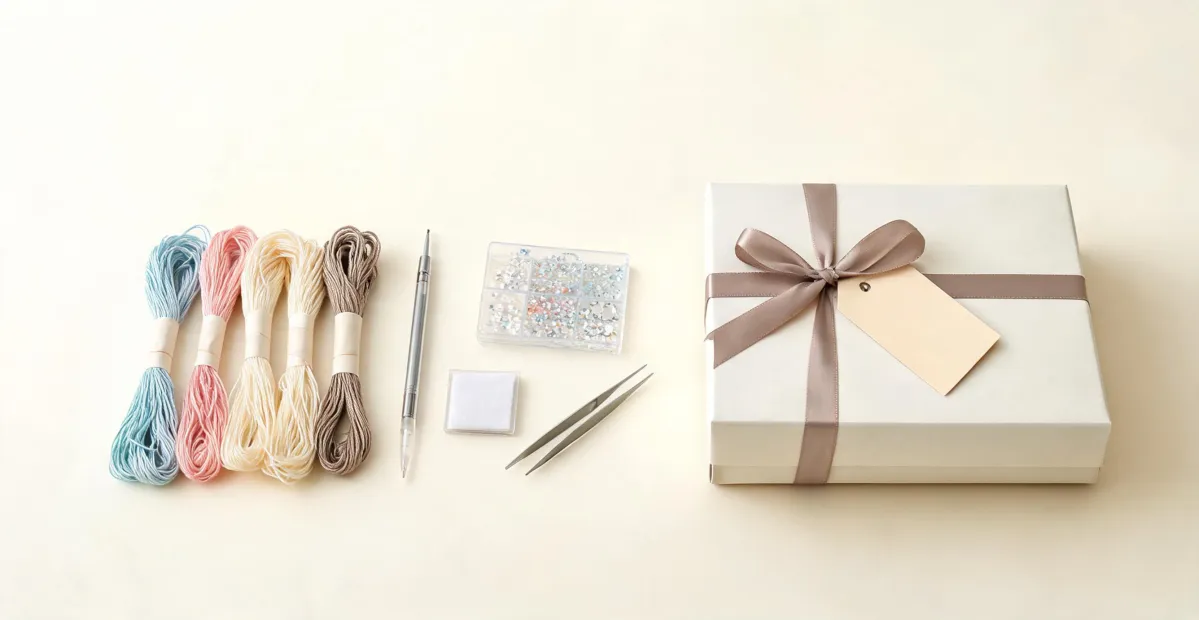
If you’re rushing a diamond painting or cross stitch order, here’s the short answer: use the official DMC color chart for diamond painting PDF from dmc.com, not a scanned third-party version. And for 14-count Aida, use a size 24 tapestry needle; a size 26 works if you prefer a finer tool. I’ve handled more rush orders than I can count, and those two details have saved us more than once.
I coordinate B2B custom gifts and promotional products at a company that works with DMC products. In my role, I’ve handled 200+ rush orders over the past seven years, including same-day turnarounds for trade show booths. Last quarter alone we processed 47 rush jobs with a 95% on-time delivery rate. When I’m triaging a rush order, I’m not looking for the most expensive option; I’m looking for the one that removes variables. The DMC standardized color system is one of those variables.
Why color certainty matters more than speed
In a rush order, speed is the easy part. You can always pay for overnight delivery, overtime at the embroidery shop, or express shipping for drills. The hard part is certainty. A rushed order fails when the wrong color is discovered at the end of the line. That’s why DMC’s standardized color system is valuable: it removes the need to guess.
Let’s say you need 500 personalized embroidery kits for a trade show. Each kit contains a chart, floss, a 14-count Aida square, a size 24 needle, and instructions. If the chart is an unofficial version, a stitcher might interpret a shade differently. That doesn’t matter for a hobbyist, but it matters a lot if the kit’s pattern is tied to a client’s brand colors.
DMC’s product range reaches into home decor too. I’ve seen companies order embroidered pillow kits and wall-hanging kits as client gifts. For those products, the same logic applies: use DMC numbers in the pattern, and recipients can buy replacement floss at any craft store without ever asking a question.
One chart to trust, and one big trap
The DMC color chart is the closest thing cross stitch and diamond painting have to a shared language. It maps shade names to numbers like DMC 310 or DMC 321, so a designer in one country can hand off a pattern to a supplier in another country and they both mean the same color. DMC has been around in some form since 1746, and that history is why its color numbers appear in embroidery kits, diamond painting accessories, and custom promotional products.
But here’s the thing: not all DMC color chart for diamond painting PDF downloads are created equal. Some third-party versions are years out of date. Some have colors shifted by cheap scanning. And some are just plain wrong. I learned this the hard way.
I assumed a third-party chart was accurate because it had a professional cover and looked official. Didn’t verify. Turned out it had outdated numbers for 12 shades. We reordered drills overnight, paid $80 in rush shipping, and still made the deadline. That was the last time I trusted anything except DMC’s own PDF.
Before I use any DMC color chart for diamond painting PDF, I check three things: where it came from, what date it was published, and whether the colors look right in the file’s metadata. If it didn’t come from dmc.com or a DMC-authorized distributor, I don’t build a production file from it.
- Official source: Start with DMC’s free PDF. It’s the only one I trust for current DMC numbers as of January 2025.
- Version date: A chart from 2024 is not the same as a chart from 2021. DMC shades rarely change, but number assignments and product lines do.
- Print profile: If you print the chart, choose a color-managed print setting. The screen version can look brighter than reality.
What size cross stitch needle for 14 Count Aida?
Short answer: for 14-count Aida, use a size 24 tapestry needle. That’s the blunt-tipped needle with a long eye, made for counted cross stitch. A size 26 also works if you’re using one strand or if your hands prefer a thinner needle, but for standard two or three strands of DMC floss on 14-count Aida, size 24 is the sweet spot.
Why not size 22? Because 14-count Aida has 14 holes per inch. A size 22 needle is built for 11-count Aida and will stretch or distort the holes. A size 28 is too thin and flexible for a new stitcher, and it can split the Aida threads if you’re not careful.
This comes up a lot in embroidery kits. If you’re buying kits for a corporate workshop or a team event, check the needle that’s included. Some kits ship with a size 26 to keep the package flat. That’s fine for experienced stitchers, but if your group is beginners working on 14-count Aida, a size 24 is more forgiving.
Embroidery kits, custom name badges, and a near-disaster
Let me give you a real example. In March 2024, a client called at 2 p.m. because they needed 350 embroidered name badges for a hotel opening the next day. The name badges were supposed to match their brand’s red, but the supplier had used a loose DMC color chart for diamond painting PDF they found somewhere and encoded the wrong red. The first sample arrived looking orange.
We pulled up DMC’s official chart, identified the correct DMC number, re-encoded the design, and had a local embroidery shop produce one sample in under an hour. It wasn’t cheap—we paid $120 in sample and rush fees on top of the production cost—but we saved the $18,000 order. The client’s alternative was showing up with mismatched badges at a hotel opening, which would have been embarrassing for everyone.
That’s why I tell B2B buyers to treat DMC’s color chart as a contract. If your custom name badge uses a DMC number, put that number in writing. When the production file says DMC 321, the embroiderer knows exactly what to thread the machine with.
When the chart works, and when it doesn’t
I recommend the official DMC color chart for diamond painting PDF for most projects: patterns, kits, diamond painting drills, and cross stitch thread ordering. It’s free, it’s searchable, and it aligns with the DMC numbering system used by manufacturers around the world.
But there’s a limit. If you’re matching a logo that has to be exact—I mean exact, like a Pantone-matched brand color—a PDF on a screen is not enough. You need a physical DMC color card or a printed swatch under good light. Monitors shift, printers shift, and resin colors in diamond painting drills can vary slightly between suppliers. The chart is a reference, not a guarantee.
Also, the needle size answer changes with your fabric. For 11-count Aida, use a size 22. For 14-count, size 24 (or 26). For 18-count, use a size 26. For evenweave or linen, you might need a size 26 or 28. So if someone tells you one needle works for everything, they haven’t done many rush orders.
The official DMC color chart works for 80 percent of my projects. The other 20 percent need physical swatches, Pantone bridges, and a supplier who will answer the phone. Know which one you’re in before you cut it close.
Final advice from someone who’s had to re-make badges at midnight: don’t wait until the night before to test your color chart. Open DMC’s official PDF now, save it, and if you’re ordering embroidery kits or custom name badges, build in one extra day for color verification. That small buffer has saved me more times than I can count.

Elise Laurent
Elise Laurent is a crystal and decorative glass quality analyst covering crystal figurines, vases, ornaments, suncatchers, and gift glassware. She examines ISO 6486-1 where food-contact glass dinnerware applies, then uses polarized strain inspection, dimensional checks, surface-defect grading, and refractive clarity to compare decorative pieces outside that scope. Her work helps sourcing teams choose materials, finishing routes, and protective packaging without confusing visual brilliance with verified durability.