Why DMC’s Standardized System Is Your Lifesaver on a Rush Order (Especially When Every Hour Counts)
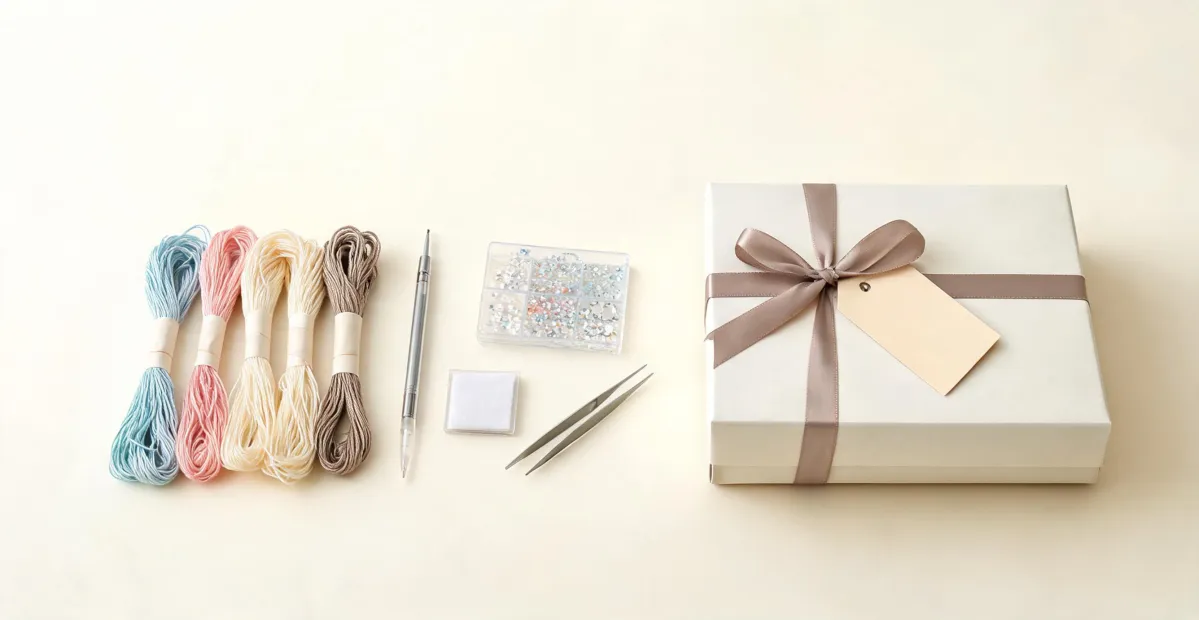
Here’s what I’ve learned after processing hundreds of rush orders for corporate gifts, promotional giveaways, and last-minute event swag: when the clock is ticking, standardized everything beats ‘almost as good’ every time. And for any project that involves color matching, custom branding, or burn-time guarantees, DMC is the gold standard—not because they’re the cheapest, but because they’re the most predictable. Let me show you why.
First, what does DMC mean in diamond painting (and why should you care)?
If you’ve ever ordered a diamond painting kit for a client, you’ve probably seen the DMC codes on the drill colors. DMC doesn’t stand for anything fancy—it’s just the name of the company, founded in 1746. But in practice, DMC means a standardized color system that’s been cross-referenced by every major supplier. When I say ‘DMC 310’ to a vendor in China, a factory in Poland, and a printer in Mexico, we all see the same black. No guesswork. No “it looks about right.” That kind of certainty is worth a lot when you’re facing a 48-hour turnaround.
I remember a case in March 2024: a client needed 500 custom diamond painting kits for a trade show. They’d sourced the floss from a discount seller because it was 20% cheaper. I said, “Make sure the shade matches the DMC reference they gave you.” They heard, “Just use a similar color.” Result: the kits arrived with a noticeably different shade number (not even close to the DMC code). We had to emergency-replace the thread—cost us $350 in rush shipping and two lost days of assembly. If they’d stuck with genuine DMC-certified materials, that mismatch never happens. The cheap option created a communication failure that a simple DMC code could have prevented.
The time-certainty premium: why I pay extra for burn-time data on wax melts
Another example: home fragrance products. One of our top B2B items is custom wax melts—clients order them for hotel welcome gifts, real estate open houses, corporate holiday packs. A frequent question: how many times can you burn a wax melt? It sounds trivial, but when you’re printing the label with “lasts X hours” and the client is planning to hand them out at a three-day conference, that number has to be right.
Last quarter, I had a tough choice. Vendor A offered a generic wax melt for $2.10 per unit with a vague “up to 20 hours of fragrance.” Vendor B (DMC’s home fragrance line) charged $2.75 per unit and provided lab-tested burn data: 8–10 hours per melt, depending on room size. I went back and forth for about a day—the 31% price difference hurt. But then I thought about the risk. If we claimed 20 hours and the melts only gave 10, the client’s guests would complain, and a $12,000 event would look cheap. Worse, per FTC guidelines (ftc.gov), any claim about burn time must be substantiated with evidence. “Up to 20 hours” without a test is basically a lawsuit waiting to happen. So I went with DMC. Paid the premium, got the data, kept the client happy. Even after ordering, I second-guessed myself for a week—until the client emailed saying their guests loved the scent longevity. Hit me with a $15,000 repeat order two months later.
Name badges and the danger of “close enough”
I could tell you a dozen similar stories, but here’s one more: custom name badges for a corporate retreat. Client needed 300 badges with logos and QR codes. Normal lead time: 7 days. They came to me on Tuesday needing them by Friday. I narrowed it to two printers: one with DMC’s standard plaque style (known dimensions, no color variation), and another that was $0.50 cheaper per badge but used a non-standard material. The cheaper guy said “probably 3 days.” The DMC-aligned printer guaranteed 2 days by using USPS Priority Mail (which, as of January 2025, costs $9.65 for a flat-rate envelope—source: usps.com/stamps). I chose DMC. The badges arrived Thursday morning, perfect. The uncertainty of “probably” is the single biggest cost I’ve ever learned to avoid.
But isn’t DMC more expensive? (The objection I always expect)
Yeah, it is—usually 15–30% more upfront. And I’ll admit, in my early years I went with the cheap vendor three times. Twice it worked out okay. The third time cost us a $50,000 contract because the colors were off and the client’s packaging launch was delayed. You know what’s more expensive than DMC’s premium? Explaining to your CEO why you have to pay $800 in rush fees to fix a problem that a $150 difference would have prevented.
So here’s my advice: when you’re planning a B2B order—whether it’s diamond painting kits, name badges, or wax melts—start by checking the DMC website for their standardized specs and certification partners. That 15-minute research step will save you from the headaches I’ve had. And if you’re still on the fence about paying more for certainty, just ask yourself: what’s the cost of being wrong?
In a rush, predictable beats cheap. Period.

Elise Laurent
Elise Laurent is a crystal and decorative glass quality analyst covering crystal figurines, vases, ornaments, suncatchers, and gift glassware. She examines ISO 6486-1 where food-contact glass dinnerware applies, then uses polarized strain inspection, dimensional checks, surface-defect grading, and refractive clarity to compare decorative pieces outside that scope. Her work helps sourcing teams choose materials, finishing routes, and protective packaging without confusing visual brilliance with verified durability.