What Does DMC Mean in Diamond Painting? A Buyer's Take on Needlepoint vs Cross Stitch and Home Decor
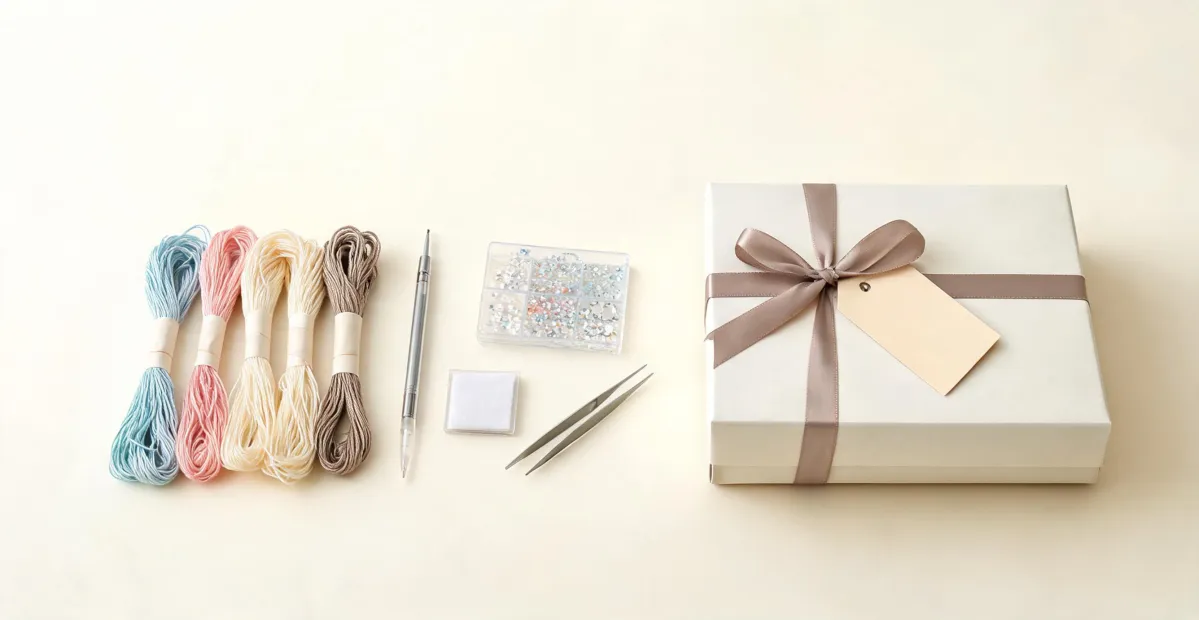
I manage procurement for a 14-person gift and craft distributor. For the past six years, I have bought Christmas ornament programs, home decor lines, cross stitch kits, and diamond painting accessories. I log every invoice in the same cost system, which is how I know that my most expensive mistakes were not the ones where the unit price was high.
I am not a designer. I do not choose colors because they look nice on a screen. I choose colors because they can be reproduced across a large production run. That difference has shaped an opinion I now defend in every vendor meeting: I trust a craft supplier more when they tell me what they do not do well. A specialist who has clear boundaries will usually cost less over the life of an order than a generalist who says yes to everything.
I did not always believe this. I spent my first buying seasons consolidating vendors because fewer purchase orders looked cheaper. Then two bad batches and one expensive rush reorder shifted my policy. The examples below are why.
What Does DMC Mean in Diamond Painting?
DMC is not an acronym for diamond material code or diamond master color. In the craft world, DMC is the initials of Dollfus-Mieg et Compagnie, a textile company whose official history reaches back to 1746. For generations of embroiderers, DMC has been a trusted color reference. In diamond painting, the term DMC points to that brand's color-numbering system rather than to a type of resin, drill, or canvas.
When a diamond painting chart says DMC 310, it means black. DMC 666 is a bright red. Those numbers give kit makers, crafters, and B2B buyers a shared language. Diamond painting is a younger craft than cross stitch, but it inherited the same chart system because designers and manufacturers wanted compatibility with embroidery colors.
From a purchasing perspective, that compatibility is useful but it does not replace samples. I treat a DMC code as a starting reference, not as a guarantee that every factory's batch will match. Before a production run, we ask for a printed color reference or a physical drill card and compare it to the required DMC shade. That one step has stopped a wrong-color order at least twice in the past three years.
Christmas in Hollis Run DMC and the Craft DMC
Let me handle the other common DMC search before a reader feels tricked. Christmas in Hollis is a Run-DMC holiday song, released on A Very Special Christmas in 1987. In that context, DMC is Darryl McDaniels. It has nothing to do with French textile history or diamond painting color codes.
I mention this because the two DMCs collide in B2B conversations more often than you would expect. If an account manager says 'we matched the logo to DMC red,' you need to know whether they are talking about a rap group or a supply chain standard. One DMC makes a good holiday playlist. The other makes a reproducible Christmas ornament kit.
Are Needlepoint and Cross Stitch the Same Thing?
No. Needlepoint and cross stitch are both embroidery, but they are not interchangeable production methods. Cross stitch is usually worked on evenweave cloth or Aida fabric. The basic stitch is an X shape, and the background fabric often remains part of the finished look. Needlepoint is usually worked on an open-weave canvas that provides the structure for the design. It traditionally uses yarn, and the canvas is covered by the stitch.
That difference is exactly why needlepoint holds up better for items that get handled, like ornaments, stockings, and pillow fronts. Cross stitch is better for decorative pieces where the openwork background is desired. If someone says 'it is all just embroidery,' they are underestimating thread weight, canvas count, tension, and finishing requirements.
In my first year of buying ornament kits, I made the rookie mistake of assuming that a factory that did excellent cross stitch could also do needlepoint. The 500-unit test order had clean cross stitch pieces and visibly uneven needlepoint pieces. The needlepoint pieces did not fit the same backing, and the yarn tension around the edges was inconsistent. The factory had quietly subcontracted needlepoint work to a shop they rarely used. That rework cost was roughly three times the difference between the cheapest quote and the specialist's quote.
Now, when a product description uses the phrase 'needlepoint-style cross stitch,' I read it as a red flag. I ask simple spec questions: Aida or canvas? Cotton floss or yarn? X-shaped stitch or tent stitch? If the supplier cannot answer those, the product is not ready to scale.
How This Shapes Home Decor and Christmas Ornament Buying
Home decor is the category where scope creep gets expensive. A client says 'we want home decor products for the holiday season,' and suddenly the kit includes a counted cross stitch panel, a diamond painting coaster, an ornament finisher, and a custom box. Each of those steps uses a different supplier skill. If one vendor says they will do all of them, they may be passing off parts to an unknown subcontractor.
For custom B2B gifts, we now break every project into separate checks: the craft technique, the base material, the color standard, the finishing method, and the packaging. DMC codes are the color language that connects embroidery and diamond painting in one art file. But finishing is a separate sourcing decision. A supplier who is excellent at flat cross stitch is not automatically excellent at cutting fabric, stuffing ornaments, or attaching jute hangers.
When I ask a supplier what they do not include and they can tell me quickly, I know they have actual production boundaries. That is not a rejection. That is a total cost reduction.
Why a Supplier Who Says No Can Lower My Total Cost
Here is the comparison that changed my procurement policy. In 2023, I requested quotes for a 2,000-piece custom needlepoint ornament program. The broad craft supplier quoted 18 percent below the specialist. Their sales team said 'no problem, we can do everything.' The specialist said, 'Needlepoint is our core work, but we do not stitch logo labels and we do not sew finishing bags.' The lower quote looked like the answer until the first samples arrived with the wrong thread density. We requested a second sample. It improved, but the production delay meant expedited shipping. More rejected pieces came through final inspection.
The final total cost ended up about 7 percent above the specialist's original quote, and we still had to do extra sorting at our warehouse. The supplier did not mean to mislead me. They simply spoke in generalities because that is how they sell. The specialist sounded less flexible, but their production reality was clearer.
Now every request for quote includes an out-of-scope line. I want to see that line filled. It is one of the most useful negotiating tools I have, because it reveals whether a vendor has thought about their own limitations. It also shows that they will not surprise me with hidden subcontracting.
What I Am Not Saying
I am not saying broad craft suppliers are never a good choice. If you are a retail buyer stocking shelves, a broad catalog is useful. There are large importers and wholesalers that manage dozens of craft categories without disaster. My argument is specific to custom, branded projects where color consistency, material behavior, and finishing details must fit a client expectation.
I also do not want to oversell color standards. DMC's color system is not a promise that every future batch will be identical. Dye lots shift. Lighting changes how a shade looks. For that reason, the standard is most valuable when it is paired with a physical color card and a final approved sample.
The final answers: DMC in diamond painting does not mean 'diamond material color.' It is a color standard created by a thread company with roots in 1746. Needlepoint and cross stitch are not the same technique, and using the terms carelessly is an expensive mistake in bulk purchasing. The most efficient supply chain is one where people tell the truth about their limits.
If you found this page because you searched Christmas in Hollis Run DMC, you probably wanted the holiday single. If you stayed, consider this your procurement answer too.

Elise Laurent
Elise Laurent is a crystal and decorative glass quality analyst covering crystal figurines, vases, ornaments, suncatchers, and gift glassware. She examines ISO 6486-1 where food-contact glass dinnerware applies, then uses polarized strain inspection, dimensional checks, surface-defect grading, and refractive clarity to compare decorative pieces outside that scope. Her work helps sourcing teams choose materials, finishing routes, and protective packaging without confusing visual brilliance with verified durability.