What Does DMC Mean in Cross Stitch? A Last-Minute Wedding Order Taught Me the Real Cost of Saving
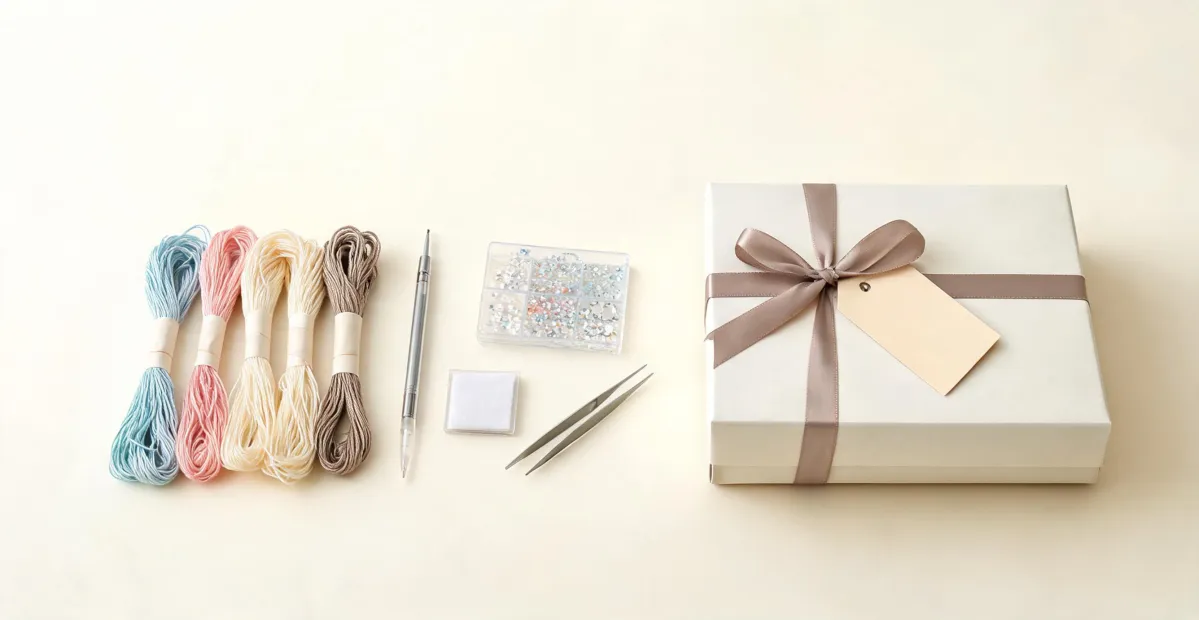
What Does DMC Mean in Cross Stitch?
In March 2024, at 10:47 on a Tuesday night, I was about to close my laptop when a subject line I never want to see again popped into my inbox: URGENT: wedding cross stitch kits.
I coordinate custom embroidery kits for event planners, retail shops, and wholesale buyers. In the past six years, I've handled more than 40 rush orders—including same-day turnarounds for clients who thought custom meant next week. Most orders come with two or three weeks of lead time. This one had eight days. The client needed 60 wedding cross stitch kits for the bride's welcome dinner—each one with a printed pattern, fabric, a needle, and floss in DMC numbers.
For anyone new to cross stitch, DMC is a brand, not a stitch type. Its full name is Dollfus-Mieg et Compagnie, and DMC's official history page, which I checked in January 2025, traces the company's roots to 1746. The reason DMC matters in cross stitch is the color numbering system. When a pattern says DMC 310, it means one specific black. DMC 666 is a specific red. Those numbers are a shared language between designers and stitchers.
The Wedding Order That Changed How I Buy Thread
So when the client's pattern said DMC colors only, I understood why. The pattern was built around DMC thread.
A vendor offered us a lower-priced floss with the same DMC numbers. $0.18 less per skein. With 60 kits and eight colors per kit, that came to about $86 in savings. I made a whole spreadsheet. I felt smart.
Then the first sample kit came in.
The two reds looked okay in the office light. Under the wedding venue's warm lighting, they were close but not right. One leaned too orange. The other was too dark. On a small heart-shaped cross stitch, that difference is enough to make a pattern look off. And when the pattern starts with the bride's favorite red, off is not acceptable.
I assumed that same DMC numbers meant the colors would be the same. Didn't verify. Turned out the supplier's conversion chart matched DMC's numbers on their screen but not in real fiber. I should have ordered a sample skein first. It would have cost $2 and two days.
What the mistake actually cost
The extra shipping for a rush replacement from a DMC stockist was $47. The replacement floss itself cost more than the discount because we ordered at retail. Overtime labor for two of us, re-kitting all 60 kits on a Saturday, was about $240. Add the wasted sample and packaging, and the real extra cost was close to $330. We saved $86 and spent $330. That's not a saving. That's a negative ROI on a decision made with incomplete data.
By Monday morning, the kits were ready. The client's event was the following Thursday. We delivered on time, and the bride's mother actually sent us a photo of the finished favors on the tables. The clients never knew how close it came. I'm grateful for that.
But I'm also still annoyed at my past self.
Here's what I should have known, and what I now tell anyone who asks about total cost thinking: the price on an invoice is not the total cost. The total cost includes the time you spend checking, the risk of getting it wrong, the cost of rework, and the cost of your reputation if you deliver late. Sometimes the cheaper vendor is genuinely cheaper. But the cheapest quote is only a starting point.
What most people don't realize is that thread compatibility is not a guarantee. A vendor can label thread with DMC numbers, but the actual dye formulation can vary by manufacturer, batch, and fiber lot. The numbers are a reference, not a promise.
So, what does DMC mean in cross stitch? In practical terms, it means you're following a color standard that most designers assume you'll use. If you swap in a brand with different numbers, or a supposedly compatible brand you haven't seen in person, do a sample first. It's the cheapest insurance you can buy.
What Can You Make With Cross Stitch?
Now for the part that's more fun. After that wedding order, I could give you a long list. The short version is: almost anything with fabric and a needle. People cross stitch bookmarks, pillows, ornaments, and framed wall art. In home decor, cross stitch is one of those crafts that keeps coming back—I've seen it on kitchen towels, table runners, cushion covers, and even lampshades. As an embroidery kit, it's also a great entry point for beginners because each kit has everything you need and a pattern that tells you exactly where each stitch goes.
Wedding cross stitch kits are a whole niche of their own. They work as favors, place settings, and keepsakes. The bride and groom get something personal; guests get an activity. It's charming. What surprised me is how many brides specifically look for kits that use DMC thread. Partly because the colors are known. Partly because the kits hold their value if someone wants to finish and frame them later.
Home decor and wedding projects are actually the two places where DMC numbers matter most. If you're stitching for yourself and do not care about exact chart matching, almost any floss can work. But if you're making something for someone else, or if the pattern was designed in DMC numbers, then those numbers are part of the deal.
I don't want to overstate this. I'm not saying non-DMC floss is bad. Some is quite good. But 'quite good' is not the same as 'matches the chart.' At least, that's been my experience in projects where the recipient is a bride on a deadline.
The Real Lesson: Total Cost Thinking
The whole thing took 18 hours of extra work. Actually, 18 hours was just the re-kitting. Counting the mental stress and the two hours I spent on a spreadsheet comparing thread prices, it was more like a full day. I do not recommend learning the TCO lesson that way.
If there's a takeaway beyond sample before you commit, it's this: total cost thinking applies to every B2B buy, not just thread. Quote me a low unit price all day—I will still ask about shipping, setup, revision, and what happens if the order is wrong. Because those are costs too. Time has a cost, and I've paid too much of it because I focused on one number in a spreadsheet.
That order still sits on my mental shelf as the time saving $86 cost me $330. But it also gave me a better process. New vendors get sample runs. Color-critical orders get physical proofed thread before bulk kit assembly. And whenever a client asks for wedding cross stitch kits DMC colors, I know exactly what that means: the thread is not optional.
Now, I'm not saying DMC is the only thread worth using. But for a wedding, for a pattern with DMC numbers, and for a deadline measured in days, it's the safer call. You pay extra for certainty. Sometimes certainty is the cheapest cost of all.

Elise Laurent
Elise Laurent is a crystal and decorative glass quality analyst covering crystal figurines, vases, ornaments, suncatchers, and gift glassware. She examines ISO 6486-1 where food-contact glass dinnerware applies, then uses polarized strain inspection, dimensional checks, surface-defect grading, and refractive clarity to compare decorative pieces outside that scope. Her work helps sourcing teams choose materials, finishing routes, and protective packaging without confusing visual brilliance with verified durability.