How to Buy DMC Products Without Getting Burned: Three Scenarios from a Quality Inspector
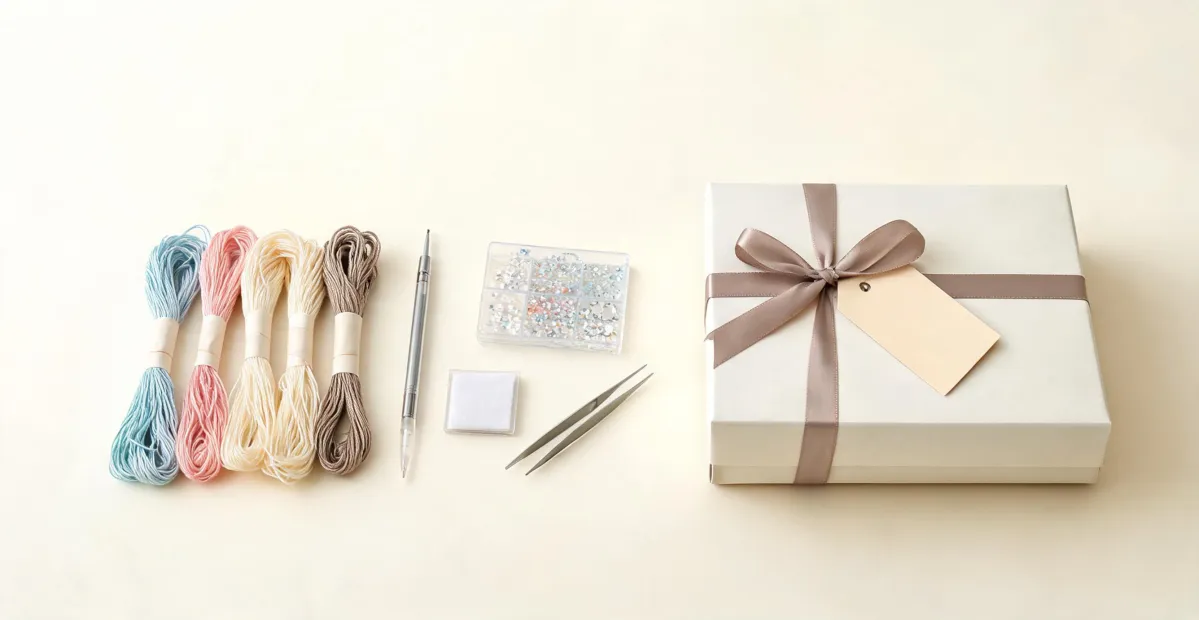
When I first started working in quality assurance for a craft supplier, I assumed that the most expensive DMC thread was always the right choice. I was wrong. Three years and several rejected batches later, I realized that DMC sourcing is basically a decision tree—the right approach depends on your deadline, your volumes, and whether you're building a one-time order or a repeat product line.
I'm a quality and brand compliance manager. I review every DMC-based product before it reaches customers—roughly 200 unique items a year. I've rejected 9% of first deliveries in 2025 because of issues like wrong DMC numbers, missing pattern licenses, and color drift between batches. Those are the kinds of problems I want to help you avoid.
No Single Answer
Honestly, anyone who gives you a universal “buy this” answer has probably never run a quality check on an embroidery kit. The right move depends on which of three situations you're in:
- The deadline-driven order. One event, one date, no room for a miss.
- The repeat product line. You're stocking, selling online, or building a craft brand.
- The private-label / source-visit launch. You want control, differentiation, and a real relationship with the DMC system.
These need different levels of verification, different budgets, and—this is the part people forget—different tolerance for risk.
Scenario 1: You Have a Fixed Date and a Promotional Order
Let's start with the one I see go wrong most often. A company wants custom cross stitch kits or diamond painting kits for an event, corporate gift, or store opening. The date is set. The budget is tight. And someone says, “Let's save money by using a standard supplier and standard shipping.”
Here's where I've learned to push back. The money you save on expedited service is tiny compared with the cost of a missed deadline. In March 2024, we paid an extra €400 for guaranteed delivery on a promotional order. It wasn't about speed—it was about certainty. The alternative was missing a €15,000 event order. The €400 looked silly on the invoice until you remembered what it was protecting.
If you're in this scenario, my advice:
- Use official DMC color numbers on every spec. Do not let the supplier “match visually.”
- Ask for a physical pre-production sample before full production. A photo on a messaging app is not enough.
- Skip the free printable DMC color chart for diamond painting here. It's useful for planning, but a printed chart depends on your printer and screen. For a rush job, you need a physical card or a physical swatch.
And honestly? If a supplier charges a rush fee, that's not a red flag. That's them being honest about the cost of certainty. I'm more worried by quotes with no rush fee and no guaranteed date. You know what “no guaranteed date” means? It means they'll ship when they ship.
Scenario 2: You're Building a Repeat Product Line
Now let's talk about the situation I'm actually in most days: a retailer or small brand that wants to sell DMC-related products consistently. Cross stitch patterns, diamond painting kits, home decor hoops, embroidery starter kits—and increasingly, home fragrance products that fit the same gift aesthetic.
This is where the “where to get cross stitch patterns” question comes up. It's one of the first things new clients ask me. My answer is boring but important: get them from a licensed source. DMC's own pattern library and professional pattern designers are the safest routes. If you're buying patterns for resale, the license matters more than the source. I once saw a beautifully curated kit that had to be pulled from a store because the pattern designer hadn't authorized commercial use. The design was lovely. The rights were not.
For a repeat product line, you need a standard. Don't rely on memory. Create a spec sheet that includes:
- Exact DMC numbers for every thread, including alternatives for discontinued shades.
- Dye lot tolerance. DMC's system is consistent, but no dye process is mathematically perfect. Order enough from one dye lot for a full run, or test the new lot before production.
- Packaging requirements, because home decor and gift buyers absolutely notice when a card color doesn't match the product photo.
A free printable DMC color chart for diamond painting is fine for your first conversation with a manufacturer. I do not recommend using it to approve final color. Printers and screens skew colors. If you're approving a diamond painting drill chart, use the official color card or a certified scan from the supplier. It's a small step that prevents a huge problem.
One thing that changed my thinking here was an order of 8,000 diamond painting kits. I knew I should get written confirmation on the DMC mapping, but I thought, “What are the odds? The supplier has done this before.” That was the one time the mapping was wrong. The rescue cost more than the original rush fee would have been. So yes, I document everything now.
Scenario 3: You're Going Big—Private Label, Custom Tours, or Both
The third scenario is less common but increasingly important. You're not just buying thread and patterns; you're building a brand around the DMC name and heritage. For that, the custom tours DMC France offers for trade and professional partners can be genuinely useful—if you go with a plan.
Here's what I tell clients: don't book a tour to “see how thread is made.” That's tourist thinking. The real value of a custom DMC France tour is understanding the color system, the dye lot process, and the people responsible for quality. You're there to ask questions like “How do you ensure consistency?” and “What happens when a dye lot shifts?”
If you can't go in person, the next best thing is to define your own specification. Think about what would make your product line defensible:
- A private-label cross stitch kit with custom packaging.
- A curated diamond painting collection using DMC numbers as the default color language.
- A home decor and home fragrance range positioned as a gift bundle—not just an embroidery kit.
One of my favorite moments in this space was watching a buyer realize that the DMC color chart is not just a list of shades. It's a communication tool. When you say “DMC 310” to a manufacturer in a different country, they know exactly which black you mean. That's valuable. You can't say that about every craft brand.
And a quick note on the printable chart: I still advise clients to download a free printable DMC color chart for diamond painting as a shared reference. Just label it clearly: “For planning only, not for approval.” It keeps the conversation going without turning your printer into the final authority.
How to Tell Which Scenario You're In
Still unsure? Here's a practical test:
- If you have a hard date and no supplier yet, assume you're in Scenario 1. Protect the date first, negotiate price second.
- If you already have a supplier but you're fighting color mismatches, pattern rights, or packaging inconsistency, you're in Scenario 2. Fix the spec sheet before you worry about anything else.
- If you're trying to stand out in a crowded gift market, or you want your brand to carry a bit of French heritage, then Scenario 3 is worth exploring. A source visit or private-label relationship is an investment in the story, not just the materials.
There's no DMC sourcing “one right answer.” But there is one thing I'd defend strongly: choose certainty when you need it, and pay for it openly. The worst deal I ever made wasn't the one with the biggest rush fee—it was the one where I pretended time didn't matter.
It's not about finding a magic supplier. It's about deciding what you can verify, what you're betting on, and what you'll do if the bet fails.

Elise Laurent
Elise Laurent is a crystal and decorative glass quality analyst covering crystal figurines, vases, ornaments, suncatchers, and gift glassware. She examines ISO 6486-1 where food-contact glass dinnerware applies, then uses polarized strain inspection, dimensional checks, surface-defect grading, and refractive clarity to compare decorative pieces outside that scope. Her work helps sourcing teams choose materials, finishing routes, and protective packaging without confusing visual brilliance with verified durability.