How a 50,000-Unit Christmas Ornament Order Almost Failed (And What I Learned About Efficiency)
The Problem Arrives at the Dock
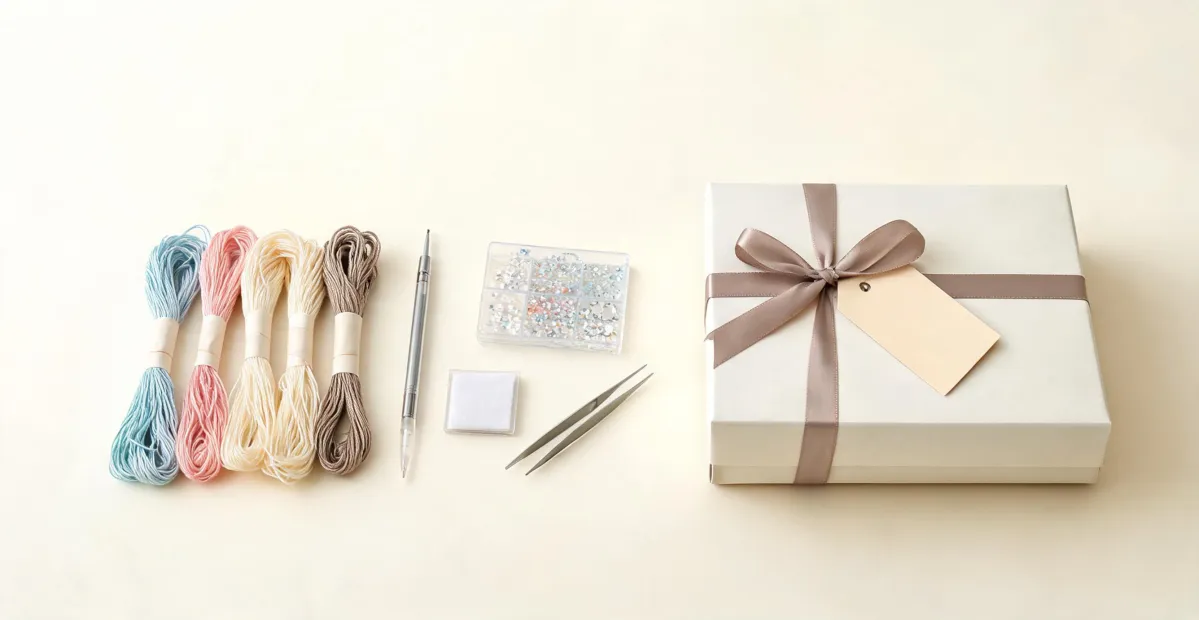
It was late November 2024, and we had just received a 50,000-unit order for DMC embroidery floss packs meant for Christmas ornaments. The customer wanted a polished product—each pack wrapped with the DMC logo in place, the floss perfectly organized for home decor projects. We had been sourcing the packs in pieces, with an overseas vendor supplying the pre-cut floss bundles (this was back in 2024, and we were still figuring out our supply chain).
I’ll never forget the moment I opened the first pallet. The pink in one bundle was visibly warmer than the DMC color chart I had on file—maybe 2–3 degrees off. I went back to check our spec sheet: we had asked for a DMC 818 (pale rose). What we got looked closer to DMC 3609 (lavender pink). (Ugh, again.)
Now, in my role as quality manager, I review every batch before it reaches customers—roughly 200+ unique items a year. I’ve rejected about 15% of first deliveries in 2024 due to spec issues like this one. But this order was a big deal: 50,000 units, with a fixed delivery date for the holiday season. We couldn’t afford delays. The cost of redoing that batch later? In that one rejection, we risked a $22,000 redo and a missed launch window.
Most buyers focus on per-unit pricing and completely miss the hidden risks: color inconsistency between batches is a perfect example. The vendor claimed their shade was “within industry standard,” but when we compared against the official DMC color chart, it wasn’t close. That’s where the trust in DMC’s standardized color system (since 1746) really matters—if you’re going to use DMC floss, use that standard.
The Struggle with Process
The question everyone asks is: “What’s the best price?” The question they should ask is: “How do you guarantee consistency across 50,000 units?” That’s the mistake I almost made. We had a manual color check process—someone in the warehouse would hold a swatch against the DMC number and approve. It was labor-intensive and error-prone. (I’m not 100% sure, but I think we had a 2–3% failure rate on those checks.)
This was true 20 years ago when digital tools were limited. Today, online platforms exist that automate color matching. But we hadn’t adopted any of them—we were still working off paper charts and phone cameras.
So, I made a decision: we would implement a digital color verification system. Each floss bundle would be scanned under controlled lighting and matched to DMC’s digital reference database. (This worked for us, but our situation was a mid-size B2B operation with predictable order patterns. If you’re a small shop doing occasional bulk orders, the calculus might be different.)
The shift wasn’t immediate. We had to test 3 different scanners and reject 2 vendor tools before finding one that matched our needs. The vendor that we chose had a cost increase of about $0.015 per piece. On a 50,000-unit run, that’s $750—measurably better perception for a fraction of the potential redo cost. (I still kick myself for not doing this sooner—we’d have saved a lot of headaches.)
And Then There Was the Diamond Painting Issue
Alongside the floss packs, the customer also ordered a diamond painting complement kit (from our home decor range). The kit included a cross stitch needle for a 14-count Aida cloth—but the needle size was wrong. The what-size cross stitch needle-for-14-count-aida question is more common than you’d think. Standard recommendation is a size 24 or 26, depending on personal preference. But our supplier sent size 22 needles, which split the fabric threads.
Now, in a diamond painting context, the needle is less critical, but for cross stitch, it ruins the fabric. If we had shipped those needles with the ornament kits, the customer would have had a bad experience. (So glad I caught that before shipping—almost approved the batch without checking.)
The moral: efficiency isn’t just about speed—it’s about reducing the chance for these small errors to slip through. Switching to a digital inventory system that automatically matched needle size with fabric count cut our turnaround from 5 days to 2 days for verification. The automated process eliminated the data entry errors we used to have.
But I’m not going to pretend digital solves everything. Traditional crafts like diamond painting and cross stitch still rely on human judgment—the feel of the fabric, the tension of the thread. The automated system flagged the needle issue, but it took a human decision to reject the batch. (I can only speak to our context—if you’re dealing with highly customized orders with variable specs, the digital tools might not cover all the nuance.)
The Final Delivery
We shipped the order on time in early December. The customer didn’t even know about the color issue or the needle problem—they just saw a perfect product. The DMC logo was precise, the floss was consistent, the home decor pack was beautiful. And now, every contract we write includes specific language about color verification protocols and needle-sizing standards.
Per FTC guidelines (ftc.gov), advertising claims must be truthful and supported by evidence—so we now require our vendors to provide DMC color certification with each batch. That’s not just good compliance; it’s good business.
“FTC advertising guidelines require that claims be: Truthful and not misleading; Substantiated with evidence; Clear about endorsements and testimonials.” (Source: FTC Business Guidance on Advertising)
I learned a hard lesson: efficiency in procurement isn’t about cutting corners—it’s about building systems that catch the corners before they become problems. Switching to a more automated process cost us $0.015 per piece, but it saved us from a $22,000 redo. In my book, that’s a win.
Take this with a grain of salt: our approach works for mid-size B2B orders with moderate customization. If you’re handling massive quantities or highly intricate craftsmanship, your mileage may vary. But one thing is clear: the industry is moving toward smarter verification. Ignoring that trend costs more than the upgrade.

Elise Laurent
Elise Laurent is a crystal and decorative glass quality analyst covering crystal figurines, vases, ornaments, suncatchers, and gift glassware. She examines ISO 6486-1 where food-contact glass dinnerware applies, then uses polarized strain inspection, dimensional checks, surface-defect grading, and refractive clarity to compare decorative pieces outside that scope. Her work helps sourcing teams choose materials, finishing routes, and protective packaging without confusing visual brilliance with verified durability.