Are Bulk Promotional Products Cost Effective? A DMC Christmas Red Mistake
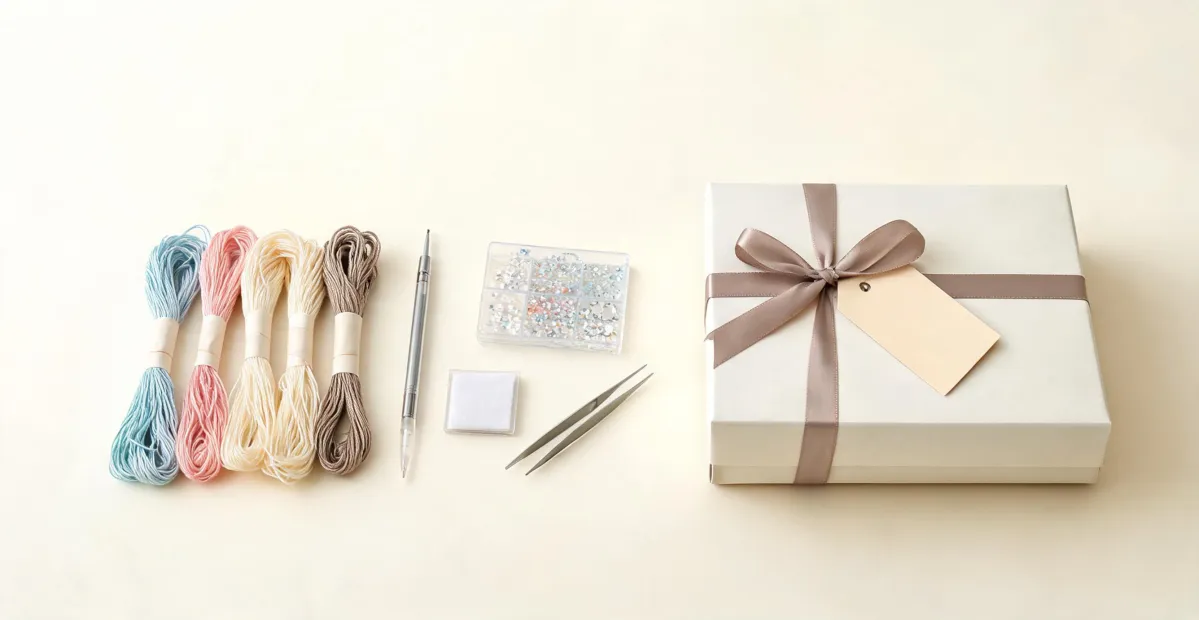
In October 2022, I found one of our products in a trash can at a client event.
Actually, let me be precise. I found a photo of our product in a trash can. Someone posted a candid shot from the client's annual manager dinner on their internal blog, and there it was, in the background: an embroidery kit with a half-stitched snowflake, tangled thread, and red dye bleeding into the white fabric.
I stared at that photo for a long time. Then I zoomed in. Because I already knew whose fault it was. Mine.
The Project That Started It
I handle corporate gift and promotional product orders for a mid-sized branding agency. In eight years, I've personally made — and documented — four significant purchasing mistakes, totaling roughly $12,000 in wasted budget. This project was the most expensive lesson on that list.
It started in July 2022. A regional retail client asked us to build 200 holiday gift boxes for store managers attending their annual sales kickoff. Each box was supposed to contain a small embroidery kit, a name badge for the event, and a home fragrance sachet. The budget felt reasonable: $25 per box. The client even hinted they'd love to come in lower.
Then came the question that still makes me cringe:
"Are bulk promotional products cost effective? Can we hit $15 a box if we order everything in volume?"
I should have given a careful answer about total cost. Instead, I wanted to impress them. I said yes.
Where I Tried To Save Money
The embroidery kit was the biggest line item. The client's branding team had approved a winter snowflake pattern with a deep red accent thread. They gave us a Pantone reference and asked us to match it as closely as possible.
DMC embroidery kits were the obvious choice. DMC's been around forever, and their floss colors are numbered, not just named. At wholesale, a proper DMC embroidery kit would run about $6.80 per unit. Two hundred kits: $1,360.
Then I found a bulk supplier offering a similar kit for $4.20. The pattern looked almost identical. The photos looked fine. The savings worked out to $2.60 per kit, or $520 on the whole order.
I told myself the difference wouldn't matter. That was my first mistake.
"Christmas Red" Is Not a Color Specification
About two weeks before production, the supplier asked me to confirm the thread color. Their email said:
"Please confirm: main thread color = Christmas Red?"
The client's Pantone reference was a deep, slightly brick-toned red. And I made an assumption that still embarrasses me: I told myself "Christmas red" was close enough.
It wasn't. There is no universal standard for "Christmas red." It's a mood, not a number. The supplier's version was bright, almost tomato-toned — noticeably different from the rich red the client had approved.
DMC actually has a shade literally called DMC Christmas Red. It's number 321 in their color system. If I had written "DMC Christmas Red, 321" on the purchase order, every person involved would have known exactly which red I meant. But I didn't. I figured the digital proof would catch any real problem.
The digital proof looked wrong on my screen. The red seemed too bright. The supplier said monitors distort colors and the physical thread would be closer to the reference. I let it go. I didn't order a physical sample because I didn't want to slow down the timeline.
That decision alone turned a $520 "savings" into a much bigger problem.
The Unraveling
The kits arrived in late September. I opened one and compared the thread to the Pantone chip. It wasn't terrible. It was maybe 40 percent off — enough to notice, but not enough to make me stop the shipment.
My colleague put it more bluntly: "That red looks like tomato soup."
I said it would be fine. Because saying it wasn't fine meant admitting I'd chosen the cheap supplier over the DMC embroidery kit to save money.
So the shipment went out.
The client's kickoff event was October 14. Store managers opened their gift boxes during dinner, and several actually tried stitching the kits over the weekend. That's when the complaints started.
Thread broke constantly. One manager, a cross stitcher with decades of experience, said she'd never seen floss knot the way this one did. Another manager tried the kit with her daughter, and when they lightly dampened the fabric to iron it, the red dye bled into the white border.
The name badge wasn't a home run either. We'd ordered clip-style badges, and roughly one in three clips snapped after first use. Small defect, but it made the whole box feel cheap.
The home fragrance sachet was fine. Nobody ever complains about lavender. But nobody raves about it either.
And then came the trash can photo.
I didn't sleep much after I saw it.
The Real Cost of a Bad Bulk Order
I agreed to replace all 200 embroidery kits. There was no point arguing. I told the client I'd manage it personally.
Here's where the math gets painful:
- Cheap kits originally ordered: $4.20 × 200 = $840
- Replacement DMC embroidery kits: $6.80 × 200 = $1,360
- Rush shipping on replacements: $210
- Total replacement invoice: $1,570
The $520 I'd "saved" disappeared the moment I signed that purchase order. And the original supplier wouldn't refund anything — they pointed to the approved digital proof and said the product matched the spec.
When the dust settled, we had spent $840 on useless kits and another $1,570 on the kits we should have ordered from the beginning. That's $2,410 in total kit spend for a project that should have cost $1,360. Finance called it a write-off. I call it the most expensive lesson in my career.
What I Do Now
That project taught me to look at bulk promotional products the way I look at any investment: total cost, not unit price.
My team now uses a checklist before every custom order. It's not complicated, but it would have stopped this disaster cold:
- Specify colors with standards, not words. Don't write "Christmas red." Write "DMC 321" or "Pantone 187C" or provide a hex code. Words are ambiguous. Numbers are not.
- Always request a physical sample. Screens lie. Suppliers don't always lie, but they do interpret. A real sample costs $25. A failed order costs $1,570.
- Test the product the way the end user will use it. If it's an embroidery kit, someone will actually stitch it. Does the thread behave? Does the color run? You won't know unless you test.
- Add rework, rush shipping, and credibility to your cost equation. The lowest quote is rarely the lowest total cost.
I don't have hard data on how many bulk promotional orders fail this way industry-wide. What I can say from experience is that the failure pattern isn't rare. Since we adopted the checklist, we've caught 47 potential issues in 18 months — and most of them trace back to someone trying to save too much on the sticker price.
So, Are Bulk Promotional Products Cost Effective?
Yes — but only when you measure cost correctly. The product price is just the starting point. Shipping, rush fees, rework, quality failures, and the quiet damage to your reputation all count. That $2.60 per kit I thought I was saving? It was a fantasy.
This works for us in a B2B context with predictable order volumes. If you're buying promotional items for a one-time event where nobody will notice small quality issues, the cheapest option might truly be fine. But corporate gifts and branded products are different. They carry your company's name. They get opened in front of people who matter.
These days, when a client asks whether bulk promotional products are cost effective, I answer honestly: "They are when you define cost the right way."
And if anyone asks me for the perfect Christmas red, I give them the answer I should have given three years ago.
DMC Christmas Red. Shade 321. Then I order a sample before I order anything else.

Elise Laurent
Elise Laurent is a crystal and decorative glass quality analyst covering crystal figurines, vases, ornaments, suncatchers, and gift glassware. She examines ISO 6486-1 where food-contact glass dinnerware applies, then uses polarized strain inspection, dimensional checks, surface-defect grading, and refractive clarity to compare decorative pieces outside that scope. Her work helps sourcing teams choose materials, finishing routes, and protective packaging without confusing visual brilliance with verified durability.