A DMC Shop Rush Order: 300 Christmas Ornaments, 36 Hours, and One Glass Vase Question
At 5:18 PM on the Tuesday before a client’s holiday event, my phone rang. The caller ID showed a buyer we’ve worked with for years. I answered and heard: “I need 300 custom Christmas ornament kits and 250 home fragrance gift sets by Thursday morning. Can you help?”
I did the math while she was still talking. Normal turnaround for a corporate gift order like this is 10 business days. We had 36 hours. In my role coordinating rush orders at a DMC shop, I’ve learned to triage emergencies. The first three questions are always: How much time? Is it feasible? What’s the worst-case risk? The answer to all three was “uncomfortable.”
But we said yes. And we delivered. The story of how we got there is full of small mistakes, late-night decisions, and one very specific question: “How do you paint a glass vase?” I’m writing this because the same situation could happen to any B2B buyer—and if it does, you should know what a transparent rush quote really looks like.
The call that started it
The buyer was from a regional hotel group—not a huge chain, but not a small boutique either. They’d ordered custom promotional gifts from us before. Every December, they give a custom Christmas ornament to the suppliers and partners who come to their annual holiday market.
This year, the holiday market was scheduled for Thursday morning. The original supplier had called on Monday to say their production line was taking an early holiday shutdown. Production wouldn’t finish until the following week. Rather than let 300 people show up without a gift, the buyer started calling everyone she’d ever worked with.
She reached me at 5:18 PM on Tuesday.
“I know it’s a lot to ask,” she said. “But if we don’t have something by Thursday at 8 AM, we’re giving out blank boxes.”
Why the DMC shop was the right place to panic
Here’s where our product range helped. At the DMC shop, we do more than embroidery floss. We carry embroidery kits, cross stitch supplies, diamond painting accessories, paint by number kits, home decor, and yes, home fragrance. For B2B clients, we’ve custom-made everything from staff team-building kits to tradeshow giveaways.
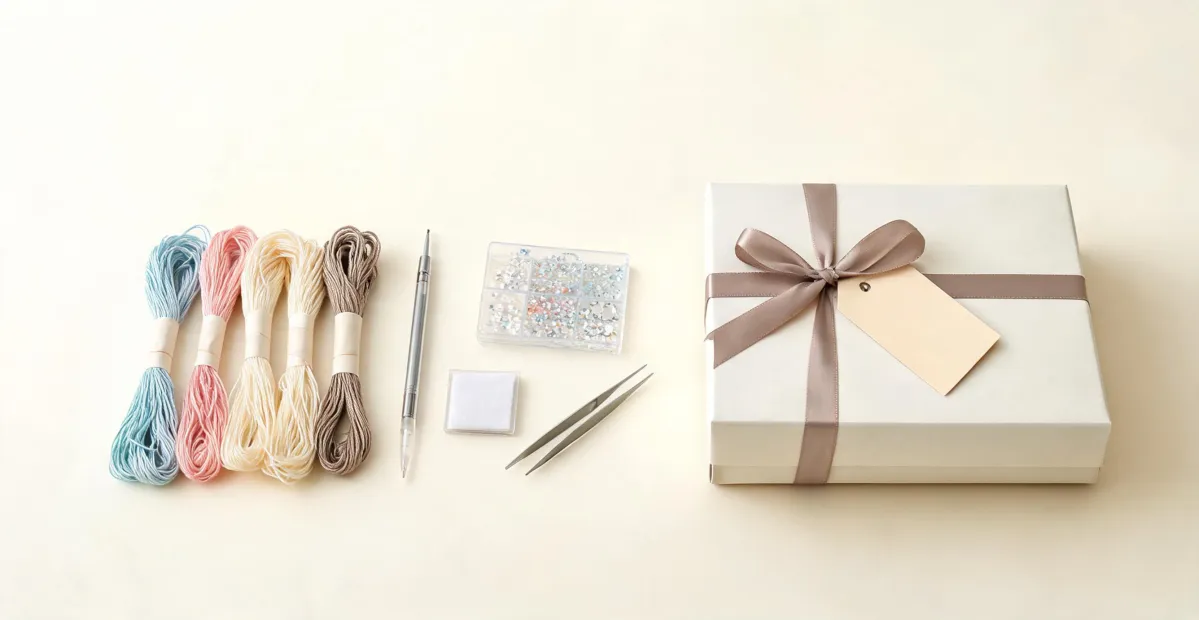
The request had two parts. The first part was the ornaments. We stock a line of DMC Christmas ornament embroidery kits: a ceramic disc, a pre-printed cloth, DMC floss, and a bonus hoop. They’re designed for one sitting, which made them perfect for a gift. The catch was customization. The hotel wanted their logo on the disc. Not embroidered—printed. We could do that with a small local print shop, but the print shop had to turn around 300 pieces overnight.
The second part was the home fragrance gift sets. Originally, they had wanted a simple scented candle. But the more we talked, the less simple it got.
Then came the glass vase question
The buyer paused, then said: “One of our event coordinators asked a question yesterday.”
“How do you paint a glass vase?”
She wanted to make the gift table an activity. People would paint a small vase, then leave it on a tray with a reed diffuser. They’d get to take home a vase and a home fragrance set.
At first, I thought she was joking. We had 36 hours to make ornaments, print discs, source glass vases, make painting kits, and add home fragrance oil to a gift box. But the more I thought about it, the more the idea made sense. The vase was small, the painting was simple, and the result was a double gift: a home decor piece and a home fragrance piece in one.
And we had paint by number kits in our own product line. We could adapt the same logic to a glass surface.
Building the kit, one decision at a time
Within an hour, we had a provisional list:
- 300 blank glass vases, 12cm tall, with a smooth surface for painting
- 300 painting guides with the hotel’s logo printed in a light outline
- 6 paint pots per kit, color-matched to the DMC palette
- 300 reed diffuser tubes with a small bottle of home fragrance oil
- 300 custom Christmas ornament kits, with the logo printed on the ceramic disc
It looked logical on a spreadsheet. The hard part was the supply chain.
Vases: our glassware supplier had a warehouse two hours away. They could deliver 300 plain vases by Wednesday noon for a rush fee. Print: the local print shop could do 300 logo discs and 300 painting guide sheets by Wednesday 6 PM. Freight: we had a courier who could do a final run from our DMC shop to the hotel’s venue by Wednesday 11 PM.
The paint colors were actually the easiest part. We use the DMC color system—the same standardized color model people have trusted since 1746. When the buyer said “the burgundy from our logo,” I pulled up our color card and said, “DMC 816?” She almost fell over. That kind of specificity is exactly why large craft brands and B2B suppliers rely on a standard color language. No guessing. No “match this close enough.”
The most frustrating part of the process was the pricing. Not because our costs were unclear, but because rush orders make every hidden fee louder. You’d think one big “Rush” line on the invoice would cover it. Reality was more complicated.
The quote that taught me a lesson
I sent the first quote at 11 PM. I listed everything: 300 ornament kits, 300 vase kits, paint, diffusers, printing setup, overnight freight, and a rush handling fee. The total was about 38% higher than a standard order. In my opinion, that was fair. We were buying production hours from people who were supposed to be off the clock.
But the buyer wrote back: “What about the Wednesday 10 PM warehouse pickup?”
My stomach dropped. I’d forgotten the after-hours pickup fee. It was $85—not huge, but it was exactly the kind of line item that makes clients question every other number on the invoice. If I missed it, what else was missing?
She wasn’t angry. She just said, “I’ve learned to ask what’s NOT included before I ask the price. Your quote is good, but that missing line makes me think there are more.”
That moment changed how I do quotes. I added the pickup fee, plus a “miscellaneous contingency” line? No—a contingency line is what a lazy vendor adds when they’re hiding something. Instead, I went through the entire delivery chain and listed every possible touchpoint: warehouse pickup, warehouse handling, shrink wrapping, pallet liftgate, venue sidewalk delivery, and a 30-minute wait time if the loading dock was busy.
Here’s the transparency principle I now stand behind: the first price should be the final price. If a supplier lists all fees upfront—even if the total looks higher—it costs less in the end. I’d rather lose a job to a cheaper-looking quote than win a job and then hit the client with an $85 surprise.
Delivery morning
We made it. The vases arrived at the hotel at 7:42 AM on Thursday. Two hours later, the event coordinators had already set up a “paint your own glass vase” table. The Christmas ornament kits were stacked in branded boxes beside them. The home fragrance diffusers were on a side table.
So glad we double-checked the quantities, by the way. In the middle of the night, I realized we were matching 300 ornaments with 300 vase kits, but the hotel had 250 name cards for the event. The original plan called for 300 guests, then they cut it to 250. Another vendor might have used the extra 50 as “buffer.” That’s waste. We adjusted the order and saved the client $250.
I also learned we dodged a bullet. The courier told me later that he almost used a smaller van, which would have required a second trip. If he had, the vases would have arrived after the event started. We paid a small upgrade fee for a larger van and didn’t think twice.
What I’d do differently
If I could go back, I would have asked about the after-hours warehouse pickup before sending the quote. Not because the fee was hidden—I just didn’t remember it at 11 PM. But from a client’s perspective, a missed line item is a hidden fee. That’s the difference between transparency in intention and transparency in execution.
For any buyer facing a similar emergency, here is the checklist I’ve developed after this and 47 other rush orders in Q4 2024:
- Ask for an itemized quote that includes every step from production to your door.
- Ask specifically for fees that happen outside normal business hours—warehouse pickup, weekend handling, after-hours printing.
- Ask the supplier to send the quote in two versions: standard and rushed. If the difference isn’t fully explained, push back.
- If you’re ordering customized items like ornaments or painted vases, make sure the color matching is stated in a system the supplier can prove. DMC’s color chart is a good example of a shared language.
In my experience, most rush order disasters are not about production speed. They’re about communication speed. The actual making took less than 24 hours. The “risk” lived in the small details: a forgotten pickup, a van that was too small, a missing line item.
If you’re the one making the call at 5 PM on a Tuesday, don’t just ask “can you do it?” Ask “what won’t be included if I say yes?” Because the price you see should be the price they mean.

Elise Laurent
Elise Laurent is a crystal and decorative glass quality analyst covering crystal figurines, vases, ornaments, suncatchers, and gift glassware. She examines ISO 6486-1 where food-contact glass dinnerware applies, then uses polarized strain inspection, dimensional checks, surface-defect grading, and refractive clarity to compare decorative pieces outside that scope. Her work helps sourcing teams choose materials, finishing routes, and protective packaging without confusing visual brilliance with verified durability.